
'Secure interests': HMS Dragon heads away from Middle East amid 'dangerous' Houthi threat against Saudi Arabia

The situation in the Middle East is unravelling, with a new conflict raging between Saudi Arabia and Houthi rebels in Yemen
A Royal Navy warship is heading away from the Middle East while another conflict breaks out in the region.
Portsmouth-based destroyer HMS Dragon has been pictured alongside Valletta, the capital city of Malta, this week. The Type 45 vessel has been on deployment since March 10 after leaving HMNB Portsmouth.
Her departure from the region comes as Iranian-backed Houthi rebels in Yemen have started attacking strategic positions belonging to Saudi Arabia. Concerns have been raised about control in the Red Sea, with commercial shipping being disrupted in a similar way to the ongoing Iran war. Britain has started supporting Riyadh, but the situation remains uncertain.
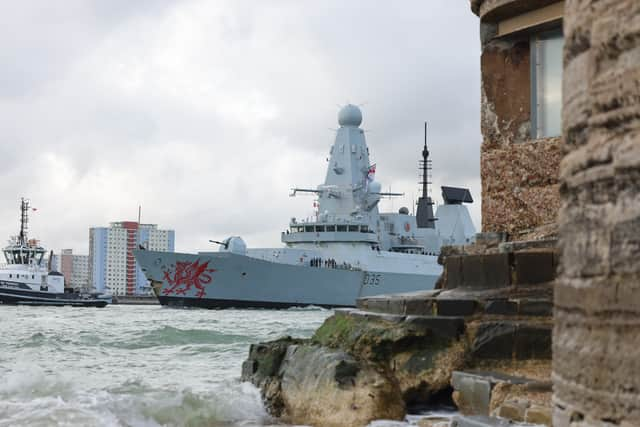

What has been going on with HMS Dragon?
She was placed on operation following the escalation of war in the Middle East, with a US-Israeli coalition fighting against Iran. Both sides exchanged various air strikes. After originally heading to RAF Akrotiri in Cyprus after the base was hit by a Shahed kamikaze drone - believed to have been shot from a pro-Iranian militia in Iraq - the destroyer headed through the Suez Canal and into the Red Sea.
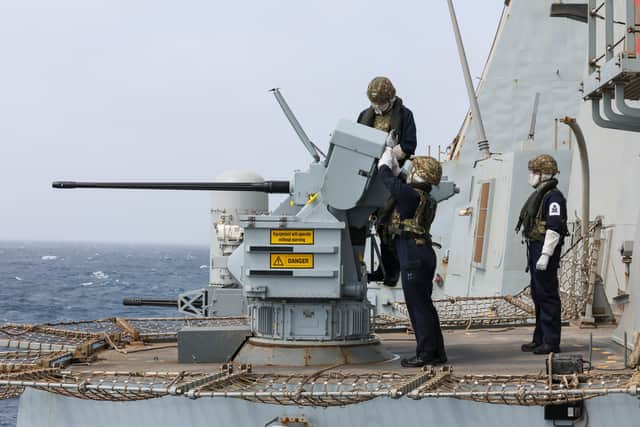
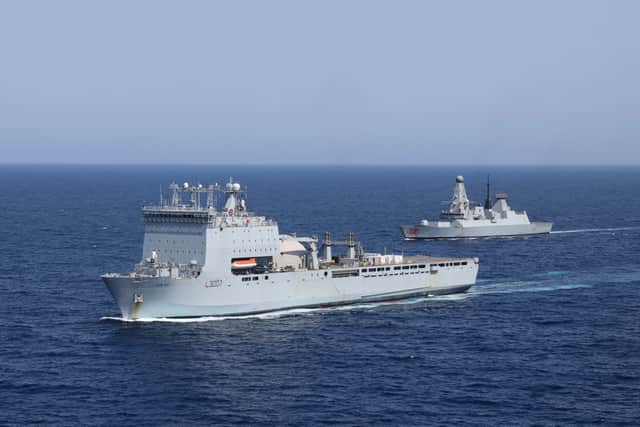
Various training drills took place throughout to prepare the weapons systems and ship’s company for what may lie ahead. The Daring-class destroyer was joined by RFA Lyme Bay after the auxiliary dock landing ship was equipped with a suite of mine-hunting drones and other equipment.
Both were placed on standby as part of a Nato operation, primarily led by France, to reopen the Strait of Hormuz. The strategic waterway, where 20 per cent of the world’s oil passes through, has been heavily disrupted by Iran with minimal traffic passing through. Mines and underwater explosives have been laid in the region.
What’s happening with Yemen, the Houthis, and Saudi Arabia?
While ceasefire talks between Tehran and US President Donald Trump stall, the worldwide economic impact has been stark; diesel prices have currently risen to well over $200 a barrel in the US and Europe, according to the Financial Times. The situation has also worsened in the Red Sea.
Iranian-backed Houthi militias seized control of the key port city of Mokha from Saudi-supported pro-government forces. The group also attacked and took control of strategic islands including the Hanish Islands north of the Bab el-Mandeb Strait and Perim Island.
Fears have been raised that commercial shipping will be blocked. The Houthis said they posed no threat to international shipping, but would target Saudi Arabian vessels. Concerning events have taken places in both commercial shipping locations recently.
The United Kingdom Maritime Trade Operations Centre (UKMTO) said a tanker was struck by an “unknown projectile” as it headed into the Strait of Hormuz. Two crew members were injured, and the ship was able to get to its next port of call under its own power.
The World Health Organisation (WHO) said 680 people were killed or injured across Yemen over the course of a week. The total death toll caused by the Riyadh and Houthi conflict since August 6 is 3,672.
Houthi rebels previously attacked Royal Navy ships in the Red Sea. HMS Diamond, currently being refitted at HMNB Portsmouth, had to shoot down a barrage of drones and missiles while deployed in the region alongside American forces between late 2023 and early 2024.
Britain supporting Saudi Arabia
Given the ongoing threats to the freedom of navigation, it’s highly expected that HMS Dragon will be replaced by another warship. No official confirmations have been made by the Royal Navy.
Britain is aiming to support free-flowing maritime traffic in the Strait of Hormuz “when conditions allow”, effectively when a ceasefire is agreed between the US-Israeli coalition and Iran. The UK is currently providing defensive support to Saudi Arabia.
An RAF Voyager air-to-air refuelling aircraft is currently assisting the Riyadh air force. In a press statement, the Ministry of Defence (MoD) said the Houthis are “a dangerous threat to regional security in the Middle East”.
“It is in the UK’s national economic and security interest that they do not succeed,” they added. “We unequivocally condemn the Houthi attacks on Saudi Arabia and are clear that the Kingdom of Saudi Arabia and the Republic of Yemen have the right to defend themselves.
“The support builds on the UK’s existing military contribution to Saudi Arabia’s air defence, including the deployment of air defence equipment and UK personnel helping to protect against missile and drone attacks.
“Saudi Arabia and Yemen are long-standing partners of the United Kingdom and play a vital role in regional stability. It is in the UK’s interest to protect regional stability, protecting vital trade and energy supplies and encouraging a diplomatic resolution to the conflict in Yemen.”
When asked about the decision, prime minister Andy Burnham said he was “acting to secure the interests of Britain and the wider region because, of course, Saudi Arabia has been experiencing attacks, is looking at potential further disruption, and we need to keep those pathways open, and hence our agreement to the request”.