
Iran: 'Turning point' for Royal Navy as Strait of Hormuz mine clearance put under spotlight amid HMS Dragon op

A ‘technology shift’ in the Royal Navy is under the microscope due to the ongoing conflict in the Middle East.
Ferocious US-Israeli strikes are continuing to hit Iran, with Tehran’s retaliatory actions aimed at attacking the global economy. The Strait of Hormuz, a strategic waterway often transited by commercial ships, has become a dangerous chokepoint for drone and missile strikes.
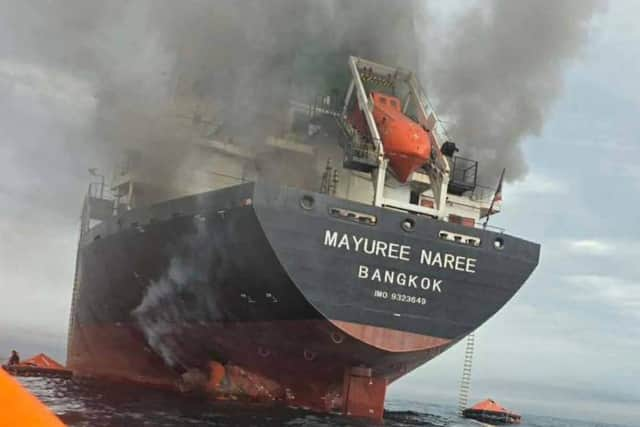
A total of six ships - mostly carrying oil - have been attacked since the conflict began. As reported in Reuters, two projectiles of unknown origin struck the Thai-flagged Mayuree Naree dry bulk vessel as it sailed through the strait earlier on Wednesday, causing a fire and damaging the engine room. Two fuel tankers, Marshall Islands-flagged Safesea Vishnu and the Malta-flagged Zefyros, were set ablaze after suspected Iranian boats were spotted nearby.

Another problem is Tehran laying mines in the region. The Pentagon said the US has already destroyed 16 mine-laying vessels, with explosives being laid under the surface. Defence secretary John Healey confirmed to Sky News that autonomous systems have been positioned in case Britain deploys to safeguard the passage.
“I have - pre-positioned in the region - some autonomous mine hunting systems,” he said. “I have been talking to planners today about additional options we can bring to bear alongside allies should it be needed."
Dr Matthew Heaslip, Senior Lecturer of Naval History at the University of Portsmouth, clearing mines in the Gulf is a task which the Royal Navy has traditionally provided a lot of support with. He told The News: “There is a technological shift to unmanned surface and subsurface vessels. They will be much easier, cheaper, and safer to get out to the Middle East.
“There is the potential the Royal Navy could do something like that to assist with the task. It seems likely that mines have already been laid, and will continue to be laid. They’re a very cheap, effective, and dangerous way of closing straits of water. That would be something where the Royal Navy could provide a level of assistance.” Dr Heaslip added that due to French and American forces deploying to the region, and a lack of resources overall, it’s unlikely that HMS Dragon will be deployed from the eastern Mediterranean to the Strait of Hormuz.
Britain may be asked to take on the mine-clearance duties, though this comes amid a period of transition. Conventional minehunters are unlikely to be deployed. The Times reports that the Hunt-class vessel HMS Middleton was towed back to Portsmouth as a cost cutting measure and due to a shortage of sailors. Four of the seven current minehunters are unavailable for operations.
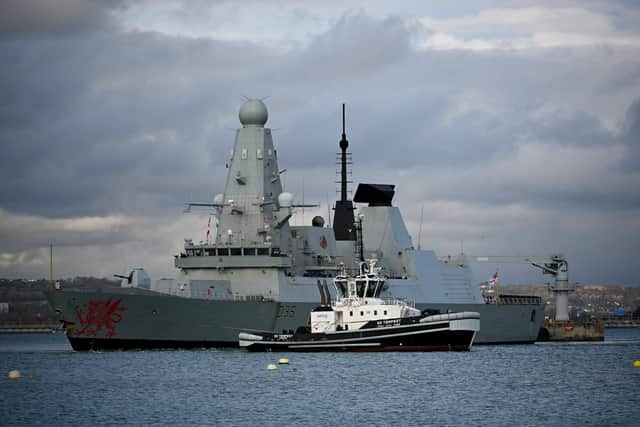
HMS Ledbury, Hurworth, and Cattistock, have been conducting security and training operations in British waters. HMS Stirling Castle, acquired from the Royal Fleet Auxiliary, was recently converted into a mothership for drones and houses various mine-hunting equipment. This is while the Royal Navy continues to transition from crewed minehunters to autonomous platforms under the Maritime Mine Counter Measures (MMCM) programme, with some systems in the Middle East.
“There is a technological shift to unmanned surface and subsurface vessels,” Dr Heaslip added. “They will be much easier, cheaper, and safer to get out to the Middle East. There is the potential the Royal Navy could do something like that to assist with the task. It seems likely that mines have already been laid, and will continue to be laid. They’re a very cheap, effective, and dangerous way of closing straits of water. That would be something where the Royal Navy could provide a level of assistance.”
When asked if the Royal Navy has enough mine-clearance capability, he added: “We are at that turning point. Some of these unmanned vehicles are already being used for surveying and mine countermeasures. It’s reasonably tried and tested, but we’re in new territory dealing with an active opponent. It’ll be experimental, but it’s where the technology is and that’s always a part of the naval world. You’re always testing something and seeing how it goes.”