
Why HMS Prince of Wales will be deployed to Arctic, with Royal Navy responding to 'immediate Russia threat'

The latest region for a UK Carrier Strike Group will not come as a surprise to many.
Britain has been continually looking towards the North Atlantic and the High North as an area of strategic importance. Whether the focus is on protecting critical undersea cables, or responding to increased activities from Russia, the area has been put in the spotlight in recent years.
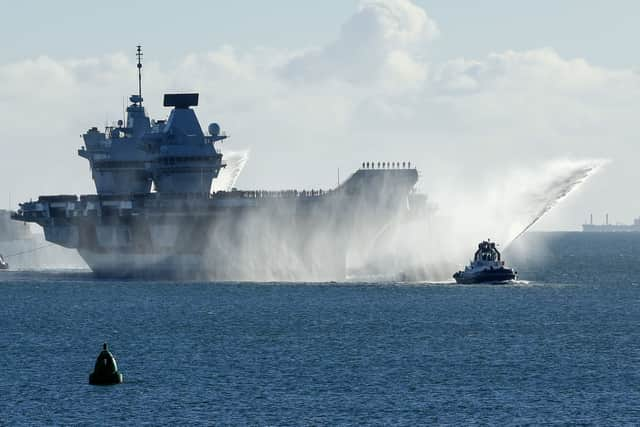
HMS Prince of Wales, the Royal Navy’s flagship, will be deployed closer to home compared to her previous mission in the Info-Pacific. Once again taking the helm of the UK Carrier Strike group (UKCSG), she’ll be aligned with Nato under Operation Firecrest.

What do we know so far?
The UKCSG will carry out military operations across the North Atlantic and Arctic. The £3.2bn aircraft carrier will be joined by a suite of F-35 fighter jets, Merlin and Wildcat helicopters, as well as a Type 45 destroyer, frigate, Royal Fleet Auxiliary supply ships, and other equipment.
British forces will join forces with Nato allies and their American counterparts. After bolstering security along the North American East Coast, the UKCSG will sail to a US port. American jets are expected to land on HMS Prince of Wales’ flight deck. Operations will come under Nato’s Arctic Sentry mission. Thousands of troops from the Royal Navy, Army, RAF, and Royal Marines, are all expected to be involved.
Defence secretary John Healey said: “I’m proud that we’re stepping up UK leadership on High North and Atlantic security. This deployment will help make Britain warfighting ready, boost our contribution to NATO, and strengthen our operations with key allies, keeping the UK secure at home and strong abroad.”

Why is HMS Prince of Wales being deployed to the Arctic?
The focus on Arctic operations was heavily highlighted in the Strategic Defence Review (SDR). Published in June 2025, the document set out an aim to deploy a hybrid navy of conventional warships and drones which will “patrol the North Atlantic and beyond”.
“Of particular importance to Defence is the likelihood that the Arctic and High North will be ‘ice-free’ each summer by 2040, providing access to more actors and creating a new site for competition within the UK’s wider neighbourhood,” the document said.
Russia was described as an “immediate and pressing threat” in the report, which stated Vladimir Putin wanted to extend the country’s sphere of influence. The number of incidents where Moscow vessels have threatened UK waters has increased by 30 per cent over the past two years.
British forces will also operate under a Nato first policy, with missions taking in closer territories. Although this doesn’t mean a Nato only approach, according to the SDR, but the main aim of military deployments will be achieve three goals: defend, protect, and enhance the resilience of the UK, its Overseas Territories, and Crown Dependencies; Deter and defend in the Euro-Atlantic; and shape the global security environment.
“There is an unequivocal need for the UK to redouble its efforts within the Alliance and to step up its contribution to Euro-Atlantic security more broadly—particularly as Russian aggression across Europe grows and as the United States of America adapts its regional priorities,” the SDR said.
Why is Russia interested in the North Atlantic?
Moscow and other British adversaries see the region as an opportunity. If more trade lanes open up due to climate change, there will be a race for who controls its resources and revenue streams. With Russia continually hit by sanctions for oil and other commodities, shadow fleet vessels may use the region to transport goods to fund the war in Ukraine and other conflicts.
The North Atlantic is also home to targets that can be hit in grey zone warfare, namely undersea cables. Grey zone warfare exists in limbo between war and peace - actions which are designed to achieve strategic objectives without traditional military conflict. This can include sabotaging data cables, oil pipelines, and committing cyber attacks.
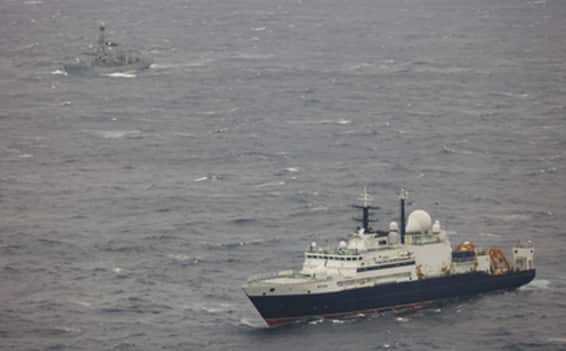
Former chief of the Secret Intelligence Service (MI6) Sir Alex Younger KCMG said Russia acts like its at war with the UK and its allies, and urged the UK to respond to the threat. The UK signed a defensive pact with Norway under the Lunar House agreement to patrol the North Atlantic and respond to such threats. Yantar, a Russian spy ship, was seen in the North Sea months ago and shined a laser into the faces of helicopter pilots when they tried to force her away.
This focus is extended further under the Atlantic Bastion concept, where new Type 26 submarine-hunting frigates will be joined by various autonomous systems. First Sea Lord Sir Gwyn Jenkins said Russia is also growing its submarine force and the UK is losing ground on the capabilities the country is facing. Responding with the UKCSG is a showcase that Britain can defend its waters if called upon.
What ships will join HMS Prince of Wales?
No specific ships have been assigned to the UKCSG so far alongside HMS Prince of Wales, but HMS Dragon is a likely candidate to be involved in the operations. The Portsmouth-based destroyer will be acting as the command ship of Nato’s Standing Naval Maritime Group 1 throughout 2026.
This will join the UKCSG, United States, Canada, and Joint Expeditionary Force (JEF) personnel: a coalition consisting of Denmark, Estonia, Finland, Iceland, Latvia, Lithuania, Netherlands, Norway, Sweden, and the UK.
HMS Richmond, the Type 23 frigate deployed to the Indo-Pacific, is highly unlikely to join the deployment given the talk of decommissioning at a recent ceremony in Yorkshire.