
Bowel Cancer Month: 'Act now if you have any cancer concerns – don’t make my mistake'
Former News reporter Elise Sargent is living with bowel cancer - and writes about her experiences for Bowel Cancer Month
Bowel cancer is now the biggest cancer killer of people under 50 in the UK. Isn’t that frightening?
As someone who received a shock diagnosis of stage 4 bowel cancer aged just 44, believe me, you really don’t want it.
But the good news is, if it is caught early enough, 90 per cent of people will survive it. I know I’m not going to be so lucky, so, during Bowel Cancer Awareness Month, I’m doing everything I can to encourage people to visit their GP at the very first sign – something I didn’t do.
For about a year, I occasionally had blood in my poo but it didn’t occur to me to worry about it, even though I was very aware of Dame Deborah James’s Bowel Babe campaign. Despite having written perhaps hundreds of stories about cancer during my many years as a reporter at The News, I simply didn’t think something like that would ever happen to me.
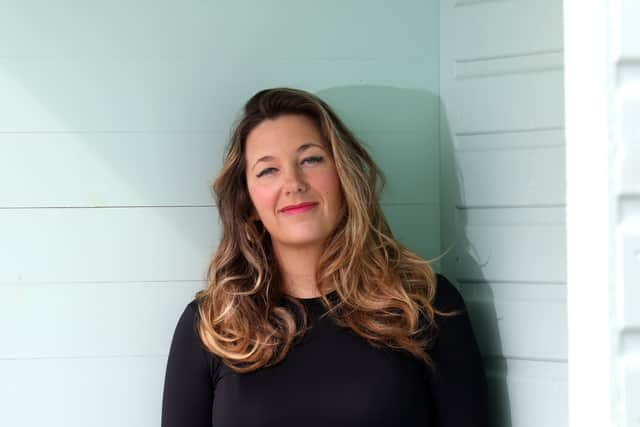

Then, in January 2025, I suddenly became unwell with excruciating stomach pains. The first hospital I visited sent me away, saying I was just constipated. I refused to accept that and fortunately I was scanned very quickly at Queen Alexandra’s A&E and told there was a large tumour on my bowel and something in my liver. But that was only the beginning, over the next few weeks cancer was also found in my left lung, ovaries and pelvis.
At the same time as having blood in my poo, I was constantly tired. Taken together, they are glaring, all-singing, all-dancing signs of bowel cancer. If I had a time machine I would go back and shake myself into doing something about it sooner.
Since I wrote about my initial diagnosis in The News in April 2025, I’ve had more than 700 hours of chemotherapy and a 16-hour operation to try to eradicate the cancer that is rampaging through me.
The surgery involved removing 60 per cent of my liver, part of my left lung, the bowel tumour, my gall bladder, omentum, and a complete hysterectomy. My peritoneum was scraped and hot chemotherapy was poured into my abdomen and washed around for several hours to target the hard-to-reach peritoneal disease.
At the time, there was so much hope that I would be cancer-free, at least for a few months. The recovery was brutal, but remarkably swift. Within three months I was running again, doing strength training and, best of all, back in the swimming pool. So many plans were made – family holidays, moving house, big challenges like Swim Serpentine and walking the Camino de Santiago.
I really felt like I’d been amazingly lucky to have dodged a bullet and been able to wrap up this whole cancer business neatly within just a year.
Sadly, by my first post-surgery scan in January, the original cancer had gone but now once barely perceptible dots were now glowing brightly on the PET scans. I was crushed.
Reconciling how well I feel, with the amount of cancer that’s burst back on the scene, has been a struggle. I’m trying chemo again but my options are very limited. We’ve discovered I have a genetic mutation called Kras (a third of colorectal cancer patients have this) which makes treating it very difficult. Kras controls how cells divide and grow. When it is mutated, it can become permanently switched on which leads to uncontrolled cancer growth.
Until very recently, Kras was deemed “undruggable”. It doesn’t respond to immunotherapy – which has become a game changer in cancer treatment. However, a targeted drug called Avastin (bevacizumab) which inhibits tumour growth by blocking blood vessel formation, was approved for use by the NHS in December, having shown positive results in slowing cancer growth in patients, like me, with advanced disease.
Isn’t that amazing?
I’m having that drug combined with a chemotherapy drug called Folfox. It comes with a long list of scary side effects, including peripheral neuropathy and extreme cold sensitivity. To counter this I freeze my hands and feet during the infusion, which feels like the opposite of what I should do, but there is evidence that it can reduce the impact by 30 per cent.
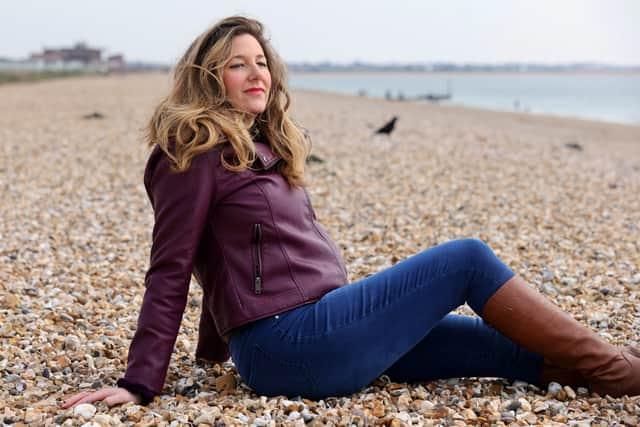
The reason I share my story is because I know, with certainty, that it could have been very different if I’d seen my GP at the first sight of blood in late 2023.
It would have given me a full year’s head-start on beating it. How different my life would be now if I’d acted. Bowel cancer is curable if it’s caught early enough – even up to stage 3. Please, please don’t do what I did and ignore it.
If you have blood in your stools or when you wipe, unexplained tiredness or weight-loss, a change in bowel habits, a lump or pain in your abdomen, go to your GP. Ask for a FIT test and blood test. Don’t be put off because you’re young. Bowel cancer rates in under 50s have risen 25 per cent in the past decade – an astonishing figure.
Urge your friends, children, anyone you care about, to act if they are worried. It might just save their life.
Visit bowelcanceruk.org.uk
Elise Sargent says that despite having stage 4 cancer she still lives life to the full and has set herself three major challenges in the autumn to raise money for the Portsmouth Bowel Cancer Appeal.
The charity was founded by Queen Alexandra Hospital’s Professor Jim Khan, one of the country’s leading bowel surgeons, along with his former patient, Lorraine Till.
Professor Khan’s aim is to make Portsmouth a centre of excellence for bowel cancer surgery, at the cutting edge of pre and post-surgical support, training and research.
In September Elise, from Rowlands Castle, will take part in Tour de 4, a cycling challenge set up by stage 4 prostate cancer sufferer Sir Chris Hoy. Two weeks after that is Swim Serpentine, a one-mile swim in the famous Hyde Park lake. And in October it’s the Great South Run.
She said: “Despite chemotherapy being pretty tough, I try to keep life as normal as possible. I want to make the most of every day because I see every single one as a bonus.
“That means I need to keep really fit, even when sometimes all I want to do is curl up in a ball in bed. Exercise helps me mentally and physically – it’s such an important part of your treatment. It’s a pleasure to support Prof Khan and Lorraine who have helped so many local people through bowel cancer.”
To make a donation, visit: justgiving.com/page/elise-sargent-2.