
"Pioneering study" to help diagnose babies with life-changing conditions earlier now on offer in Portsmouth
Expectant mothers in Portsmouth are now able to take part in a “pioneering study” that is aiming to help diagnose life-changing condition in babies
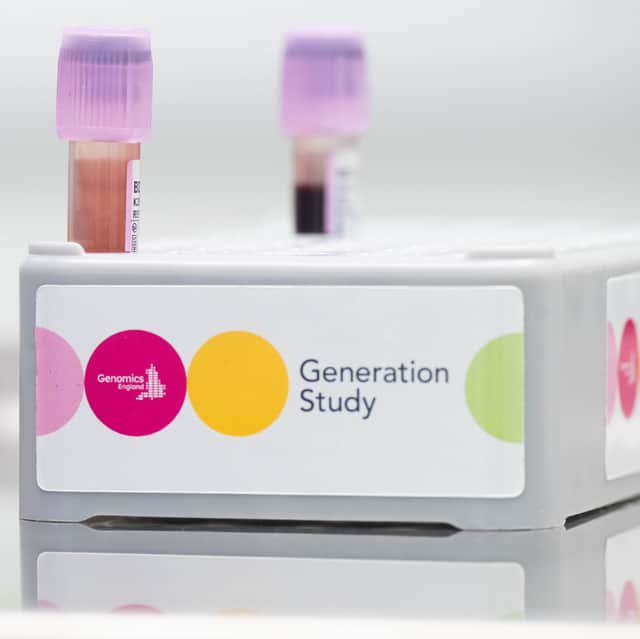
The Generation Study, led by Genomics England in partnership with NHS England, is a major national programme looking to screen 100,000 newborns across England for over 200 rare conditions.
It is now on offer at Portsmouth Hospitals University Trust with parents able to opt in for free with a small sample taken from the umbilical cord shortly after birth or via a heel prick test if the cord sample is not possible. The study uses the small sample to look at a baby’s complete set of genes, called their genome.
It can help detect treatable and rare conditions shortly after birth, including Spinal Muscular Atrophy (SMA), Cystic Fibrosis and rarer conditions like Barth Syndrome.

Emma Macleod, Principal Investigator for Portsmouth Hospitals University NHS Trust said: “This is an exciting opportunity to support research and your child’s future health. Taking part in the Generation Study is free and completely optional and we will provide you with clear information to help you decide if it’s right for your family.”
Expectant parents will be able to discuss participation in the study during pregnancy and will have the chance to speak to the research team directly. Interest in participation can also be registered online via the Generation Study website.
The study will also be on offer to patients on the Isle of Wight. Sharon McCready, Principal Investigator for Isle of Wight NHS Trust said: “This pioneering study will help ensure that babies with potentially life-changing conditions are diagnosed much earlier. Ultimately, this will help the NHS provide families with the right support sooner and enable children to lead healthier lives”.
Once the sample has been taken the results will be sent to parents as quickly as possible. Parents will be told by letter or email if no condition is found. If a possible condition is detected, an NHS specialist will phone the parents to explain what happens next.
If a condition is confirmed, families and carers will be offered further NHS tests, care and treatment, with ongoing support.
Further details on the study can be found at https://www.generationstudy.co.uk/