
Corridor care: NHS figures show dozens of patients at Queen Alexandra Hospital in Portsmouth are treated outside hospital wards

New figures show how many patients at Queen Alexandra Hospital had to be treated in corridors in May - which is part of a “national scandal”
Queen Alexandra Hospital has apologised to the dozens of hospital patients in Portsmouth who have had to be treated in a corridor.
QA’s chief nursing officer has said that it is down to the demand for care outstripping the hospital’s capacity.
New NHS figures reveal the extent of “corridor care”, which is defined as “treatment that does not take place in a clinically appropriate and safe setting”. Safe settings can include beds with oxygen supplies and call bells, privacy and whether lights can be turned off to allow sleep. If treatment does not meet any one of these criteria, is it classed as corridor care, and patients have to spend 45 minutes there before being classed as receiving corridor care.
This is the first time this type of statistic has been released. There are two categories - corridor care for emergency departments and for hospital wards. The figures cover patients receiving treatment, waiting for assessment, admission or transfer, but do not include ambulance handover delays.
Portsmouth Hospitals University NHS Trust, which runs Queen Alexandra Hospital, reported that it had 60 people each day in May in its emergency department receiving “corridor care”, which was 2.7 per cent of the total number of patients treated in corridors in the country.
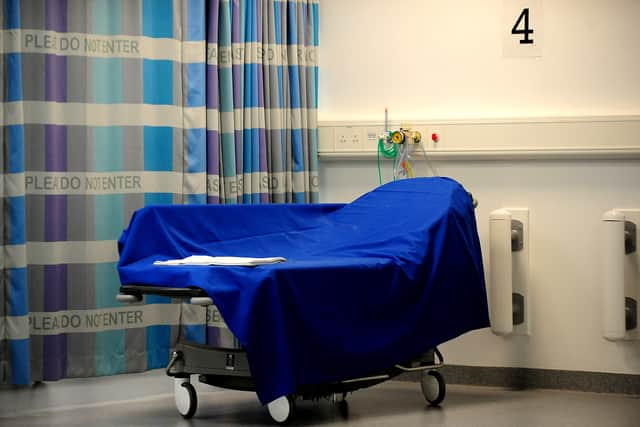

The figure for hospital ward was 25 people a day, or 3.7 per cent of the total number of patients who were given corridor care.
Steve Thomas, Chief Nursing Officer at Portsmouth said: “We are sorry that our patients are receiving care in corridors. It is not the standard of care we aspire to deliver and we know it significantly impacts the experience of our patients, their carers, and our staff.
“As a large and busy hospital, the demand for urgent and emergency care can be higher than our physical capacity, resulting in the use of corridors for care. Over the last 18 months, we have eliminated long delays in patient handover from our ambulance partners, which has positively improved access to emergency care across our system. However, there is more we must do together with our partners, to end the use of corridor care as quickly as possible.
“We are committed to stopping corridor care through delivery of our improvement plans to remove unnecessary delays for our patients.”
Nationally Portsmouth had the ninth highest number of patients receiving corridor care in emergency departments, and the sixth highest number of patients supposed to be on wards being left in corridors. The University Hospital Southampton had the sixth highest numbers for emergency departments, with an average of 71 patients a day experiencing corridor care, which is 3.2 per cent of the national daily total.
Dr Ian Higginson, president of the Royal College of Emergency Medicine, said: “Corridor care is utterly unacceptable. It’s an undignified and dangerous way to deal with patients. Today, for the first time, NHS England has published data attempting to capture the scale of the problem in our hospitals, with the goal of eradicating corridor care.
“Attempts to better understand, and ultimately end, this awful and dangerous practice are welcome. We hope that the publication of this data will mean trusts and policymakers will begin to take stern action on curbing it. However, we remain doubtful about the current accuracy and scope of this data – as well as the potential for trusts ‘gaming’ the system.
“Corridor care is a national scandal, and a problem which policymakers have acknowledged has become normalised. While we welcome the government’s commitment to ending corridor care by the end of this parliament – it is still focusing far too much on reducing attendances and diverting people away from EDs. Corridor care is a symptom of overcrowding. It is not, for the most part, caused by the least sick patients.
“We are still not seeing the measures we know will curb corridor care being put into place, such as: increasing hospital bed availability, weekend and evening working for other parts of the system and investments in more staffed beds. We hope the new Secretary of State for Health and Social Care will work with us to put into place these interventions. Lives are at stake.”
Dr Higginson cast doubt on whether all trusts were reporting the full extent of corridor care, saying it was possible that some are “gaming” the system.
On average 2,241 patients a day were given corridor care in emergency departments around the country, with 669 on wards.