
Ripple: South Coast charity leader warns of 'hidden' signs of suicide often mistaken for recovery
‘We are taking the opportunity to highlight these unknown signs in the hope that people will spot them and intervene before it’s too late’
A suicide prevention charity on the South Coast is urging businesses and the public to get to grips with the hidden signs of suicide in a drive to save lives and provide better support to those in crisis.
As part of World Suicide Prevention Day, on September 10, Alice Hendy MBE from Stubbington who is the CEO and Founder of Ripple Suicide Prevention Charity which intercepts harmful online searches into suicide and self-harm and redirects people in crisis to vital support is highlighting the subtler behavioural changes that are often misunderstood as recovery and could create a false sense of hope that a friend or loved one’s mental health is improving.
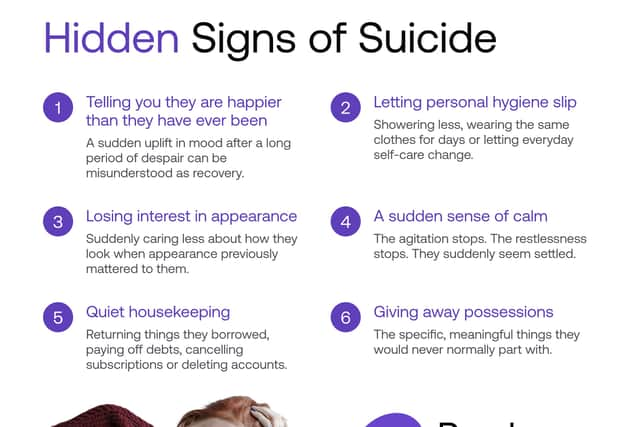
While most people associate crisis with obvious signs of distress such as constant talk of hopelessness or withdrawal, the charity is asking the public to re-evaluate their perception of suicide crisis and become more familiar with the hidden signs.


Traits like a sudden improvement in mood or stating that they are the happiest they have ever been alongside a sudden sense of calm off the back of an extended period of restlessness can be associated with somebody who has made peace with a decision to take their own life.
Losing interest in their appearance alongside a drop in their hygiene is a more common association but in people who have previously struggled with issues around their appearance, this can be framed as a letting go of their previous anxieties when it can actually be evidence that there is no longer a need to keep up appearances.
Finally, the charity is warning that quiet housekeeping, paying off debts and getting their house in order can be misconstrued as somebody who has gained the strength to organise their life when in reality it can be a sign of them getting their affairs in order ahead of taking their own lives.
Alice Hendy MBE, CEO and Founder of Ripple Suicide Prevention Charity said: “Days before Josh took his own life, he told me that he was the happiest he’d ever been. Little did I know that during this time he was actively searching the internet for methods and instructions on how to kill himself. People who are contemplating taking their own lives will often find a sense of relief once they have made a decision, and this sensation is tragically misunderstood as somebody who is recovering. We are taking the opportunity during World Suicide Prevention Day to highlight these unknown signs in the hope that people will spot them and intervene before it’s too late.”
Alongside the educational material, the charity is encouraging people to talk more openly about suicide and self-harm if they suspect a friend or loved one might be struggling. Reassuring the public that they won’t “plant the seed” of suicide into someone’s head if they talk about the topic, Ripple Suicide Prevention Charity has created a specific guide on how to talk about suicide to aid difficult and often uncomfortable conversations.
Alice concluded: “Listening is the most important aspect when helping anyone in crisis, for them, it could be the first opportunity that they have had to articulate their thoughts, so it’s important that you don’t immediately jump to solutions for them or try and problem solve the smaller issues that might be affecting their mental health. As a friend, loved one or even a colleague, you are best placed to offer a non-judgemental ear and to ask them if there is anything you can do to support them while they continue to struggle. Do not be surprised if they cannot identify an area where you can help or calmly refuse any simple adjustments, being available and giving them reassurance that you are there for them could be enough to lift a weight off their shoulders.”
If you have been affected by this story, or you are worried about someone else, help is available now:
· Samaritans – call 116 123 (free, 24/7)
· Shout – text SHOUT to 85258 (free, 24/7)
· NHS 111 – for urgent mental health support
· In an emergency, call 999 or go to A&E
To access the charity’s free guide on how to talk about suicide, visit: How to Talk About Suicide | Free Guide From Experts | Ripple
For more information on the charity please visit: Ripple | Crisis Intervention, Suicide Prevention & Mental Health