
Thirteen spookiest spots in the South Downs National Park this Halloween
Spooky season has arrived!
The South Downs are cloaked in a mysterious mist and there’s a frightful chill in the air with Halloween just around the corner.
With some of the darkest skies in England and an abundance of nocturnal wildlife, it’s no wonder autumn and winter stir up a swirling cauldron of myths, legends, and folklore around the South Downs National Park.
The hills and valleys harbour many a tale passed down the generations and some of these accounts are a little bit chilling!
Here are 13 intriguing tales and places to ignite your imagination:
Cowdray Ruins
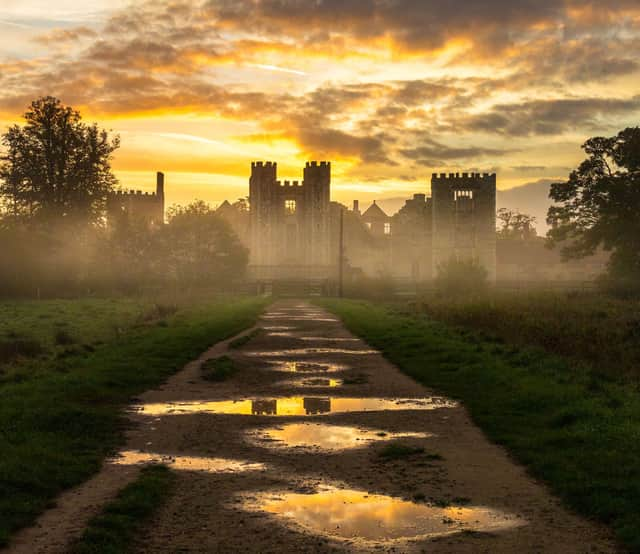

There are many spooky stories connected to this Tudor home that was consumed by fire during restoration work in 1793. Some attribute the fire to a curse that expired when the 8th Viscount Montague died two weeks after the blaze and the inheriting descendant died childless. The Grey Lady is the ruins’ most frequently seen spook and she manifests so often that her usual haunting route has been coined the ‘Lady’s Walk’.
Green men of Winchester
Was it the verdant spirit of Hampshire’s countryside that led the people who built Winchester cathedral to carve mysterious Green Men into its ancient walls? Estimates vary from 60 to 70 of these strange faces covered in leaves, spewing vegetation from their mouths or sprouting it from eyes, noses, mouths and ears.
Hinton Ampner
The Tudor Old Manor House that previously stood on the site of Hinton Ampner was reputed to be one of the most haunted houses in Britain – complete with howling, shouting, gun shots, screaming, loud bangs, mysterious music and an overwhelming feeling of dread. A ghost army of defeated Royalist soldiers is said to return to the nearby English Civil War battlefield at Cheriton.
Tichborne
The Tichborne Dole still takes place to this day and is the tradition of giving a measure of flour to all those in the community who need it. The story behind it involves Lord Tichborne and his wife Lady Mabella. She would give alms to the poor every year but her husband did not agree with it. When she lay dying she made her husband promise to continue it.
He said that he would give as much flour as the land she could walk on would give. She dragged herself out of bed and crawled around 23 acres of land before getting back into bed and cursing her husband. She said that if he did not keep his promise then one year there would be seven sons born and the next seven daughters. With the seven daughters the Tichborne name would die out.
In 1796 the lord got fed up with ‘too many beggars’ and so stopped giving alms to the poor. The curse came true with several heirs dying and the house burning to the ground. The tradition was then reinstated and has happened every year since.
Owslebury
Marwell Hall is one of the locations of the “Mistletoe Bride” legend. A bride goes missing on her wedding night while playing hide and seek and when the wedding guests could not find her they thought she must have run away, fleeing her new husband. In truth she became stuck in a chest and could not get out, starved to death and died. She now haunts the hall.
Heathlands
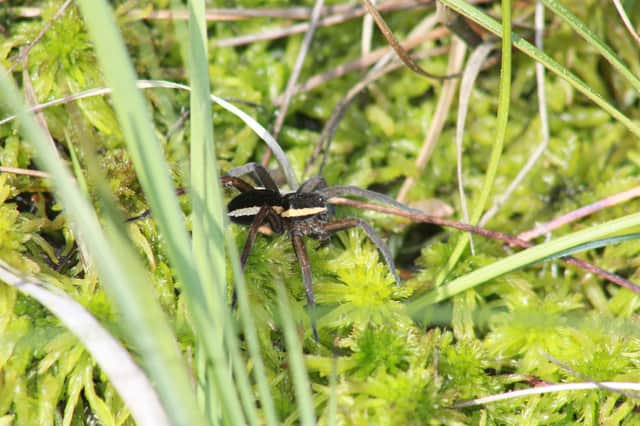
Lowland heath can have its spooky moments, and there are plenty of wonderful heathland sites on the edge of the National Park around Bordon, Petersfield and Haslemere to explore. You often see bats flitting about just after sunset, enjoying the large insect population that heathlands support, and using the wooded edges to find roosts.
At this time of year, the wildlife may be a little quieter but an early morning or late afternoon in the mists provides plenty of spooky encounters, with the possibility of hearing ravens kronking on Longmoor in particular. And the spiderwebs coating the gorse bushes show up beautifully, limned in morning dew or frost. Heathlands also have a long history of human use and habitation, from early hunter-gatherers to modern times.
Many of our heathland sites have bronze age burial mounds on their high points, perhaps linked to the sacred beliefs of those peoples. There are burial mounds on Longmoor, Woolmer and Broxhead. Perhaps you can hear the tramp of the Roman army, or the creak of Romano-British wagons taking their trade to market along the remains of the Roman road that runs across Longmoor?
Close to Bramshott Common is the village of Bramshott, possibly the most haunted village in England, with a history of highwaymen and murder! Back on Longmoor, it’s said the ghost of the military railway can still be seen at the entrance at Forest Road, Liss. Join a spooky heathland walk with rangers this Halloween.
Kingley Vale
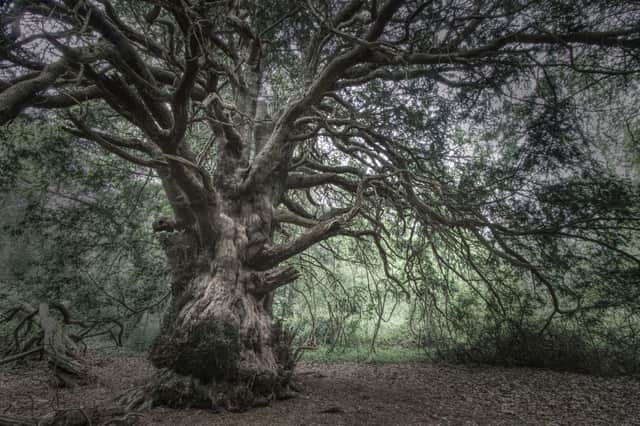
Who or what lies beneath Kingley Vale? A special place of Bronze Age burial mounds and Iron Age camps, tales of hauntings in the dark and silent grove of ancient yews will come as no surprise to those who know this spot. Stories tell of the Kings’ Graves or Devil’s Humps as the tombs of Viking leaders buried in 894, with the yews marking the battlefield site, stained red with the blood of dead warriors. Legend has it that the woods are haunted by these Vikings, while one story suggests that the gnarled trees transform into human forms at moonlight.
Racton Ruin
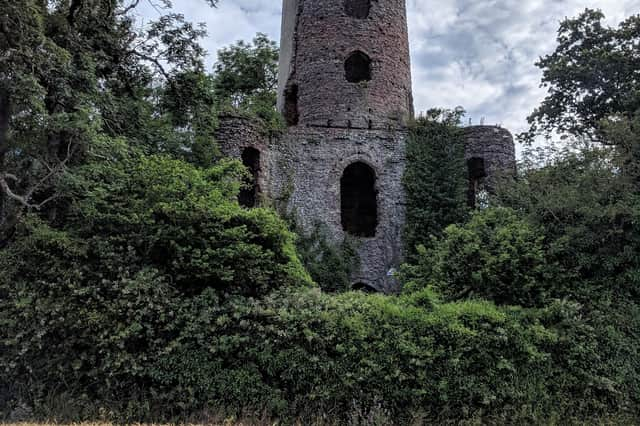
Completed in the 1770s, and arguably one of the “spookiest” places in Sussex, there have been reports of paranormal activity at the isolated folly, including bricks being thrown from the top of the tower not far from Stansted Park. According to local legend, there is a “ghost tractor” in the fields that comes right up to you then disappears. Visitors to the site should remember Racton Monument is a privately-owned property and visitors should stick to the public bridleway.
Chanctonbury Ring
This popular spot is reputed to be one of the most haunted locations on the South Downs. The beech trees that circle the ring were first planted in 1760. But long before it was the site of Bronze Age burials, Iron Age forts and a Roman temple. According to local stories, walking widdershins (anti clockwise) seven times round the ring will summon the Devil, ready to offer you a bowl of milk, soup or porridge in exchange for your soul.
Upwaltham
Ol’ Sary Weaver lived at Upwaltham and was a village wise woman in the 1800s. Local lore tells of her being a witch who could turn herself into a hare. According to the legend, two country workers were resting under a hedge and when they saw a hare bounding along they had their suspicions it was actually an old woman from the village. A stone was thrown at the hare’s leg and the creature let out a screech. That night Ol’ Sary Weaver was seen in the village hobbling to her cottage, struggling with the same leg.
Devil’s Dyke
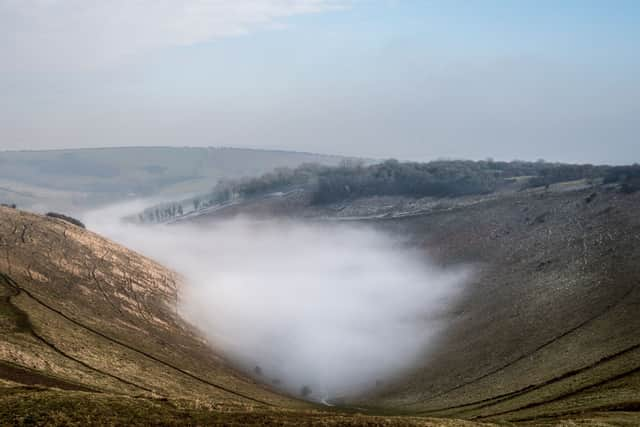
According to local legend, the devil decided to stop the Christian conversion of Sussex by digging through the Downs, letting in the sea and drowning them all. Clods of earth thrown up by his digging formed Chanctonbury, Cissbury, Rackham Hill and Mount Caburn. An old lady saw him, lit a candle behind a sieve and knocked her rooster awake. The devil thought the sun was rising and ran away, throwing the Goldstone into Hove on the way. One more clod fell from his hoof and became the Isle of Wight, or perhaps he landed so hard in Surrey he formed the Devil’s Punch Bowl!
Mount Caburn
A giant called Gil is said to have walked the slopes of the hill, hurling his hammer from the summit. A nearby barrow that once stood on the site of the chalk quarry near Glynde railway crossing, was called ‘Gil’s Grave’. Other places bearing the giants name include Gil’s Ridge near Crowborough and Gil’s Lap in Ashdown Forest. There are other stories of a silver coffin and a knight in golden armour at Mount Caburn.
The Long Man of Wilmington
There are many theories about the age and history of the Long Man – from a Prehistoric fertility symbol to a 4th century Roman emperor. One local legend claims that the Long Man of Wilmington is a memorial outlining the figure of a giant from Windover Hill who fell and broke his neck. Another talks of a fight between the Long Man of Wilmington and another giant from Firle Beacon, which ended in the death of the tallest man to have ever lived in England.
For more details about the South Downs National Park visit www.southdowns.gov.uk