
Coldplay's Parachutes at 25: How did the earnest pub favourites become one of the UK's biggest groups?

From Starfish to stadiums: how Coldplay went from humble local heroes to global superstars
- They are one of the United Kingdom’s biggest music exports, with a litany of awards and number one hits to their name.
- Pretty good going for a band that was torn between calling themselves Pectoralz or Starfish.
- As their debut record, Parachutes, turns 25 this year and ahead of their upcoming London dates, here’s how Coldplay went from underdogs to undeniable success.
This week sees one of the UK’s biggest musical successes make their long-awaited return to London, as Coldplay embark on a series of shows at Wembley Stadium starting later today (August 26).
It’s a homecoming of sorts, owing to when the band first met as a group of students in the capital way back in 1996; since those first baby steps as a group, the band have gone on to earn a staggering list of accolades.
Seven Grammy Awards from 36 nominations, including major wins for Record of the Year and Song of the Year, and an incredible nine BRIT Awards, making them one of the most decorated artists in the awards' history.
Beyond the major awards, they have collected numerous other honours, including 7 MTV Video Music Awards and 5 Billboard Music Awards, a testament to their global appeal and their commercial success. With over 100 million albums and singles sold worldwide, they have cemented their status as one of the best-selling music artists of all time.
Not bad for a band that got their name after another local act didn’t like it themselves - and to cap things off, 2025 also happens to be the 25 year anniversary of the album that cemented the group as ones to watch at the time: Parachutes.
So ahead of the start of Coldplay’s residency at Wembley Stadium, let’s take a look back at how an earnest band once named after a crustacean became one of the UK’s biggest music exports."
Early years - Pectoralz and Starfish
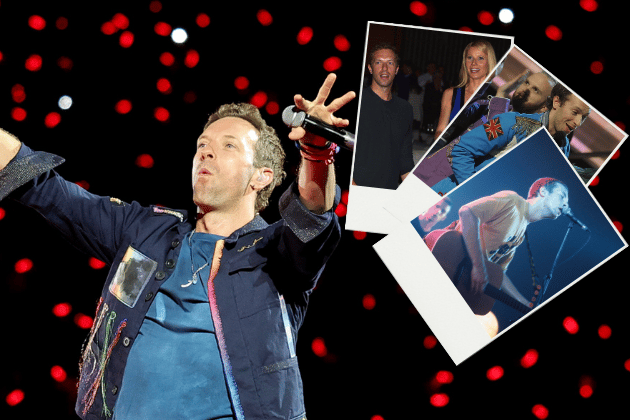

Before they were selling out stadiums around the world, the four members of Coldplay were simply a group of university friends trying to find their sound—and their name.
The story of Coldplay begins in 1996, when Chris Martin and Jonny Buckland first met at University College London. They started writing songs together and initially called themselves Pectoralz.
That line-up expanded when they were joined by Guy Berryman, and soon after, they changed their name to Starfish—a name that Chris Martin would good-naturedly cringe at years later during a 2016 Carpool Karaoke episode with James Corden.
While playing small gigs around London's pub circuit, the band was slowly building a catalogue of songs that would eventually form the basis of their early EPs (like the now incredibly valuable Safety EP from 1998).
It wasn't until a friend, Tim Crompton, offered them the name Coldplay. So the story goes, Crompton had his own band and was using the name, which he had taken from a book of poetry called "Child's Reflections, Cold Play."
When his band decided they no longer liked the name, he offered it to Chris Martin's group. The rest, as they say, is history, and it was with this new name that they finally started to get noticed, setting the stage for the breakthrough that was just around the corner.
What did a Coldplay set look like when they first started?
According to Setlist.FM, during their first show as a four-piece at The Laurel Tree in London on January 16, 1998, the band—then still known as Starfish—performed the following set:
- If All Else Fails
- So Sad
- Don't Panic
- Vitamins
- High Speed
- Ode to Deodorant
Encore:
- So Sad
The Parachutes era - ‘Yellow’ and mainstream success
By the turn of the millennium, the newly christened Coldplay had signed with Parlophone Records, and it was their debut album, Parachutes, that would be their first major turning point.
Released in July 2000, the album was a complete departure from the bombastic sounds of Britpop that had dominated the decade. It was melancholic, gentle, and deeply melodic, with a "woozy, sad" sound that many found to be a breath of fresh air. It was a mature and assured debut from a band that still felt like they were finding their way.
But it was one specific song that changed everything.
The single ‘Yellow’—written in a moment of frustration during a recording session in Wales—became their breakthrough hit. As Chris Martin has previously stated, the song was never meant to be a single, but a sense of hope and devotion made it feel special.
It’s simple, soaring chorus and raw, emotional vocals proved that a stripped-back, piano and guitar-driven song could still conquer the charts.
The success was almost immediate: ‘Yellow’ entered the UK charts at number four, giving them their first top-five hit. The album, propelled by this newfound fame, debuted at number one on the UK Albums Chart and would go on to sell millions of copies worldwide. Parachutes was hailed as a masterpiece by critics and would eventually win the Grammy Award for Best Alternative Music Album.
The band was no longer just a pub favourite; they were now a global sensation.
What were Coldplay performing around this era?
Though they had performed at the festival previously, Glastonbury 2000 was a turning point for the band, as their step up to the Other Stage came weeks before Parachutes was released, and their performance was propelled by heavy rotation of both ‘Yellow’ and ‘Trouble’ on radio and television at the time.
According to Setlist.FM, the band performed the following set during this milestone
- Spies
- Don't Panic
- High Speed
- Shiver
- Trouble
- Yellow
- Everything's Not Lost
- You Only Live Twice (Nancy Sinatra cover)
The shift to arena-sized sounds: A Rush of Blood to the Head and X&Y
While Parachutes gave Coldplay an international fanbase, it was their next two albums that truly laid the groundwork for their stadium status.
The shift was made clear on their second album, 2002’s A Rush of Blood to the Head, which saw the band move beyond the gentle introspection of their debut. The quiet intimacy was replaced with a more expansive, guitar-driven sound. Tracks like the soaring ‘In My Place,’ the haunting ‘The Scientist,’ and the Grammy-winning ‘Clocks’ were designed for big spaces and became immediate festival anthems.
Their live shows began to evolve accordingly, too; Chris Martin’s famously frenetic stage presence, coupled with the band’s increasingly powerful sound, made their concerts a communal experience.
They were no longer a small band; they were a group ready to fill arenas. This was solidified with the release of their third album, X&Y, in 2005, which spawned hits like ‘Speed of Sound’ and further expanded their sound. The album was the best-selling of 2005 worldwide and cemented their status as a major global act.
This period was also marked by a string of critical accolades: A Rush of Blood to the Head won the Grammy for Best Alternative Music Album in 2003, and their Glastonbury Festival headline performance in 2005 cemented their place as a live phenomenon.
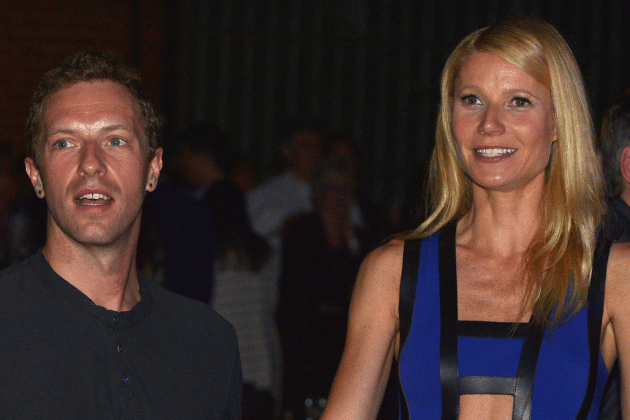
However, with this new level of fame came an intense new level of scrutiny; in a move that made them a tabloid fixture, Chris Martin began a relationship with Hollywood actress Gwyneth Paltrow in 2002, with the couple marrying a year later. Suddenly, the famously private frontman was a paparazzi target, a stark contrast to the band's humble beginnings.
Speaking about this period of time for the band in the documentary Coldplay: A Head Full of Dreams, Martin recalls: “The first few years of being famous were the best years of my life, but it was just so intense. I was getting chased by the paparazzi, and people were writing about my private life all the time. It was a complete nightmare."
This new tabloid presence was the price of mainstream success, adding a layer of intense public pressure and fame that the band had to navigate daily.
What did Coldplay perform at Glastonbury 2005?
Credit: Setlist.FM
- Square One
- Politik
- Yellow
- God Put a Smile Upon Your Face
- Speed of Sound
- Low
- Warning Sign
- Everything's Not Lost
- White Shadows
- The Scientist
- Til Kingdom Come
- Don't Panic
- Clocks
- Swallowed in the Sea
Encore:
- Can't Get You Out of My Head (Kylie Minogue cover)
- In My Place
- Fix You
The Stadium Takeover: Coldplay’s reinvention under Brian Eno
The true turning point in Coldplay’s career—the moment they went from a very big band to a global institution—came with Viva la Vida or Death and All His Friends in 2008.
The album, produced by legendary artist and producer Brian Eno, was a complete departure. He pushed the band to embrace grander, more experimental flourishes, moving away from their guitar-driven sound towards a more orchestral and layered sonic landscape.
Coldplay, feeling a creative rut after the intense pressure of making X&Y, approached Eno for advice on who to work with. He famously replied, "Me."
What Eno brought to the table was a fresh, challenging approach. He encouraged the band to play together live in the studio, a practice they had grown unaccustomed to, to recapture the raw energy of their early days. He also pushed them to incorporate new sounds and textures, from strings to world music influences, giving the album a grand, cinematic quality.
Eno's influence was so profound that it wasn't always an easy process. He once famously (and temporarily) kicked Chris Martin out of the studio to give the other band members more creative freedom.
Martin later reflected on this in an interview with Q Magazine in October 2008, saying: "There was a time when Eno kicked me out of the band for a few weeks to get everybody else's confidence up. At that time, I could be quite strong-minded, so he taught us a bit more flexibility and to let everybody get to the end of their idea before judgment is passed."
The result was a triumphant record that redefined their artistry. The title track, ‘Viva la Vida,’ became a global phenomenon and their first UK and US number one single. It was a song built for stadiums, a euphoric singalong that transcended genres and felt less like a rock song and more like a celebratory anthem.
Superstar Collaborations, Music of the Spheres, and London 2025
After the monumental success of Viva la Vida, Coldplay fully embraced a more pop-infused and globally collaborative sound, a final step in their evolution from a rock band to a global spectacle - and one that would lead to many more huge collaborations with some of the biggest (fellow) names in the industry.
Their next album, 2011’s Mylo Xyloto, saw them work with global pop superstar Rihanna on the hit ‘Princess of China,’ a collaboration that introduced their sound to an even wider audience. This era also saw the band fully embrace a vivid, theatrical live show, which introduced the now-iconic light-up wristbands that would become a staple of every subsequent tour.
This trend of working with music's biggest names only grew. The band teamed up with the electronic duo The Chainsmokers for ‘Something Just Like This’ in 2017, a dance-pop crossover hit that became a global phenomenon.
But the most significant collaboration came on their ninth studio album, Music of the Spheres in 2021.
An ambitious concept album, it was centred on a fictional planetary system and featured collaborations with global titans like BTS on the record-breaking ‘My Universe,’ and Selena Gomez on ‘Let Somebody Go.’
The accompanying Music of the Spheres world tour has been a testament to their enduring power. The shows are a multi-sensory spectacle of light, sound, and communal joy, turning their concerts into an intergalactic party with confetti, lasers, and fireworks. It has become one of the highest-grossing tours of all time, proving that their ability to fill stadiums has only grown with time.
And in 2025, as Parachutes turns 25, Coldplay will culminate this incredible journey with a ten-night residency at London's Wembley Stadium.
It's a fitting return to the city where they first met as university students.
Are there any tickets left to see Coldplay in London?
There are a select number of tickets left to see Coldplay during their residency in London over the next fortnight.
For more details and to pick up a last-minute ticket, head on over to Ticketmaster at your earliest convenience.

Florence + The Machine have announced their Everybody Scream Tour 2026, with huge arena shows lined up across the UK including London’s O2, Manchester Co-op Live, and Glasgow’s OVO Hydro. Fans can register and prepare now via Ticketmaster 🎫 ahead of presales opening on 3 September and general on-sale from 5 September.
For those wanting to take the experience up a notch, Seat Unique 💫 offers exclusive VIP hospitality packages. Expect premium seats, luxury dining, lounge access and five-star treatment while watching Florence Welch deliver her spellbinding live set.
With demand expected to be sky-high, it pays to be ready – secure your place as soon as tickets go live.
👉 Check Ticketmaster for presale & on-sale dates or explore VIP with Seat Unique 🎟️✨