
Low's Alan Sparhawk talks family pride and new album With Trampled by Turtles as he prepares to head to Portsmouth's Wedgewood Rooms

As a baby Hollis Sparhawk made her vocal debut – of sorts – on the song In Metal, while being held by her mum Mimi Parker.
Her delighted squeaks can be heard in the mix on the hugely acclaimed 2001 album Things We Lost in The Fire by her parents’ band Low.
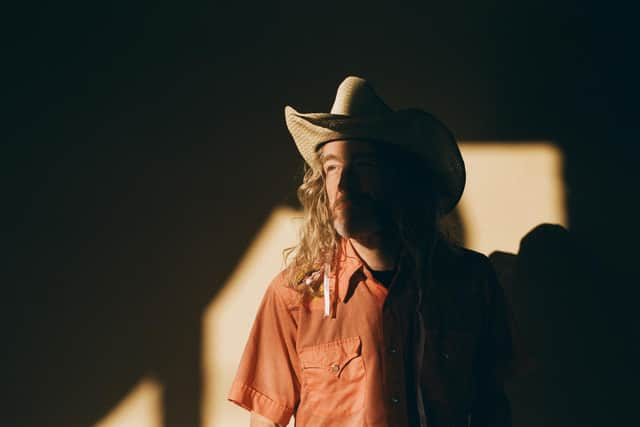

However, Mimi died of cancer in 2022, bringing Low to an abrupt end.
But Alan Sparhawk, Parker’s partner in life and the band, has continued making music, and a grown-up Hollis, now an accomplished musician in her own right, features on his new single, the achingly beautiful Not Broken.
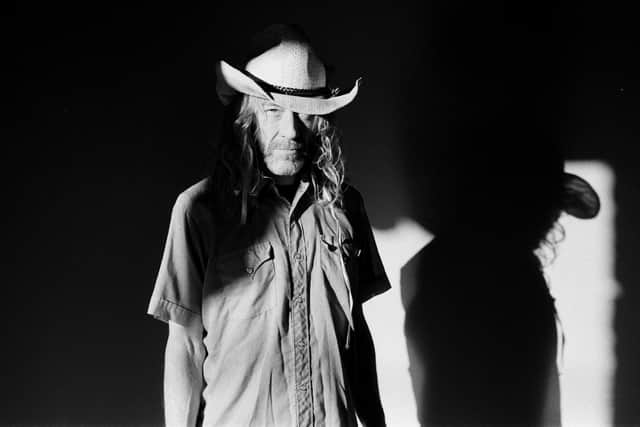
It is a taster of Sparhawk’s forthcoming album With Trampled By Turtles, and it is literally that – Sparhawk working with the roots/bluegrass band, and long-term friends, Trampled by Turtles from his hometown of Duluth in Minnesota.
While Low’s early works in the ’90s were labelled ‘slowcore’ for their minimal and hushed arrangements, by the time of what became their final album, Hey What, they were dabbling in electronica and distortion.
Sparhawk's 2024 solo album, White Roses, My God, pushed things even further – featuring a series of electronic improvisations.
The new album sees him return to a more ‘traditional’, rootsy sound.
“Trampled by Turtles are old friends of ours, and we've done stuff with them over the years,” explains Sparhawk. “There's always been kind of a little half conversation going on, you know, we should do something together someday, or different ideas have come up. But this just happened to be good timing for everybody.
"I was still in the process of finishing mixing the White Roses, My God album when that session and the opportunity to go play with them came up.
“By then I had a couple of songs I could bring to that situation, and a couple of old songs that I thought would be interesting to try with them.”
Some of the tracks date back to Low, but didn’t work out for the band.
And as Alan recalls, the music flowed swiftly in the studio.
“It came together pretty quickly, I wasn't necessarily thinking that I'd get a record out of it, but we ended up doing a lot more material than we anticipated – it started looking more like an actual record.
"It was just a couple of afternoons in the studio and those guys work really quick. It was just us standing in a circle, get a take or two and move on to the next song.”
Aside from a few overdubs and adding strings on a couple of tracks, that was largely it.
“I had worked with those guys in the studio before so I knew that was kind of their mode, the way they were used to working. It's pretty quick, it's spontaneous. There's not a lot of discussion about what needs to happen or not happen, we just had an understanding.”
They also reworked a couple of tracks from White Roses, My God, which sound radically different.
“The White Roses, My God stuff was all improvised. That was a recording of it as it came out of me, so the songs were written in that more spontaneous process.
"Then after the record was done and mixing it, it just kind of became obvious, especially a song like Heaven, it seemed a really obvious crossover. It comes across as a complete song, whereas some of the other ones are a little more random and chaotic.”
Alan admits there was some “intentionality” in that process: “Let's see if we could do versions of these songs from this very different record in this context?
“Part of that was trying to create a little continuity, trying to make it a little bit of a thread that the listener, a fan, could follow.
"Maybe a little bit of it is proving, you think these sound so different? Well, you take a song, you put it in either context, it's still valid, there's a little bit of that. But mostly they just jumped out as good songs and we tried them out on acoustic instruments that sounded cool.”
Even though it has been some years since his own releases have featured that more acoustic-based sound, Alan adds: "It was worth pausing and wondering, wow, what's going on here? I wonder if I can do this?
“Part of me was thinking that, yeah, I can totally do this. And part of me was wondering if I could do it.
“I mean, you're never far away from sitting in the basement with a guitar and strumming and working on songs, and I was playing shows off and on here and there and playing music with my son and doing funk tunes and stuff.
“The grounding, the tradition, ‘here we are with just our instruments, let's play a song’ – it's always there, even though I was dabbling in doing more electronic stuff.
"It wasn't that much of a jump (to go back to it), but I was definitely conscious at the time, like, ‘wow, imagine finishing this record (White Roses, My God) and now I'm standing in the room with a mandolin and banjo.”
Although Low were initially given with that ‘slowcore’ tag, if you listen to their back catalogue in order starting with 1994’s I Could Live in Hope, there’s a great deal of evolution in their sound over the course of the 13 albums.
Alan explains how he and Mimi approached making music as Low: "Even though Low could be perceived as fairly stringent and specific about how we'd present things, meanwhile, we were trying other things too.
“I remember it kind of dawning on me a few years back that, ‘oh, I guess we could do just about anything we wanted to’. It's still going to sound like us because it's our voices and it's our approach to song structure, phrasing and stuff.
“In many ways, we were kind of leading on that assumption. The last few Low records were made thinking we could go as far out, and we could do whatever we want.
“We could make music that's never been heard before. And it's still going to sound like us because it's our voices.
“It was almost 30 years. I don't think there's a single person out there, if they've been self-aware about what they've been doing, and what their preferences are for 30 years, I guarantee it's going to evolve.
"It's still you and there's still certain rules and aesthetics that are always going to be there. We were given the opportunity and the freedom to evolve naturally and learn new things as we would make new records.
“We were lucky to we're lucky to work with a long line of people who are inspiring and people who challenged us to to do better and to expand as a band.
“We were given the opportunity and the room to to feel things out and start from one place and end up in another.”
Since Mimi’s passing Sparhawk has worked on a variety of projects, not least of all with his children. He also plays in a funk band, DERECHO Rhythm Section, with son Cyrus. Imagining 1995-vintage Sparhawk play Funkadelic would undoubtedly blow the minds of many of his fans from those days.
"Both the kids have ended up finding their own way into music and their own unique take, getting their own unique satisfaction from it. It's been really fun to watch.
"Hollis sings with a really beautiful voice, there’s a natural talent to her. She writes a lot of songs and has a band with her partner.
"And my son Cyrus is a very smart musician, he’s constantly coming up with things that really blow my mind. He was playing me some tracks the other night, stuff that he's been doing on (music-making kit) Ableton. I keep forgetting that he has his very sophisticated sense of harmonics.
“He puts parts together that are really, really original sounding. The way they play off each other is really pretty sophisticated.”
And regarding playing with the funk band, he says: "It's a good challenge.
"I had to really I had to really buckle down and learn a few Curtis Mayfield, Parliament, Funkadelic and Roy Ayers, stuff like that.
“It's a lot of fun, getting pushed and having that kind of motivation to really learn some of the tunes and techniques.”
Sparhawk is at his most animated when talking – with no little pride – about Hollis and Cyrus. After 30 years of making music with Mimi, it is understandable.
“It's a continuation, of course,” he says, “to be close family that you also make music with. Music adds another layer of depth, communication, a sort of untouchable language that you can share.”
Alan Sparhawk is at The Wedgewood Rooms, Southsea, on Friday, May 30, supported by Leah Sinead. Tickets £22.50. Go to wedgewood-rooms.co.uk.