
'Robotic, A genius with people, Loved head tennis, Didn't stand a chance': Neil Allen's honest opinion on his 17 Portsmouth bosses - Part 2

Last week, chief sports writer Neil Allen marked 1,000 games covering Pompey for The News - but what of the managers he worked with during that time?
Now here’s Part Two of his reflections on the 17 different Blues bosses he’s interviewed since November 2000., remembering their characters, their stories, those he liked, those he disliked.
Part Two, containing eight former Pompey managers in no particular order. Part One was published on Tuesday evening.
Kenny Jackett
Following the Welshman’s appointment in June 2017, a journalist at previous club Wolves told us we wouldn’t know any more about Kenny Jackett on the day he left, compared to the day he arrived. He was absolutely right.
Similarly, Jackett didn’t believe in forming relationships with the players, preferring to retain a certain distance and not be influenced by emotion or feelings when making crucial decisions.
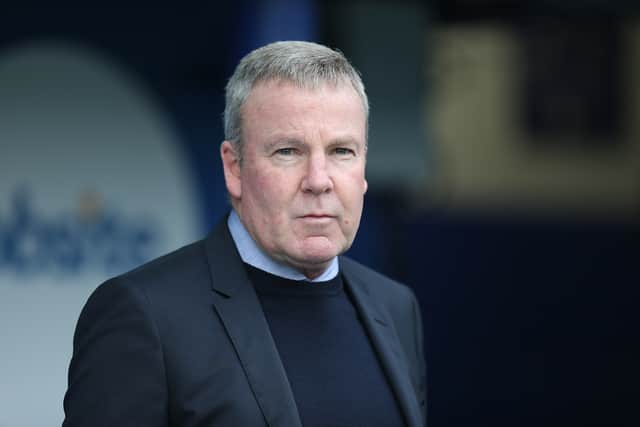

That epitomised his approach to the Pompey job. He was an absolute professional, fully focused on the job in hand, with no distractions. Robotic, yes, but his commitment to Portsmouth Football Club could never be questioned.
A former colleague of mine, Jeff Marshman, once conducted a Q&A with him for our Pompey pre-season magazine. When asked to name his favourite TV programme, Jackett replied ‘Monday Night Football’.
On Thursday press days, at 1pm on the dot he would emerge from his office to conduct media duties, politely answering every question, usually at length, and even calling in head physio Bobby Bacic on occasions to supply us with more in-depth injury news.
Then, once it was over, he returned straight to his office. No idle chit-chat, no talking off the record, no passing the time of day. It was a case of job done, goodbye.
Curiously for a manager, Jackett wouldn’t give out his mobile number. However, during Covid, with the 2019-20 season suspended, he would call The News and Radio Solent every week to give us an interview and keep supporters informed. So we had his number in the end.
Still, he didn’t need to do that, many managers wouldn’t have been so obliging to the local press, particularly in a period with no matches. To him, though, that was his job and should be carried out professionally at all times.
He did have a wry sense of humour, however, and loved his music being an Arctic Monkeys fan. He and assistant Joe Gallen would often go to music gigs together. Yet, around the football club, Kenny was no great drinker - and didn’t like his players partaking in alcohol.
On the pre-season trip to Fota Island, Cork, in July 2018, he refused the players’ pleas to be allowed to go to a bar and watch England’s World Cup quarter-final against Colombia. Instead he insisted they watched it at the clubhouse of the adjacent golf club - sober.
Regardless, several still had a drink. In fact, Danny Rose and Dion Donohue snuck out to a club with The News’ Will Rooney. I was their taxi driver, before leaving them to it. The following night, Gareth Evans and Christian Burgess escaped to attend an Alanis Morrisette concert.
Talking of golf, the venue had three courses, but bizarrely Pompey’s manager wouldn’t let any of his players use them, even on afternoons off.
Yet Jackett was an absolute gentleman and, two days following Pompey’s elimination against Oxford United in the League One play-off semi-finals in July 2020, he called kitman Kev McCormack at 9am to wish his wife, Sarah, well ahead of an operation for her bowel cancer. Class act.
Andy Awford
Iain McInnes once joked that a ‘golden bust’ should be constructed at Fratton Park in honour of Andy Awford following his heroics at the end of the 2013-14 season.
Nonetheless, the former Pompey chairman makes a valid point for it was the Hall of Famer’s elevation from the Academy to replace Richie Barker, assisted by Alan McLoughlin and Paul Hardyman, which kept the club in the Football League.
Two places off the League Two relegation zone with seven matches remaining, remarkably the caretaker boss kept the Blues up with three games to spare - rightly earning him the job on a permanent basis. He deserved it, I still maintain that, irrespective how it ended up.

However, he remains the only manager who has purposely given me yes/no answers in an interview - twice. On the second occasion, I walked out of the press conference held in Fratton Park’s media room as it was a waste of my time.
As Pompey boss, he largely preferred to choose the player we interviewed after a match, irrespective of the result. It was nothing new, Steve Cotterill did it on occasions, as did Paul Cook sporadically.
So when Ryan Taylor netted twice in the final eight minutes to secure a dramatic 3-2 triumph over Tranmere in February 2015, we were afterwards inexplicably given skipper Paul Robinson to talk to. My colleague Steve Wilson was understandably fuming, being on player duty.
In the aftermath of a 3-1 defeat at Morecambe in April 2015, a scheduled early-morning pre-match press conference ahead of a midweek trip to Stevenage was strangely put back by a few hours. We soon found out why.
Awfs had been dismissed and that afternoon McInnes sat down with the local media at the training ground for a round of interviews to explain his - and the club board’s - reasoning.
Bizarrely, he then decided to ask each of us in turn whether we thought it was the correct decision. Of the six journalists present, just one disagreed.
Regardless, Pompey came within seven matches of dropping into non-league football. Andy Awford ensured that didn’t happen.
Tony Adams
His time as Pompey boss was defined by conceding late goals, surrendering leads, the AC Milan agony, and a lot of bad luck, particularly off the pitch, with the club unravelling financially.
However, Tony Adams was an absolute pleasure to deal with. A great player and a great man - albeit not a great manager. He was vibrant, animated, talked freely and wonderful company, quite the contrast to his replacement, Paul Hart.
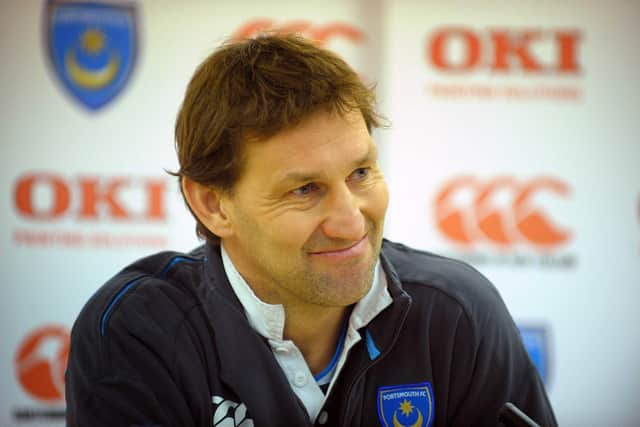
I was fortunate that my dad was club secretary at Wycombe Wanderers during Adams’ time there in his first managerial spell. To this day, he still receives a Christmas card from the former Arsenal man. They always have a theme, with each member of the Adams family photoshopped into a familiar scene. Last year was based on recent Disney+ series Rivals.
Anyhow, that connection undoubtedly helped smooth the way when dealing with Adams, who was always generous with his time with me and we spoke off the record over the phone on occasions.
With Sacha Gaydamak turning off the finances, Pompey’s January 2009 transfer focus switched from Edin Dzeko and Yaya Toure to Angelos Basinas and Theofanis Gekas. Naturally, Adams was alarmed.
I urged him to go public, to explain the situation at his next pre-match press conference so the fans realised the conditions he was now operating under. This was his reputation being impacted - and he agreed.
The only issue was I was scheduled to be away that day. Not a problem, The News would obviously still be represented, so one of my colleagues would instead ask the question and Adams could address the change of circumstances which was impacting the club. Everything was arranged.
Except he didn’t go through with it and instead remained faithful to the club line. Not a chance Harry Redknapp would have kept quiet in that scenario.
Admittedly, Adams’ results were not good enough as Pompey boss, but I felt sorry for him. There was too much politics going on in the background during his time as manager and didn’t really stand much of a chance.
Alain Perrin
Alain Perrin was the Pompey manager I dealt with the least, albeit through no fault of the Frenchman. I rarely covered a match during his seven-and-a-half months in charge, instead I was reporting on Southampton and Hampshire cricket.
On the fleeting occasions our paths crossed, his English was limited, but, by all accounts, he was perfectly approachable and extremely polite to the local media. Our chief sports writer Mark Storey and photographer Steve Reid were also allowed to cover the Blues on their pre-season tour to France in the summer of 2005.
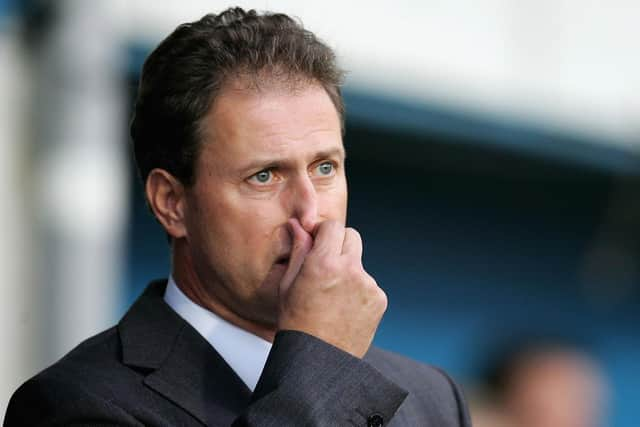
What sticks in my mind most about the Perrin era - other than a large number of established players despising him - was how his immediate response to being sacked was playing a round of golf by himself at Great Salterns, even stopping to chat to fellow course users.
Guy Whittingham
Following Michael Appleton’s departure for Blackpool, along with his assistant Ashley Westwood, Guy Whittingham stepped forward to serve as caretaker - and remained so for a staggering 29 matches.
With the Blues in administration, within five days of taking over, he was instructed to slash £1m off the wage bill, with leading scorer and top earner Izale McLeod leading the way.
Considering the club’s precarious financial state meant players were on month-to-month deals, invariably it was a simple process, resulting in a staggering 54 players used over the course of that League One relegation season.

Whittingham had a thankless task, yet remarkably always conducted himself with great dignity, remaining even-tempered and respectful throughout when dealing with the press. Simply a class act.
When Pompey ended their unwanted club record of 23 matches without a win on an emotional afternoon at Crewe in March 2013, the caretaker boss was given a round of applause by all the local media when he emerged for post-match duties.
It’s something I have never seen before or since, yet indicative of our immense respect for Whittingham - and the job he was doing in impossible circumstances.
The players loved him too, you don’t get many straighter than Corporal Punishment, with Ricardo Rocha and Johnny Ertl full of admiration, regardless of the results that season.
Following the High Court victory, with Pompey saved from liquidation, it seemed natural to appoint him permanently as manager, particularly following a late-season upturn in results.
Then, in November 2013, having just performed Monday afternoon pre-match press duties ahead of a trip to Southend, Guy was summoned to Iain McInnes’ Warsash home, unaware what was waiting for him.
He was dismissed with Pompey occupying a disappointing 18th place in League Two - and his manager column still appeared in the club programme the following night.
Harry Redknapp
He presided over Pompey for two wonderful spells, characterised by fantastic football, big-name players, the Premier League and, of course, success. Great times and my favourite manager.
Some may have never forgiven him following his Southampton treachery, yet he remains the Blues’ best boss since the days of Bob Jackson more than 70 years ago.
With the club having resurrected the Hall of Fame of late and keen to induct non-players, Redknapp has to be included. They really were glorious times.

We’re all well aware of his flaws - and his managerial strengths - yet Redknapp is one of those who is a genius with people. He can walk into a room and charm anyone, with an effortless ease which can only be admired.
From my own experiences, Fred Dinenage and Chris Kamara are of the same ilk. It is quite some talent. It’s never about them, they begin every conversation by enquiring about the person they are addressing.
He can be combustible, however, volatile even. I recall future talkSPORT chief football correspondent Alex Crook being torn to shreds after writing an article in a national newspaper suggesting Redknapp’s job was under threat ahead of Manchester City’s visit in March 2006. Apparently it was nonsense.
As luck would have it, Pedro Mendes intervened, thereby sparking the Great Escape. Years later, Harry admitted in Played Up Pompey Four that John Gregory had been lined up as his replacement had results not improved.
It has been 16-and-a-half years since he left Pompey for Spurs, but whenever I call him on occasions, he still begins every conversation by asking how my team (Aston Villa) are faring. Although he did try to use it against me once.
In September 2008, following a 6-0 hammering at Manchester City, while waiting to speak to Redknapp post-match, I saw Sacha Gaydamak enter the away dressing room. Now Pompey’s owner never attended away fixtures, although with City about to be taken over by the Abu Dhabi United Group, perhaps he sensed a networking opportunity.
Still, naturally I reported how Gaydamak had gone in to see the players afterwards. Initially, the club’s director of communications Gary Double angrily denied it out of habit. Except it was true, with plenty of witnesses.
However, I had made one crucial error. I’d written that the owner had ‘stormed’ into the dressing room. That one word implied anger from Gaydamak, when, in truth, I couldn’t prove his state of mind as I wasn’t present in the room. Life lesson, never over-egg the pudding!
In turn, Redknapp was fuming at suggestions the owner wasn’t happy and ranted down the phone at me using plenty of industrial language. I deserved it, my fault entirely. You live and learn.
Still, a couple of days later, Pompey had a League Cup match against Chelsea, with the pre-match press conference taking place at the training ground. We waited outside the room while Sky Sports went first, then it was the written press’ turn.
As ever following an argument, you must face the potential repercussions head on, so I made sure I sat in the front row, right in front of Redknapp, and asked the first question - and he was fine. Absolutely fine. No backlash, no awkwardness, thankfully he had calmed down and moved on.
I returned to the News Centre, but then started to receive a number of puzzling messages, asking what had I done to upset Harry that day. It soon became clear. Unbeknown to me, during the Sky Sports interview which took place before us, Redknapp intimated that I had attempted to destabilise the club because I am a Villa fan. This was his revenge.
Not that it bothered me, I am a Villa fan and have never hidden that fact. So is my son. Still, I deserved it. And if it helped appease Redknapp, then so be it.
Michael Appleton
Following the appointment of a new manager, I’ve always found it beneficial to arrange a friendly, off-the-record chat for us to discuss how best we can help each other for a fruitful relationship.
So, 14 days into his job, I arranged to meet Michael Appleton at the Marriott Hotel, where he was staying. However, just before leaving my house, news had broken that Pompey chairman Vladimir Antonov had been arrested in connection with a multi-million pound bank fraud.
Talk about being the bearer of bad news - Appleton didn’t have a clue. Thankfully, he didn’t shoot the messenger, but it was clear that owners Convers Sports Initiatives were in huge trouble. Later our fears were confirmed when Pompey were plunged into the financial mire.
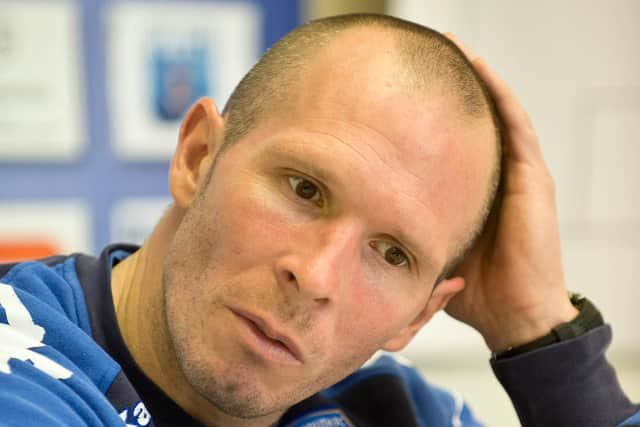
Appleton was aged 35, in his first managerial job, with the Blues aiming for a Premier League return. He had also been promised a new stadium and a new training ground. Nothing materialised.
The former Manchester United man was hugely likeable, down to earth, approachable and possessed a steely nature to match his imposed stature. Ultimately, he carried himself with great dignity, which the fans appreciated.
Of all my Pompey managers, Appleton was handed the worst hand. The club was in administration, David Lampitt was his chief executive, he had to deal with Balram Chainrai, and there was a registration embargo in place.
I was allowed to accompany the club on their 10-day pre-season tour to Benahavis, Marbella, in July 2011, albeit with Pompey’s squad consisting of Academy players and triallists, with the first-team left at home to be sold off.
Appleton and his staff couldn’t have been any more accommodating, letting me eat with them, travel with them, and even join in with their sports quiz one evening, which also involved the players.
Perhaps they spotted my potential, as my team, which included goalkeeping coach John Keeley, won comfortably. One of the rounds was based on Pictionary and I was put forward to represent our group on the basis I was ‘a journalist’.
They must have regretted that, when, having been handed a card saying Lionel Messi, I had the brainwave of drawing Mr Messy - the distinctive Mr Man. Nobody got it.
There was also an X-Factor style show, hosted by physio Steve Allen in drag, which involved all the youngsters performing a song. The talented Adam Webster won ahead of a mankini-clad Dan Butler. I wonder what became of that Webster lad?
Paul Cook
There’s a popular misconception that Paul Cook was awful to deal with for the local media, probably influenced by several terse post-match interviews with Radio Solent. Yet, in reality, he was superb.
Granted, he could be difficult immediately following a game. Cook didn’t like speaking when emotional, still gripped by the passion of a match, so poor Andy Moon really did have some testing exchanges. However, by the time he came to the written press, he largely had rediscovered his equilibrium.
In contrast, Thursday pre-match press conferences were genuinely an absolute delight. In a far more relaxed atmosphere, he was a pleasure to deal with - and loved hanging around afterwards for an off-the-record chat.
Cook created an environment which was fun. While addressing the press on Thursdays, players and staff competed in head tennis matches outside the office, watched by the majority of their team-mates.
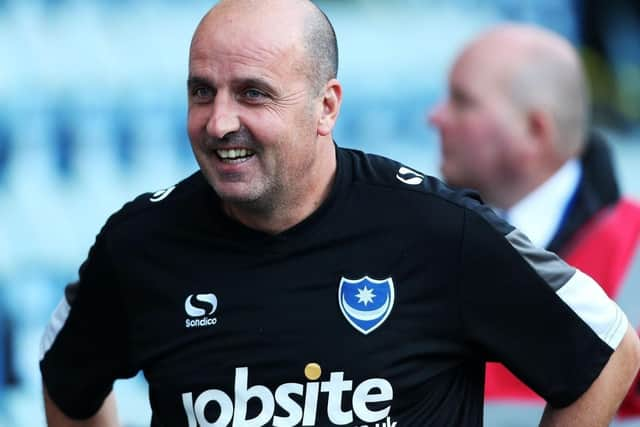
The laughter and cheering formed the backdrop to many an interview and, on occasions, when finished with us, Cook would rush outside to join them. He loved a bit of head tennis.
Sometimes, he would use objects on the table such as mugs and coasters to explain tactics. On other occasions, he’d bark at somebody to bring him a laptop to walk us through video clips.
Amid it all, players would dip in and out of the office to sign a register, effectively clocking in and clocking out. Failure to follow that requirement would see them fined. Of course, for us, it was very handy - a quick glance and you knew who had trained that day.
Sometimes, we were warned he was absolutely fuming with an article in The News, yet we’d turn up to a press conference to be greeted by a big grin and it was never mentioned. Cook loved holding court and you always left with a smile.
He often told me to pop into the training ground for a chat or watch them train whenever I liked, his door was always open. I didn’t like to do that, mind I always felt a little uncomfortable randomly dropping in - I still do. This is their domain, they don’t want me, an intruder, rolling up.
I did it one time, however, and he welcomed me in while holding a cup of tea, he always had a cup of tea in his hand. Nobody was about and, while chatting, a random lad came up to the office and, in broken English, asked whether he could train with Pompey one time.
Cook beamed, greeted him warmly and invited him to join in with the first-team the following day. He hadn’t a clue who this player was - or his circumstances - and afterwards turned to me and said: ‘Everyone deserves the chance to play football’.
The pre-season ‘Stag do’ to Dublin in the summer of 2016 was remarkable, with the work hard, play hard mantra off the chart. He was keen for the players to mix socially to generate a strong team spirit - and it was fascinating to watch.
That League Two title-winning squad was a wonderful group, both in terms of talent and also human beings. David Forde was an intimidating man to interview, more than any player I have ever come across, he possessed a real air of menace, but it was a warm and friendly squad.
That was all down to Cook, the atmosphere he created, the camaraderie. He’d even go out drinking with Kyle Bennett, Gary Roberts and Enda Stevens most Sunday afternoons, usually around the Havant area.
Ahead of Pompey’s final match of the 2016-17 season, having already won promotion, the reserves had a Premier League Cup semi-final against Swansea’s under-23s at the Welsh club’s training ground.
While watching the Blues warm-up beforehand, with Cook offering a brutal critique on Curtis Main’s finishing, he broke off to declare: ‘We’ll win the title this weekend’. Not even the players thought they could, having approached the final game against Cheltenham in third spot, but the manager was adamant. He was right, of course.
Some three years after his Pompey departure, Cook returned with Ipswich in October 2021 and under pressure. Having left the team coach, there is video footage of him having a go at me over an article I had written.
The truth was, it wasn’t my article and it wasn’t even in The News - there are generally clues like bylines and website addresses to help identify those responsible. After a 4-0 success, unsurprisingly he was buoyant afterwards, so I approached and asked: ‘What was that all about?’.
He shook my hand, said he shouldn’t have left, stopped for a very friendly five-minute chat, before bounding off towards the team coach. Quite a character.