
‘Portsmouth told me I was staying, releasing me was worst day of my life': the dark side of the football dream
All Harry Kavanagh had ever wanted to do was play for Pompey.
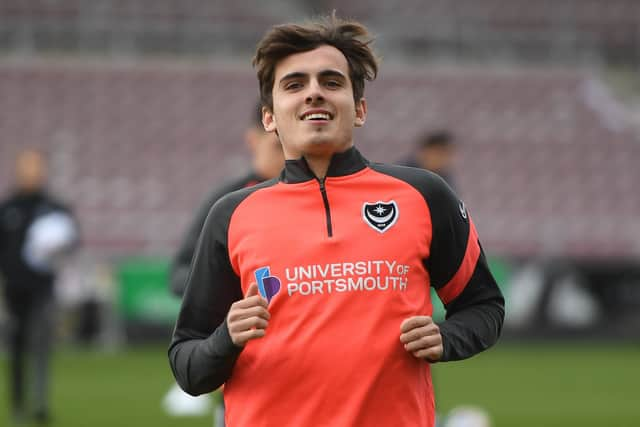
For as long as the man from Waterlooville can remember, his life had been focussed on fulfilling his aspirations of stepping out at Fratton Park with the star and crescent on his chest and a career representing the Blues at first-team level.
So when the club he loves promised a senior contract all of his dreams had come true, everything Kavanagh had spent his days working towards was becoming a reality.
Until it was brutally taken away, pulled from the academy skipper's grasp in heart-breaking and gut-wrenching fashion.
‘When I got released it was the worst day of my life, getting that news was the worst moment of my life,’ said Kavanagh, as he relived the traumatic experience of ending his 13-year Pompey association in 2021. ‘It came at a point where I didn’t expect that to happen for various reasons and after various conversations I had. There were indications around the club I would stay, and, for the people who gave me the indications, it was just as much a surprise for them when they had to give me the information.
‘I met up with Jon Slater (former Pompey head of education and welfare) recently who gave me the news, and we looked back on it all.

‘It was horrible going through that experience back then. I don’t think Jon actually said much at the meeting, but as soon as I sat down he started crying. I knew within five seconds of being in there what was happening, the words actually never came out and I could see they weren’t happy tears from Jon.
‘My dad was waiting for me in the car park all day. I just remember walking out of the hub and the first person I saw was big Kev (Pompey’s kitman) I just fell into his arms - it knocked me for six and I was devastated.
‘Because of the conversations that were going on we thought we were going to get contracts. With (former Pompey manager) Kenny Jackett, the discussions that were happening suggested he was giving me a year - especially with how hard it’d been with Covid. It wasn’t like we could go out and play games to prove ourselves.
‘Then when the Cowleys came in (after Jackett was sacked) something just seemed to change. That’s fine, but it was just the conversations we had were leading us down a different path to one we ended up going down.’
The jarring nature of Kavanagh’s release proved the catalyst for a descent into one of the most challenging periods of the 22-year-old’s life, one which sadly will be familiar to many of the thousands who pass through the academy system in English football each year.

The Pompey dream had been extinguished, replaced with a black hole where his club had offered a football framework for the defender for so long. Within weeks it wasn’t just Fratton hopes which had been dashed, as Kavanagh’s professional ambitions were extinguished in a period of mental torment.
‘The day I was released was tough and the weeks after were just as tough,’ Kavanagh reflected. ‘My family were everything for me in that period.
‘The biggest asset from my family on my journey was there was never any pressure, everything from the age of six to when I left at 19 was because I wanted to do it. My parents weren’t those ones on the sidelines screaming they just said whatever you do, do it to the best of your ability - and smile when you’re doing it.
‘When the decision was made that I was getting released, I decided that I didn’t want to pursue chasing the dream anymore. At that point, I was really struggling to find that passion within me, and I didn’t know what the journey looked like from there.
‘I went on trial at Derby. My agent lined me up for a 10-day trial there - I went there for two days and left.
‘I got in my car after the second day of training and just drove home. Mentally, I was gone but I knew I couldn’t stay there for 10 days, half-arse it and not give a good account of myself. My agent had lined up an amazing opportunity at a proper club and Wayne Rooney was the gaffer. I went with my missus and I told her on that second day: “I can’t do this anymore”.
‘I think people know when they know that it’s not there, it’s just having the bravery to make a decision: I had to make a clinical call at an important time. I remember telling my mum, dad and agent and I think they thought I was just having a funny five minutes. A lot had happened in a short time, so I could see why they’d think that - but I knew I was done.’
The anguish he experienced is far from particular to Kavanagh, with less than 0.5 per cent of those who enter professional academies at the age of nine going on to make a living from the game.
Around just 180 of the 1.5m players who take part in youth football in England will play the game at the highest level - meaning just 0.012 per cent will make it as a Premier League professional. These are just some of the figures behind the dark side of the football dream, as three-quarters of all academy players are released between the ages of 13 and 16.
The impact can be seen in the findings of a 2021 study, in which almost 90 per cent of footballers said they’d experienced depression or anxiety in the wake of their departures - and 72 per cent stating they felt they’d not been given enough support by their clubs.
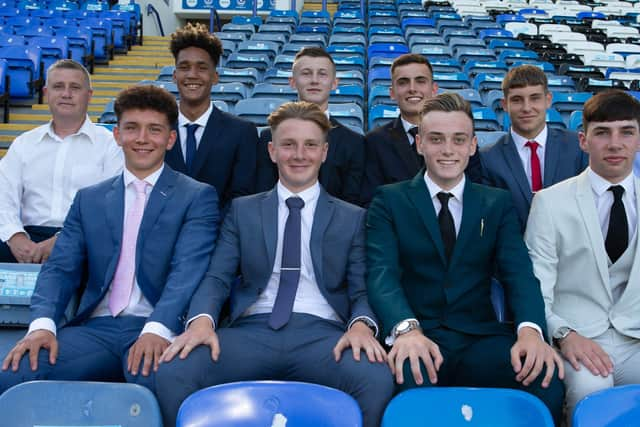
Last year saw Pompey released all of their 12 scholars, with Kavanagh’s own experiences of Fratton heartache providing him with a clear perspective on that process.
‘I don’t think there’s massive support in place for these lads getting released,’ Kavanagh affirmed. ‘A lot of the lads are Pompey boys - and when you’re a Pompey boy all you want to do is play for our club. When that opportunity is taken away it feels like your whole world has come crashing down on you.
‘What I would say though is it’s only one person’s opinion, and you shouldn’t let that person define you. There’s also still a lot of opportunities out there within football - and there’s also a lot of opportunities outside of football.
‘I’m a massive believer that if you want to do something, you should do it properly.
‘If you want to be a footballer give it everything, if you are going into something else like starting a business - don’t do it half-heartedly. When you get released it’s tough, it’s sour and it hurts but for those players their lives haven’t even started really. Everyone has different opinions on what makes you happy and gives you fulfillment.’

Out of the ashes of his professional football aspirations, Kavanagh’s story is one which offers hope for those who will once again feel their world is collapsing as clubs announce the fates of their scholars in the coming months. It’s also a tale of how such jarring crossroads moments which are decided by others, can be used as a powerful force for good.
After turning his back on pro football, signing for Southern League outfit Gosport and working in property development, Kavanagh last year linked up with the Silkworth Project, a not-for-profit organisation which provides support for those in recovery in Portsmouth. In partnership with local authorities, charities and recovery centres, Silkworth now has 80 people housed across 17 properties with plans to do the same in Gosport this year.
It’s a pathway Kavanagh could never have anticipated he would tread.
He added: ‘When I look at my life now I’m a much happier person than I was in the football environment. A lot has happened in those last few years, there’s a lot going on and I’m a lot happier.
‘I knew when I got released that I wanted to go into business and made that decision. I didn’t know what that looked like and I definitely didn’t think I was going to be running this type of business and in this industry. I love it, though. I love every day and there’s always something new. So no, I definitely didn’t see myself doing this but I love it.
‘Perhaps there’s some stress with the business but I like being in control of my own destiny. There’s no manager or chairman controlling whether I get a contract now.
‘In football you have managers holding a contract at the end of the year and deciding whether you are released or not. The football environment is tough, especially at League One and League Two level. You’re looking at one or two-year contracts there and there is a lot of ups and downs.
‘But now, for me, I’m in control of what I do and no one can really take that away from me.’

The Kavanagh of today can now reflect on his tumultuous football voyage with the perspective of some distance from his darkest moments, and the natural upbeat demeanour of a character driven to affect the scenarios he encounters positively.
His two tastes of senior football are not bitter reminders of what could’ve been but moments to be forever cherished and savoured, while the message couldn’t be starker to those thrown into the abyss of mental health struggles by academy rejection.
‘Making my debut against West Ham was the best day of my life’, smiled Kavanagh as he warmly and proudly recalled his Pompey bow. That was something I’d worked for it my whole life and my family are all Pompey through and through. I remember my grandad bringing The News around the next day with my interview. For me, it was all I’d ever wanted to do.
‘So If you’d told me at 18 I was now going to be playing part-time for Gosport and running businesses, I would’ve said: “no chance, I’m going to be a footballer”. Things happen though and it’s how you react, but those memories are there forever.
‘Everyone has their own happiness they have to search for in life.
‘I’d say to anyone who finds themselves in the same position as me, their dream isn’t over if they have enough ability and drive. And if not, there’s a lot of opportunities in life that are rewarding financially - but also in so many other aspects.
‘Football isn’t everything.’