
'I started below the bottom': Portsmouth owner Michael Eisner on Indiana Jones, Roger Rabbit, John Travolta and 50 glorious years in Hollywood

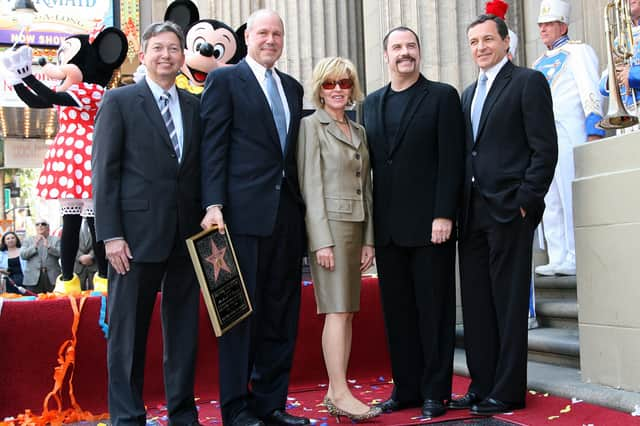
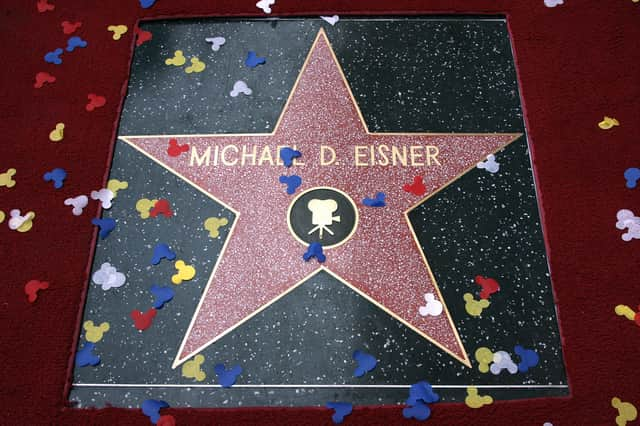
Michael Eisner’s star is located in front of the El Capitan Theatre, with Steve McQueen, Mark Hamill, Sissy Spacek and Penelope Cruz forming illustrious Los Angeles neighbours.
Disney’s former chief executive is an uncomfortable Walk of Fame presence, an honour he would have gladly rejected had his family not possessed the foresight to accept the invitation without consulting him.
Nonetheless, his name adorns the spot at 6834 Hollywood Boulevard, with long-time friend John Travolta paying tribute to ‘one of the most innovative and influential executives in the world of entertainment’ during a glittering April 2008 induction.
As Wrexham’s progressive owners, actors Ryan Reynolds and Rob McElhenney are credited with bringing Hollywood glamour to the English game - yet Pompey chairman Eisner was first.

‘The script for Raiders Of The Lost Ark was very well written, very exciting. It was the idea of a cliff hanger every 10 minutes, that I liked,’ Eisner told The News in a rare interview about his remarkable film and television career.
‘However, nobody in town wanted to do it because the opening scene with the boulder rolling would have cost a fortune. This was Steven Spielberg and George Lucas coming together on something very commercial, but each recently had films not as successful.
‘Steven had released 1941, which was fine but not up to the success of others, while George’s The Empire Strikes Back wasn’t as big as the first Star Wars - and both of these last films were expensive.
‘I met with them and said “This rolling boulder sounds like the most expensive film ever, how are we even going to afford it?”. So they gave me a tutorial.
‘Steven said: “That scene where they fly across the Pacific Ocean, I can do it with a big World War 2 plane and show an airport. Or we build a sound stage, put in the noise of an engine starting, then have a map and draw a plane crossing.
‘Due to the budget, a creative choice had to be made - and it (the map) ended up being a better shot than in the script.
‘Steven told me “I’m going to make this movie for £17m” - and he did. Today that would cost £300m.’
For more than half a century, Eisner has been a powerhouse in the American entertainment industry, boasting a prolific number of critically-acclaimed TV series and Oscar-winning blockbusters.
As an executive with the magic touch at ABC, Paramount and Disney, he oversaw the likes of Happy Days, Starsky and Hutch, Who Framed Roger Rabbit, Grease, Aladdin, Saturday Night Fever and The Lion King.
He would later savour success in English football with Pompey, claiming the Checkatrade Trophy at Wembley in 2019 and then, last season, capturing the League One title amid memorable scenes.
Now aged 82, Eisner reflects on modest beginnings - and charts the rise to become one of America’s most recognisable figures.
He added: ‘I was a major in English literature and theatre studies and I once wrote three plays in a week, they were awful! Then, after college, I decided to go to Europe and follow Ernest Hemingway in writing a great novel.
‘I went to France, I was writing a script about people who got stuck on a chairlift in Quebec, mediocre stuff to say the least. I stayed two weeks.
‘I kept meeting these Americans who were running away from home, yet I wasn’t. It seemed like I was better off getting a job, so I went back to New York and finally got a job at NBC (the National Broadcasting Company).
‘At weekends I did traffic for NBC radio, checking the automobile traffic on the highways at 4am and giving that information to the disc jockey, who would then report it. I knew nobody was listening, so I would make up news. Dating my wife-to-be at that time, Jane Breckenridge, I would say “There’s a pile-up on Breckenridge, stay away from that!”.
‘My other job at NBC was an FCC co-ordinator, which involved watching television and, every time a commercial came up on the NBC network, I would write down what the commercial was and whether it was in colour or black and white. They charged more for colour.
‘After a year, I got a job at CBS in the programming department. As commercial coordinator, I spent my time matching up the animated programmes on Saturday morning to the advertisers in the programmes. I can sing all the jingles, Heckle and Jeckle, Mighty Mouse, all those shows.
‘Eventually I got to ABC in New York, working for a vice president as an assistant. In those days there was a slight difference between a secretary and assistant - I was an assistant. I had slightly surpassed being a secretary. Then I moved to California and, from 1973-76, I worked in every office on the 37th floor of the ABC headquarters, while having every single job in programming.
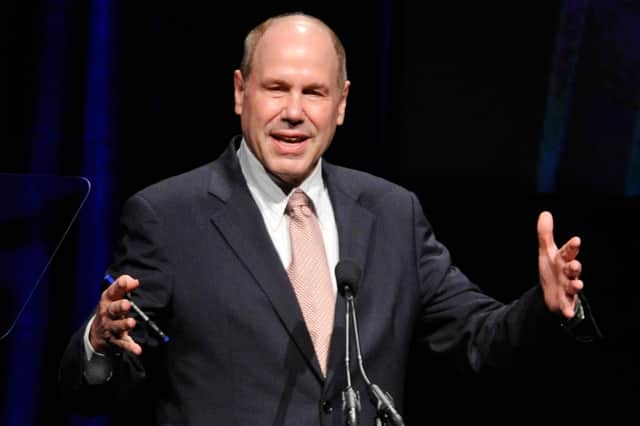
‘I didn’t start at the bottom, I started below the bottom!’
Eisner spent a decade at ABC, yet it was his elevation to vice president of broadcast television development which proved inspirational, driving the network from third to first in the primetime ratings.
He oversaw the introduction of landmark shows such as Happy Days, Starsky and Hutch, The Six Million Dollar Man, Laverne & Shirley, Roots and Mork & Mindy, catapulting the likes of Lee Majors, Robin Williams and Henry Winkler into international stardom.
He said: ‘Anybody who thinks your mind is centred on one thing over and over again is misguided. Our mind goes rapid fire, from one thing to another in instant speed.
‘You may have a preference for comedy or drama, but it’s what you don’t know which you end up loving. Just repeating over and over again what you do know gets boring. It’s about looking for things that are different and challenging.
‘Beverly Hills Cop vs Happy Days, Ordinary People vs General Hospital, The Lion King vs The Six Million Dollar Man. Look at today, Baby Reindeer came out of nowhere, the number one Netflix show in every country across the world. You never know.
‘You do research, everybody will tell you the last thing they saw they liked, then it’s what they want to see next. In fact, it’s the opposite, they don’t know what they want to see next - until you present it to them.
‘In the 1970s, I was snowbound in Newark Airport with my then three-year-old only son at the time, with nothing to do for four hours, so I wrote a treatment (synopsis) which became Happy Days.
‘We wrote a script off that and then shot a pilot, but the people at ABC’s research department said a show about the 1950s would never work, so I couldn’t get it on. I thought they were wrong.

‘There was a show called Love, American Style and I convinced them to do an episode of Happy Days in it - and we still couldn’t get it on.
‘Yet in Chicago there was a live theatrical show called Grease set in the 1950s, and then the film American Graffiti came out, which starred Ron Howard. That convinced them to try Happy Days.
‘The character of The Fonz came about when we watched American Graffiti and there was somebody in it who rolled up cigarettes in his T-shirt and was a rough character in an otherwise sweet movie. We had to add that character.
‘Barry Diller (Paramount chairman) and myself went to the reading of the part at Paramount Studios and Henry Winkler auditioned, he was great. As we left the Paramount gate, Henry was hitchhiking on Melrose Avenue. We just drove past him and said to each other “Well, this show isn’t going to work anyway”.
‘After three pilots, Happy Days became a big hit for ABC. Every one of the shows I’ve been involved in have usually been passed over by numerous people and taken years to get on the air.
‘In one Happy Days episode, Robin Williams played a character called Mork - and we spun that out into Mork & Mindy. That launched his career. As a talent, he was unbelievable, a mind like nobody else’s, and was also later in Aladdin for us at Disney.
‘You’d write a script for him and, when the lights came on and the camera started moving, he would take over, you would find magic in what he did. Yet he also became a serious actor, doing many great movies.’
It was Eisner’s appointment as president of Paramount Pictures in 1976 which would transition his immense influence into the film industry, with John Travolta an integral force.
Paramount chose Travolta for the role of Tony Manero in Saturday Night Fever, earning him an Oscar nomination as Best Actor. Then, six months following its release, he starred in Grease, as he established himself as one of Hollywood’s hottest properties.
Such films represented tremendous early success for Eisner and Paramount, quickly followed by Ordinary People, Heaven Can Wait, Raiders Of The Lost Ark, Terms Of Endearment, Footloose, An Officer And A Gentleman, Flashdance and Beverly Hills Cop.
‘Even today, John and I talk all the time. We never had a failure,’ Eisner added.
‘He had been in a couple of things and was then cast in Saturday Night Fever, but we weren’t quite sure what we had. We certainly didn’t know we had a musical.
‘About two weeks before it opened (December 1977), I was away skiing. At the bottom of the lift was the guy putting you on it and on his little radio was the Bee Gees’ song “Staying Alive” (from Saturday Night Fever). Then I got to the top and playing on the guy’s radio up there was “Staying Alive”.
‘Then I went for lunch and in the place where you got your hamburgers, “Staying Alive” was playing. I called Barry Diller (Paramount chairman) on a payphone and said “We have a musical here!”.
‘It was gigantic and John was gigantic too, like Rudolph Valentino in the 1920s. He visited Europe and it was chaos. It was John and later Michael Jackson - I don’t know anybody else who had that kind of heat.
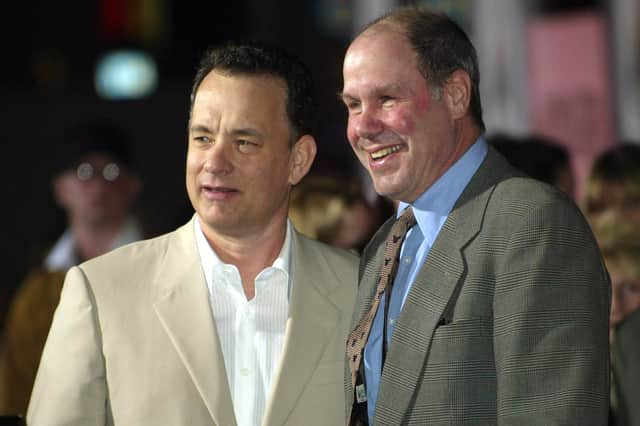
‘Grease was made six months later (June 1978). He and Olivia Newton-John were hardly teenagers, yet convinced the world they were in High School. In one way it was silly and another way not so silly, and a very inexpensive movie. Its strength was a combination of the pair, that music, the dancing. It was amazing.
‘Beverly Hills Cop took eight years. When I was at the 1976 Montreal Olympics, I spoke on the phone with Barry Diller. I was still at ABC and we were talking about me joining them.
‘At the end of the conversation, he asked what kind of car I wanted. My response was “You get cars with the jobs?”. So I asked what he had, which was a Mercedes. Fine, I’d take one of those.
‘On my first day at work, I’m driving through Beverly Hills, the top is down, I had substantially more hair than I have now, giant hair, and was stopped by a policeman for speeding.
‘I’m thrown into the back of the police car, he was really angry at me, but then had to leave on foot for something happening a few blocks away. So I’m in this car with computers, and I hadn’t seen one before.
‘The policeman came back and I started asking about what all this stuff did. Then I said “Can you afford to live in Beverly Hills?”. Of course not. Then I asked “Don’t you hate the people here that you have to protect?”. He told me: “No, it’s a real honour”. And I got out of having a ticket.
‘So I drove to work, found the people involved in stories and said “We ought to do a movie about a Beverly Hills Cop”. Eight years later, the movie opened.
‘Mind you, while in the car driving to my first day in Disney years later, I committed to Down And Out In Beverly Hills after an agent called me. In the same car ride, I also committed to The Golden Girls.’
Eisner’s prolific success at Paramount earned him the role of chairman and chief executive of The Walt Disney Company in 1984.
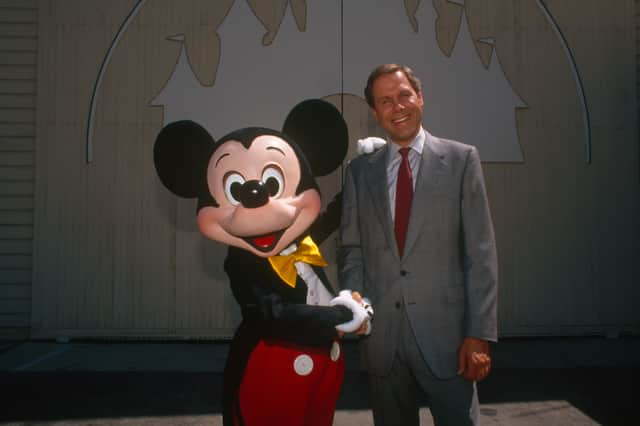
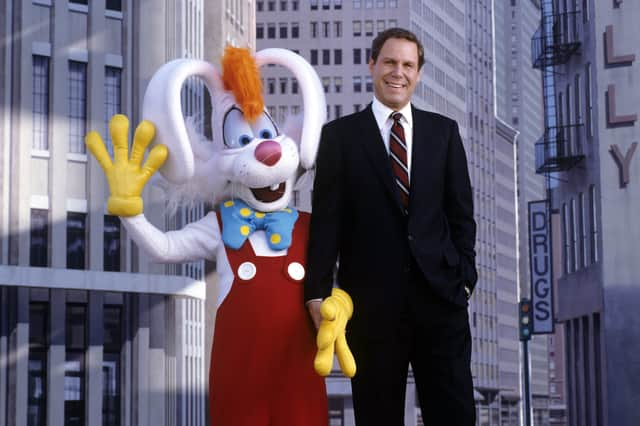
He would go on to become the face of Disney, while emphatically revitalising their fortunes, firstly with Who Framed Roger Rabbit (1988), which earned seven Oscar nominations, winning four.
The magic touch remained with The Little Mermaid, Beauty And The Beast, Aladdin and the highest-grossing traditionally animated film of all time - The Lion King.
That represented a glorious five-year period for Eisner and Disney, reaping eight Oscars.
He said: ‘Who Framed Roger Rabbit was already in development when I got to Disney, with Spielberg producing it. However, once completed, the preview with an audience was a disaster.
‘There were so many expletives coming out of these cartoon characters - and the audience really didn’t like to see historic Warner Bros characters or Roger Rabbit using that kind of language. Then we did another preview without that language and it was a hit.
‘The furthest we went was when Eddie Valiant walked into the bar and Delores said to him “Is that a rabbit in your pocket or are you just happy to see me?”. For Disney, it was a hot topic of whether we could leave that in or not.
‘We had a good run at Disney. I arrived there 18 years after Walt (Disney) died and one of the criteria for me becoming CEO was to revitalise animation - and it was a renaissance.
‘The Lion King was not originally a musical until we finally got Elton John, while at first it was set in Asia, which had no lions, so we had to move it to Africa. Beast in Beauty And The Beast was not tough enough in the beginning, so that had to change because there needed to be an evolution.
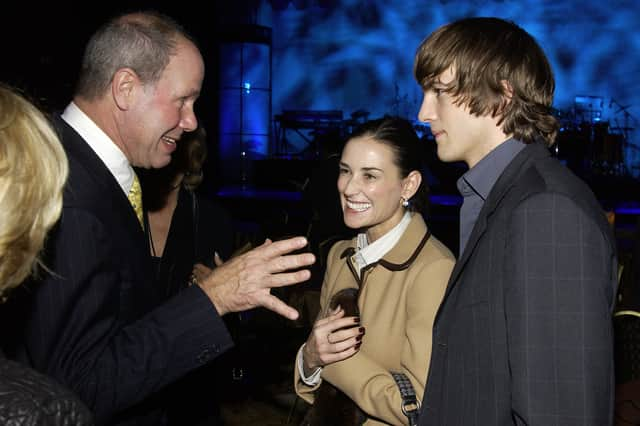
‘These aren’t children’s films. The key is these films are for adults, which children buy into. If you make children's films for the under-12s they become babysitter films, as opposed to family films.’
In August 2017, Eisner’s company Tornante completed the £5.67m takeover of Pompey, months after promotion to League One under fan ownership.
Installed as chairman, with sons Breck, Eric and Anders on the club board, they have since invested another £37m in equity, ensuring the Blues remain debt-free.
The family affair continues with wife Jane appointed chairperson of Pompey Women in June 2023, who subsequently won the National League Southern Premier Division last season and will compete in the Women’s Championship this term.
Meanwhile, over at rejuvenated Wrexham, owners Reynolds and McElhenney have overseen successive promotions to take their place in League One for 2024-25.
It’s a business model which differs from Tornante’s. In addition to pumping in £3.2m of equity, the duo have also loaned the club money at interest fixed at three per cent above the Bank of England base rate.
According to accounts filed at Companies House for the period up to June 30, 2023, those loans total £8.97m, consisting of £413,789 of interest accrued over the previous 12 months - almost £8,000 a week.
Eisner added: ‘When I left Disney, I wanted to participate in soccer, so I looked all over the world - and it came down to Portsmouth.
‘A famous team, they had been relegated often, were once on the edge of being extinct, but had a famous stadium and was a great city. I went to games all over the world and I have never seen a city that obsessed with their sports team.
‘Two years ago, they were not happy with the Eisners. Now they think we are great. God knows what will happen if we are mid-table or worse next season, but I like that kind of passion. It’s the passion in the movie business too, find something that nobody expects and build it up to great professionalism and entertainment.
‘You’re always thinking what’s next. If you have a blockbuster film and win an Oscar for it, by the time that happens it's something which is in the past and, for some reason, I can’t enjoy it.
‘I like it, it’s nice to read about, but I am beyond that. I enjoy the success while it is happening, while you’re making it, while you are casting it. I enjoy the success of Pompey now, while we are building it.’
Travolta took time out of filming The Taking Of Pelham 123 to be present at the 2008 unveiling of the 2,361st star on Hollywood’s Walk of Fame, toasting a “personal friend and a generous, caring individual, who is also great to hang out with”.

Eisner, who had stepped down as Disney chief executive three years earlier, was also greeted by Disney’s marching band, and Mickey and Minnie Mouse in a glittering ceremony.
Then 16 years later, almost to the day, he witnessed Pompey win the League One title against Barnsley to return to the Championship in style.
He added; ‘I didn’t choose any of it (the Hollywood star), I didn’t know it was happening, I got very annoyed at my wife. They didn’t tell me, they knew I would have said no.
‘I didn’t want to go to the ceremony, I didn’t know John (Travolta) was going to be there, I didn’t know there was going to be a band there, it was totally embarrassing. It was not something I would have chosen to do.
‘It's fine, just not my thing. I didn’t want to be there, I didn’t want them to hold up traffic, I didn’t want anything to do with it.
‘Once they told me and I knew my wife had gone through all this trouble and talked to Bob Iger (Disney CEO), what am I going to do? I got cornered.
‘Do you know what, winning Oscars and sports trophies is not exactly similar, but there is still a process you go through.
‘It took us eight years for Beverly Hills Cop, seven years with Happy Days, seven minutes with The Lion King, you never know.
‘It’s not something that you snap your fingers and comes out of Disney pixie dust magic. It comes out of hard work.’