
Urban regeneration’s hidden by-product


UK cities are no stranger to transformation. From the £1.3 billion Olympia redevelopment to high-street revivals in Islington and Croydon, the capital is undergoing one of its most intense periods of regeneration in decades.
And while Portsmouth may not match London’s scale, it shares the same ambition — visible in projects like the city centre regeneration plans, the Tipner West development, and waterfront housing schemes.
But with all that progress comes an inconvenient truth: waste. Behind every demolition, home upgrade, or commercial refurbishment lies tons of leftover material — broken furniture, packaging, rubble, and mixed junk. Whether in Hackney or Hilsea, this mounting waste poses a logistical and environmental problem.
Just like London, Portsmouth is experiencing its own wave of urban regeneration, bringing with it many of the same challenges around responsible waste management and sustainable development.
But amid the architectural fanfare and economic optimism, a more prosaic — yet equally pressing — issue persists: waste.
Behind every major development lies a considerable environmental and logistical burden, one that many local authorities and private contractors are struggling to manage. From demolition rubble to discarded furnishings and renovation offcuts, regeneration is producing waste on a scale that few are talking about.
Among the growing number of private firms stepping in to meet this demand is Junk Bunk, a London-based rubbish removal company known for its flexible, same-day service catering to both domestic and commercial clients — offering a practical solution that aligns with the fast pace and tight spaces of urban life.
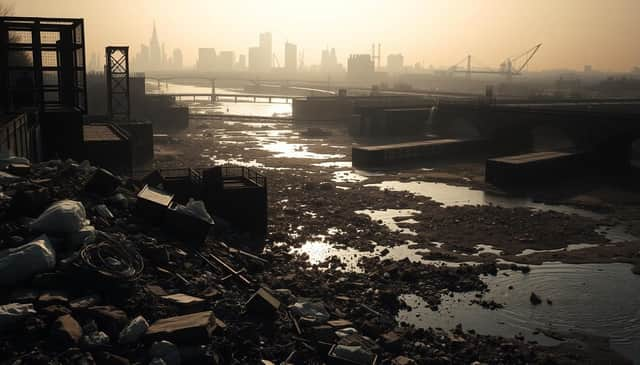
The scale of the problem
But the sheer volume of construction-related waste generated by such projects raises questions about how well UK cities are equipped to handle the by-products of its own growth.
Larger developers may have access to formalised waste processing systems, yet the London’s thousands of smaller-scale refurbishments — from converted shops in Islington to office blocks in Croydon — often fall outside this infrastructure. These projects, while less visible, still generate significant waste. And with London’s councils facing ongoing resource pressures, private services have stepped into the gap.
Junk Bunk, for instance, provides a bridge between regulation and reality — responding quickly to urgent clearance needs in tight urban spaces, while ensuring that waste is handled responsibly.
Waste, regulation, and reputation
Cities like Portsmouth’s dense urban environment adds complexity to any redevelopment. Fly-tipping can be a persistent issue, and public dissatisfaction with unmanaged waste is growing.
In response, some councils have tightened regulations on site management, placing greater responsibility on developers to ensure ethical waste handling. This has, in turn, increased demand for licensed rubbish removal companies that can document their disposal practices and adhere to environmental standards.
For policymakers across the UK — including in Scotland — the message is increasingly clear: waste management is no longer an afterthought in urban planning. It must be considered at the outset, especially as public expectations around sustainability continue to rise.

Circular economy or missed opportunity?
London has long styled itself as a “world city” when it comes to environmental responsibility. Yet many sustainability goals are undermined by inadequate attention to construction and household waste — which often ends up in landfill, despite containing recyclable materials.
This presents both a challenge and an opportunity. Rubbish removal companies such as Junk Bunk are investing in greener disposal methods and working with recycling partners to divert items like furniture, metal, and timber away from landfill. But without systemic coordination between developers, councils, and waste operators, these efforts are piecemeal.
Scotland has already made strides in embracing the circular economy — with policy frameworks that encourage reuse and local processing. London, despite its size and complexity, could follow suit, aligning its development ambitions with a robust waste strategy that rewards compliance and innovation alike.
Displacement and domestic impact
Urban change doesn’t only affect the skyline — it reshapes communities. As gentrification sweeps through, long-time residents are often displaced or forced to move. Each relocation — whether voluntary or not — produces waste in the form of unwanted possessions, broken appliances, and old furniture.
Rubbish removal companies increasingly find themselves working not just on construction sites but in homes. In this context, Junk Bunk and others provide a bridge between upheaval and renewal, helping residents leave properties clean and council-compliant, while handling the emotional and practical toll of transition.
A clean future?
As big city development machines roll on, it must reckon with the full cost of its progress — including the environmental and social implications of what gets left behind.
Waste is no longer invisible. It is a visible, often pungent, reminder that growth comes with consequences. If cities like Portsmouth and London are to serve as models of modern urban living, then their approach to rubbish must evolve too — moving from reaction to prevention, from clearance to stewardship.
Whether through regulation, innovation, or simply greater public awareness, the capital — and indeed other growing cities across the UK — must start to treat waste not as an afterthought, but as a central pillar of sustainable development.