
Ocean studies & marine sciences: Leading blue economy and coastal environment research at Uni of Portsmouth
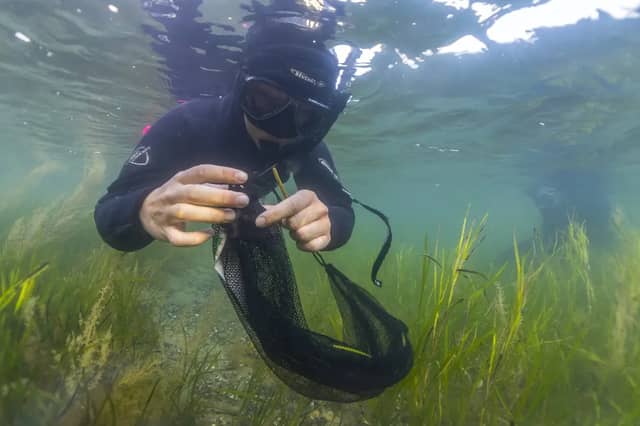

World-class facilities and research projects at the University of Portsmouth are helping the next generation of young people make waves in protecting our UK coastlines.
Portsmouth is a city shaped by its relationship with the ocean, with the evidence all around in our natural deep-water harbour and rich maritime history. Now the only island city in the UK can boast that ocean-focused education and research is rapidly becoming another key aspect of the city’s relationship with the water.
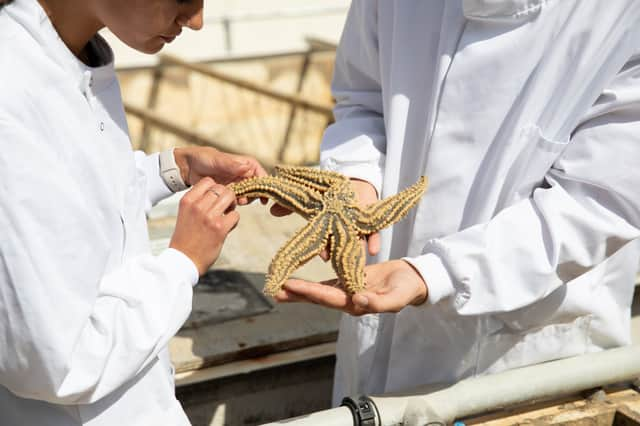
Local studies – global impact
The University of Portsmouth is a leading research institution and a place which is supporting positive changes, both on our doorstep and further afield.
If you’re fascinated by the seas around us, and protecting and nurturing them for a sustainable future, then the facilities and opportunities for study and real-world experience at Portsmouth are outstanding.
Students often have opportunities to support research that help shape policy and blue economy strategies that reach around the world, from Africa to Zanzibar.
Leading in ocean science research
Tackling issues affecting marine environments is complex and requires expertise in many different disciplines and close collaboration between scientists from within the University, and national and international colleagues.
There are several leading centres at Portsmouth looking at ways to protect the planet’s seas, including but not limited to the Marine Biology Research Group, Centre for Blue Governance, the Centre for Enzyme Innovation, Revolution Plastics Institute, the Institute of Marine Sciences, and the Institute of Biological and Biomedical Sciences.
At the Centre for Blue Governance, the University works with students and scientists on research projects covering the protection, restoration and sustainable governance of aquatic environments.
Given aquatic environments cover over 70% of the planet’s surface, and the global value of our oceans to the economy, understanding how it works and how it needs to work in the future is not only vital, it’s also big business.
The Uni’s international community of inter-disciplinary researchers look at issues such as climate, pollution, and biodiversity crises, and the safeguarding of human health and wellbeing.
“Portsmouth has quite a long history in Oceania. When it was a polytechnic school, people were working in economics and the management of marine resources,” says Professor Pierre Failler, Director of the Centre for Blue Governance and UNESCO Chair in Ocean Governance.
“Over the years we have developed a strong network with policymakers at different scales. For instance, we worked on the Blue Economy Strategy for Africa - which concerns 54 countries - and a separate one for 10 countries in Asia.”
We are also the only university on an island in the UK, which is great for practical research.
“For students, it's very important just to be able to see for themselves what an ocean ecosystem looks like in good health, and what an ecosystem looks like degraded because of the pollution. We have both examples right here on our stretch of coast. So instead of just looking at a video in a classroom, you can just go and see for yourself.”
The Institute of Marine Sciences sits right by the sea at Langstone Harbour, giving researchers easy access to the rich marine life of the Solent, including several designated conservation areas.
They use these facilities to monitor and test diverse marine environments and seawater. This includes looking at how humans impact ecosystems and how marine life behaves in these underwater worlds.
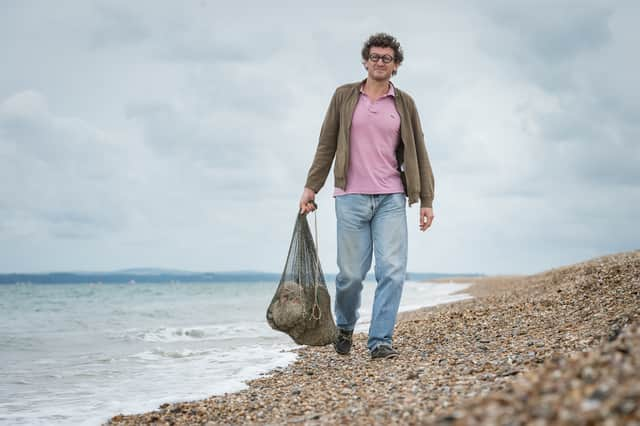
Marine restoration and conservation
The UK's first seascape-scale marine restoration project (Solent Seascape Project) – endorsed by the United Nations – and the Blue Marine Foundation’s Solent Oyster Restoration Project are both based at the Institute of Marine Sciences, and aim to restore multiple habitats such as oyster reefs, seagrass meadows, saltmarsh and birds, to reconnect and revive our struggling coastal waters.
Pollution monitoring and assessment
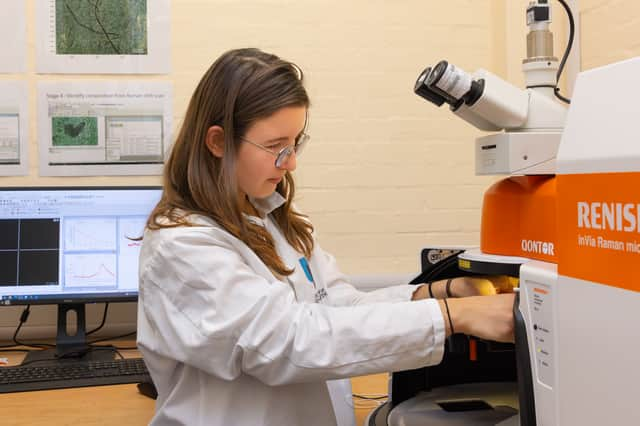
Microplastics are a well-known marine pollutant, but research from the University’s Revolution Plastics Institute has found pollution levels are up to 100 times worse than previously recorded around Britain's coastline. Students and researchers at Portsmouth have discovered fibreglass contamination in oysters and mussels, they have undertaken noise pollution mapping around UK coasts and used environmental DNA (eDNA) sampling to track marine biodiversity changes.
Student experience
Portsmouth is a progressive and dynamic university with an outstanding reputation for innovative teaching, outstanding learning outcomes and globally significant research and innovation.
It has recently been ranked 5th in overall satisfaction for research degrees according to the latest Postgraduate Research Experience Survey (PRES).
This follows impressive Research Excellence Framework (REF) outcomes where Portsmouth was ranked third of all modern UK universities for research power in the Times Higher Education REF rankings.
By actively incorporating research into the undergraduate learning experience, the university provides students with a high-quality education that prepares them for the future. Just last month, a Portsmouth palaeontology student made headlines for discovering a 145-million-year-old prehistoric mammal from the Dorset coast while on fieldwork.
I instantly had my suspicions of what the jaw was when I found it at the beach, but couldn’t have imagined where the discovery would take me. I’m extremely grateful to the team and to the university for helping me take my first steps into academic palaeontology.
It’s stories like this which make it no surprise that the University of Portsmouth was ranked 9th in England for learning resources in this year’s annual National Student Survey (NSS).
Where sport meets science
Laura Fantuzzi, who as part of her PhD studies monitored pollution and biodiversity in British coastal waters with data obtained via an ocean rowing race event - the GB Row Challenge.
I am collecting data on microplastics, environmental DNA — which tells us what species live where — underwater noise and bioacoustics, temperature and salinity. And all of that is gathered on a 10 metre rowing boat! I’m analysing the data that’s coming off of that – it’s very cool science and a really unique partnership at Portsmouth.
And of course, being right on the coast the Uni offers many water-based activities including sailing and rowing.
“For me the location of Portsmouth is a really major thing. The Institute of Marine Sciences is right on the water, and you can go out and snorkel. There’s life growing on top of the submarine blocks and hiding among the rocks. The water is surprisingly clear as well so you can actually see really far, like five metres.
“There’s also a diving club which I’m a part of and we have a project going on where we’re monitoring biodiversity ourselves. We go and dive in Langstone Harbour and report the species we see. For ocean enthusiasts, there’s the academic side, there’s the partnerships side, but there’s also just sailing and diving and paddleboarding, which I love.”
Find out more
For students considering their university options, Portsmouth has courses available through Clearing. The Clearing line is 023 9284 8073, or visit www.port.ac.uk/Clearing
For students looking to apply for 2026 for undergraduate or post-graduate studies www.port.ac.uk/apply2026