

Today it is bustling (largely) island city with a growing tourism economy and key leisure facilities (although talk of a ‘regeneration’ has continued over the years), but it has undergone a huge transformation as it adapted to a more modern world.
Changes to the city’s roads, economy, and major buildings means we have an evolving city to celebrate - and we look forward to the changes to come.
Here we look at the landmark moments which have shaped Portsmouth:
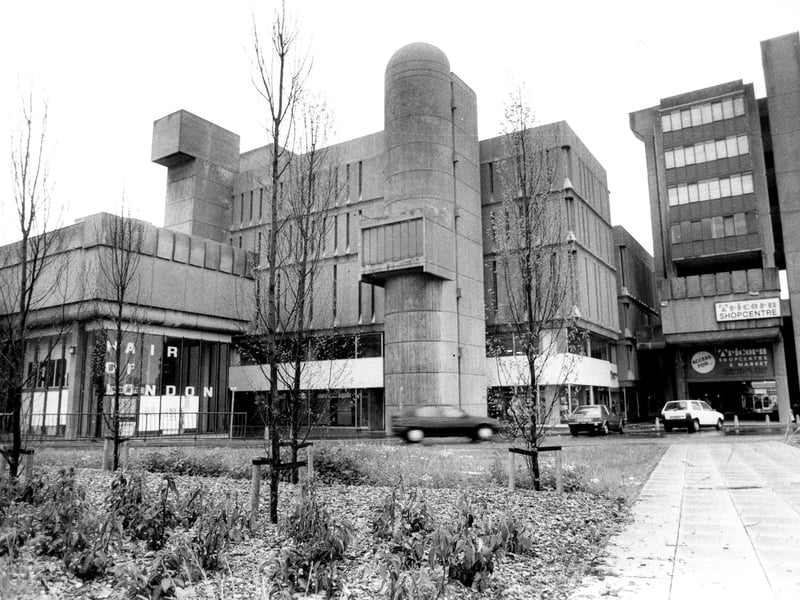
13. 1966 to 2004 - The rise and fall of the Tricorn Centre
The Tricorn Centre was a shopping, nightclub and car park complex which symbolised the rise and fall of our city centre - and continuing struggled. It was designed in the Brutalist style by Owen Luder and Rodney Gordon and was supposed to herald a regeneration of the city centre. (Sound familiar?) It opened in 1966, costing the city council £2 million, but attempts to bring in large businesses failed due to its location and instead smaller businesses were signed up. It was demolished in 2004 and later became a carpark as a temporary measure so the site could be used in fresh regeneration plans for the city. Sadly, these have still not come into fruition. Photo: The News archive
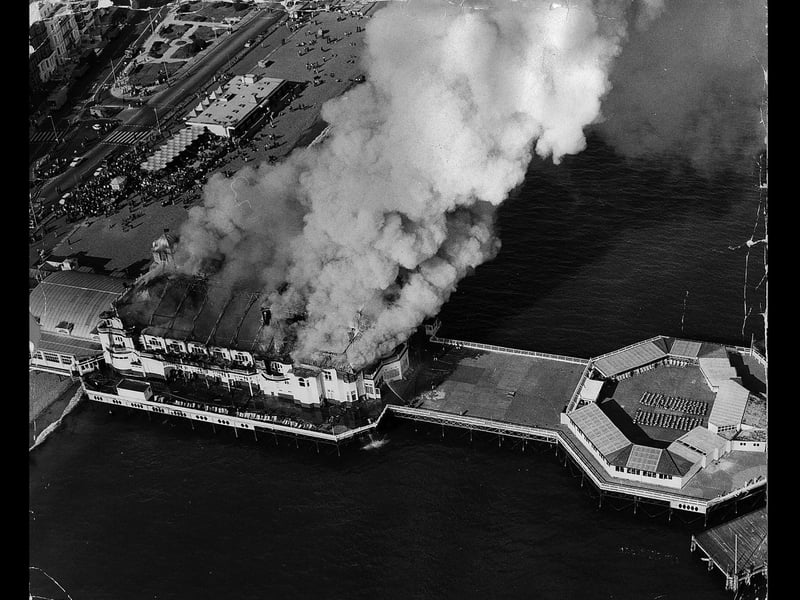
14. 1975 - Fire at South Parade Pier
South Parade Pier has a very colourful and eventful history: it has been destroyed by fire three times - 1904, 1966 and 1975. It was the fire in 1975 during the making of Ken Russell's film 'Tommy' which left the site devastated, but allowed it to begin a new chapter and begin to look like the pier we know and love today. However the pier was loosing money and a lack of investment lead to its forced closure by the council in 2012 as a result of safety fears. Then in 2015 the pier was sold and plans were unveiled and work begins to restore this iconic structure to her former glory. It was reopened in 2017 and its popularity has grown ever since with the addition of funfair rides, eateries and entertainment. Aerial view of South Parade Pier on fire in 1975 Photo: The News archive
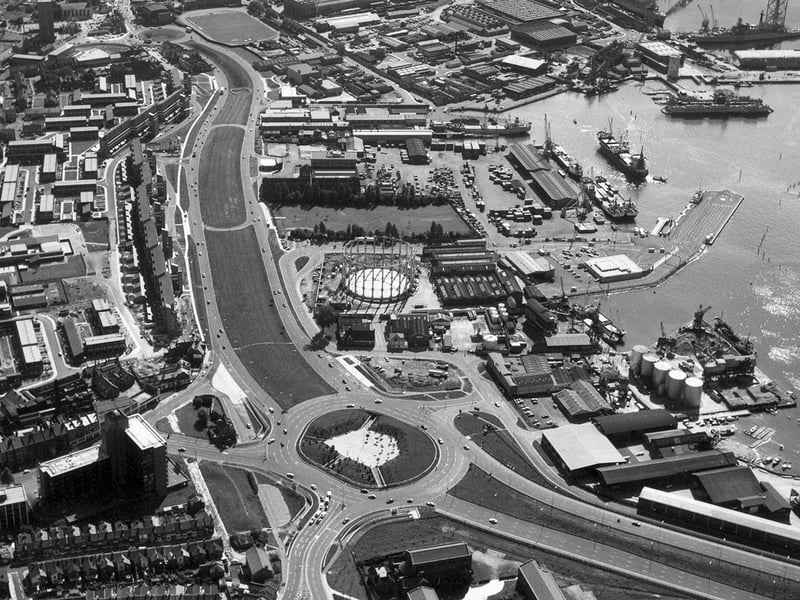
15. 1976 - opening of the M275
The motorway was opened throughout its entire length in 1976 in a bid to alleviate the growing traffic on and off Portsea Island on the two roads in and out of the city. The M275 was built down the western seaboard of Portsea Island on reclaimed land and when it opened on March 11, 1976, it gave a third, much-needed route into the city. However, a number of houses were demolished at the western ends of Stanley, Lower Derby and Ranleigh roads to make way for it. When the motorway opened, it linked to Rudmore roundabout but this soon became blocked during rush-hours. As room had been left for a flyover one was built and it opened on March 3, 1988. This also enabled a short extension of the M275 as far as the 'ABC roundabout' - next to the cinema which stood there at the time. Pictured: Rudmore roundabout, Mile End, without the flyover during the construction of the M275 in the 1970s. Photo: -
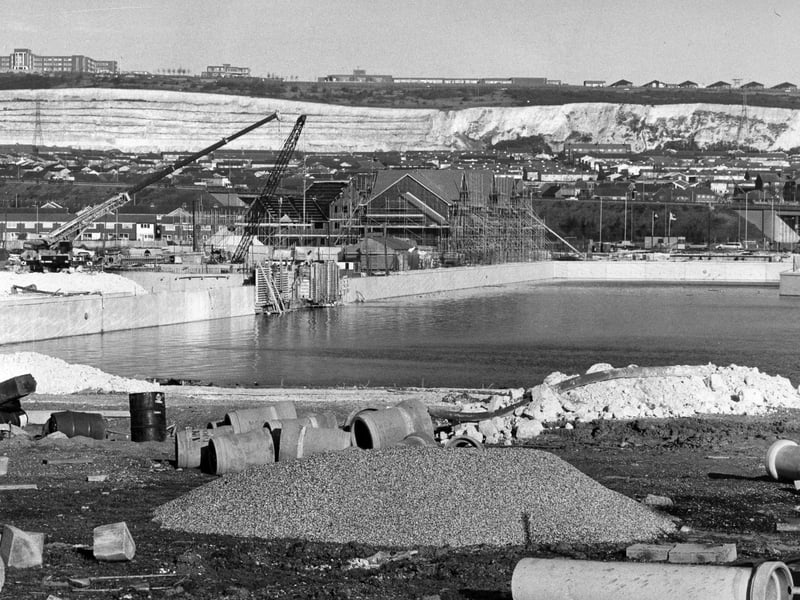
16. 1988 - the opening of Port Solent
The creation of Port Solent was a bold step into using reclaimed land to grow a city which is largely hampered by geography with the majority of it being situation on an island. The Port Solent development was built during the late 1980s on reclaimed land taken from the east side of Paulsgrove Lake in Portsmouth Harbour to create housing, leisure facilities and a marina. Port Solent was officially opened on 29 July 1988 by Princess Anne, The Princess Royal. The first boat to use Port Solent was the 36-foot cutter Lively Lady, sailed by Sir Alec Rose. Today Port Solent continues to thrive and provides a fantastic focal point in the north of the city. Its success paved the way for the much larger Gunwharf Quays which was to follow a few decades later. Pictured: Port Solent Marina in January 1988 during the construction works. The News PP5109 Photo: The News archive