
Nurosym was featured in Netflix documentary but what does the evidence say about the longevity device?



This article contains affiliate links. We may earn a small commission on items purchased through this article, but that does not affect our editorial judgement.
The wearable device uses electrical impulses to stimulate a branch of the vagus nerve, but it should not be regarded as a proven means of slowing ageing or extending life.
Interest in Nurosym has increased following its appearance in Netflix’s documentary Don’t Die: The Man Who Wants to Live Forever, which examines tech entrepreneur Bryan Johnson’s highly structured approach to longevity.
The wearable device, developed by health technology company Parasym, is designed to deliver gentle electrical stimulation to a branch of the vagus nerve through an attachment placed on the ear. It is operated using a handheld controller connected to the attachment.
The vagus nerve forms part of the autonomic nervous system, which helps regulate automatic bodily functions including heart rate and digestion. Nurosym’s external method of targeting the nerve is known as non-invasive vagus nerve stimulation and does not require implanted equipment. Researchers have investigated potential applications of nerve stimulation, but work in this area remains ongoing. Findings may differ according to the technology being examined and the purpose of individual studies.
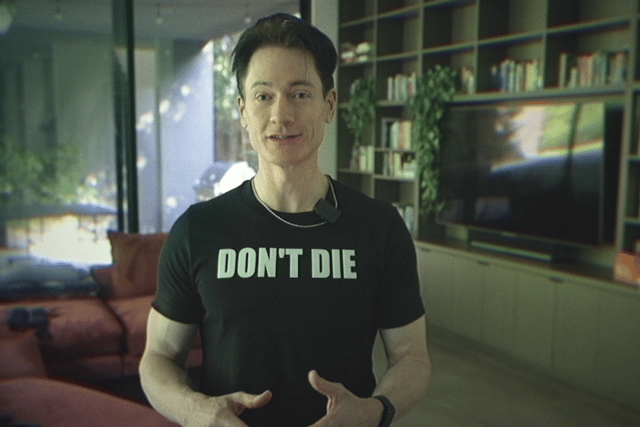
Don’t Die: The Man Who Wants to Live Forever follows the measurements, practices and technologies that Johnson incorporates into his personal routine. Nurosym appears as one element of that programme.
The documentary has helped draw attention to products associated with the growing interest in longevity and wearable technology. However, Johnson’s decision to include a device in his own routine is distinct from established evidence about its effects. Nurosym is therefore best understood as a non-invasive nerve stimulation device rather than an established longevity treatment. Its operation is based on electrical stimulation of a branch of the vagus nerve, while research into the wider approach continues.
What does a health expert say?
Dr Naheed Ali, MD, PhD, from Vera Clinic, advises people to approach wearable nerve-stimulation devices with realistic expectations, stressing that they should complement healthy habits rather than replace them.
He warns that one of the biggest concerns is people relying too heavily on technology while overlooking the basics. As Dr Ali explains, some users may buy a device and then “drop the things that actually move the needle”, including sleep, movement, monitoring blood pressure and keeping up with medical appointments. While he acknowledges that “non-invasive vagus nerve stimulation is a real research area”, he is keen to point out that a wearable device should be viewed as “an add-on, not a substitute”.
There are also important safety considerations. Dr Ali recommends that anyone with a heart rhythm condition, pacemaker or implanted medical device speaks to their own clinician before using a nerve-stimulation device near the ear.
Ultimately, the interest in Nurosym reflects a wider curiosity about technology and everyday wellbeing. Understanding what a device is designed to do, alongside its limitations and potential risks, can help people make more informed decisions.
Natalie Dixon is our Lifestyle reporter, if you liked this article and want to read more about lifestyle you can follow Natalie Dixon on X here

🎤✨ Three nights away with live entertainment from £164? Parkdean’s Celebrity Weekenders bring the party this November! 🧳
🕺🎶 Relive your favourite decades with themed breaks spanning 80s hits, 90s nostalgia and boybands vs girlbands!
🏡🏊 Accommodation, entertainment and access to swimming facilities are included, with silent discos and fancy dress adding to the fun! 🎉
🌊⭐ Explore Parkdean’s Celebrity Weekenders across five parks, with prices and line-ups varying by break and availability 📅Click here to find out more