
Shokz Openmeet review – is this £200 bone conduction office headset worth it?

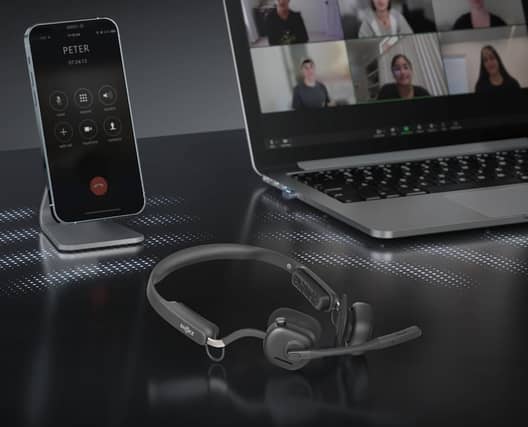

This article contains affiliate links. We may earn a small commission on items purchased through this article, but that does not affect our editorial judgement.
Shokz’s Openmeet uses bone conduction tech to keep your ears free while you work – but does it justify the £200 price tag?
With more of us working from home during the pandemic, investing in personal office tech has been a bit of a necessity. And with more of us now communicating over video calls, a decent headset is near the top of a lot of people's shopping list.
You can buy a wired or even wireless headset for less than £30 now, so you might be wondering why anyone would throw £200 at one. I wondered that, too. Which is why I asked the nice people at Shokz if they would mind me testing their hero product; the Openmeet.
And yes, you read that right, it costs £200. Actually more like £229.99 if you include a USB Bluetooth adaptor, which you don't strictly need.
It's expensive for some very important reasons, though. Most importantly, it uses bone conduction technology. And that doesn't come cheap. It is, however, seriously clever.
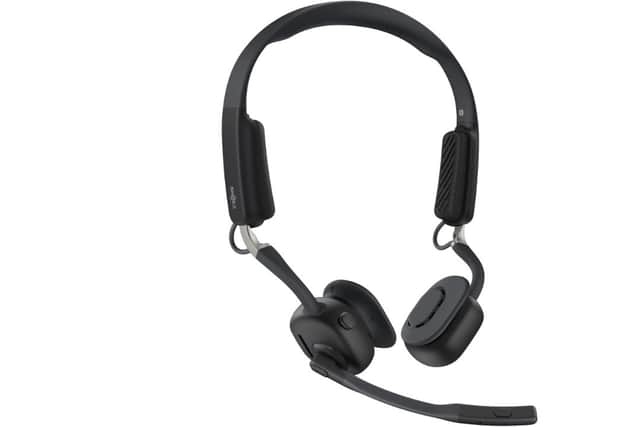
In short, instead of pumping vibrated sound straight down your ear canal, it sends sound vibrations through the bones of your skull directly to your inner ear, bypassing the eardrum.
This means your ears remain ready to hear the sounds around you and, in an office situation, this means you can listen out for phone calls, messages, or colleagues who try to get your attention.
It also means the headset is incredibly comfortable to wear for long periods because not only is it not pressing into your ear, or covering your ear lobe, it's extremely light.
And, boy, are the Openmeets light. They're just 78 grams, which is about half the weight of a decent standard headset and less than a third of the weight of a bigger, old-fashioned headset.
There are other clever bits of tech built in to the Openmeets, too. They have a dual microphone array which helps you convey your voice, and there are four separate amplifiers for each speaker, so the sound is punchy and full.
Bone conduction headsets have a tendency to be a bit tinny, especially when compared to full-sized headsets, but the Openmeets sound great. Don't get me wrong, you wouldn't want to start picking out individual instruments from an orchestra with them, but for communicating over a Teams call, they're superb.

They're also fitted with Bluetooth v5.4 which is cutting edge tech, and it means you can be up to 30 metres away from your work station and they'll stay connected. Another handy tool for office use, and trips to the water cooler - but also handy at home if you need to top up your coffee.
Their small, lightweight frame does bring some disadvantages, however. There's not a lot of space for batteries, so Shokz claims you'll get 15 hours of use, and I've found that to be pretty accurate, but it's still only enough for two full-on days - or less than a week of light use in practice. This is beaten quite easily by larger headsets with bigger batteries. It does charge quickly though, to its credit.
Bone conduction can be a flawed technology in other circumstances, too. In a noisy office, perhaps a call-centre, or a factory, you might actually be better off investing in some noise-cancellation tech. Being able to hear things around you is fine in a quiet place, especially at home, but it won't suit everyone.
That said, if you think bone conduction might be right for you, there's currently not a lot to choose from. And it's a technology Shokz has been developing for a while with some of its sports tech.
So the Openmeet has a proven pedigree, fantastic build quality, and you will struggle to find a more comfortable set.
Yes, £200+ is a lot of money for a work headset, but if you can afford the very best, this is probably it.