
Jackery Explorer 3000 V2 review: giant battery for serious off-grid power


This article contains affiliate links. We may earn a small commission on items purchased through this article, but that does not affect our editorial judgement.
Jackery’s biggest power station to date is built for serious users, from off-grid homes to mobile workshops and events teams on the go - and we’ve tested it
In the world of portable power solutions, it's not unusual for Jackery to set the standard. It was one of the pioneers in the sector, and it remains a key player.
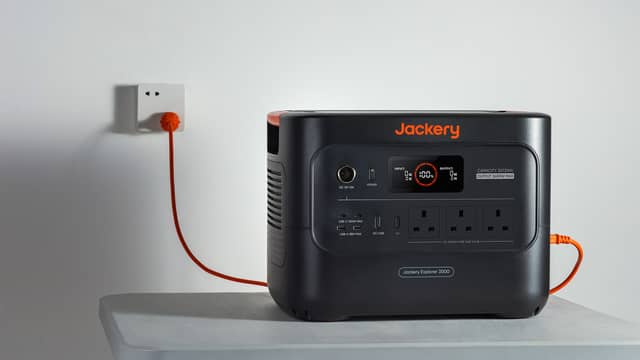
And this, its latest launch, is its biggest in the line-up, and it really is a monster. It weighs 27kg, and it costs £2,000 (if you can catch this £300 discount).
So it's not something you'd take with you on a backpacking trip, then. And it's hardly the ideal companion for a family camping trip, when there are smaller versions which pack a similar punch. What is it good for then?
A power station at this size is for serious off-grid power users. If, for example, you run an events business and you need AC power for equipment, tools, or appliances, this is for you.
If you work in the outdoors regularly and have no access to power for a mobile workshop, this would be just the ticket.
Or if you live in an off-grid location out in the sticks, or even if you just have an electricity supply prone to blackouts, this is what you need.
Because the price of the Explorer 3000 V2 might raise the odd eyebrow, but the specs are truly hair-raising.
It has a 3,072Wh battery, which is enough to power a set of household appliances for at least a full day, if not longer.
And it's linked to a 3,600 watt inverter, which is capable of powering a rapid-boil kettle with ease. Its 7,200 watt peak power could even charge up an electric car.
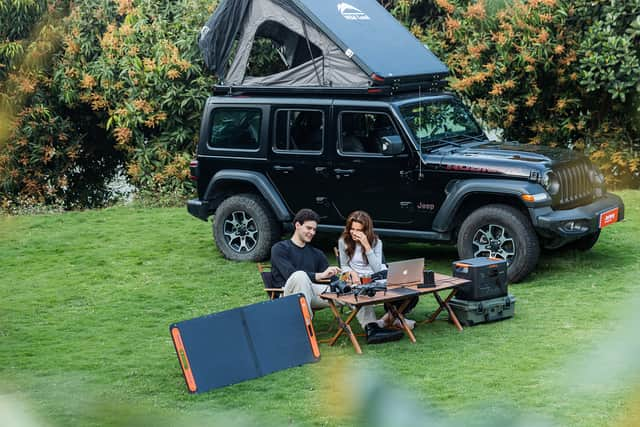
Connect all this up to solar and, if you're blessed with decent weather, you could keep yourself going for days. It has a solar input capacity of up to 1,000 watts.
This means, if you were to hook it up to some panels in your garden, or on a garage roof, you could harvest the free electricity through the day, store it in the massive battery, and then use it up through the evening, saving you money on your electricity bills.
But even just as a mobile generator, with or without the solar, this is one of the most competent machines out there. And 27kg might seem bulky, but it's actually the lightest LFP battery system out there at the moment.
And if you think £2,000 is a lot of money, consider that the equivalent Bluetti would need a second battery to match it spec-for-spec, and EcoFlow's equally impressive Delta Pro costs £2,500 - and that includes a current £800 discount.
This is what Jackery does well, competing and beating rivals in the numbers game - but numbers only tell you so much. Because there are down-sides.
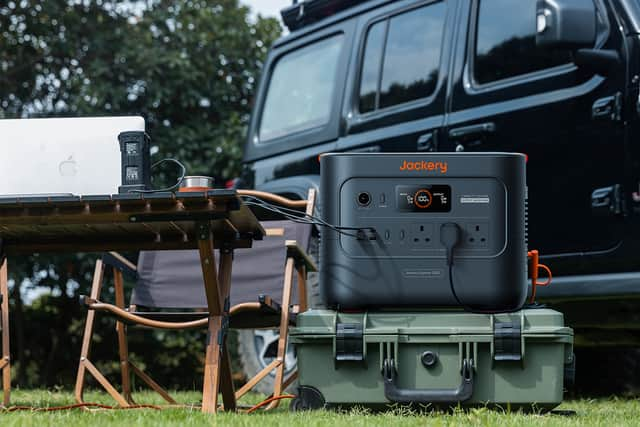
Firstly, despite the size and power of the unit, there are only three AC sockets. Competitors usually have four.
Its AC charging input maxes out at 1,000 watts, and that's doubled by some of its key rivals.

Jackery's reliance on brand-specific solar connectors limits your scope when it comes to buying solar panels, too. Its SolarSaga series of panels is absolutely brilliant, but they are pricey. And with EcoFlow and Bluetti in particular, you are free to plug in cheaper, non-branded panels through a standardised connector, as long as the voltage matches up. Which it usually does.
Having said that, Jackery's timeless design makes the Explorer 3000 V2 easy to lug around, and it feels every bit as robust as the other products in the range. They really are built to last, and you're backed up by a five-year warranty.
The Jackery app remains a joy to use, there's plenty of information on the digital display and, although It's a shame they appear to have dropped the built-in lamp on the front of the units, I can't say I've really missed it all that much.
It's fair to say then, that this is another hats off moment for Jackery. It's built a seriously capable home back-up system and, at least for as long as the £300 discount lasts, it's selling it at a very tempting price point.
Its only shortcomings are trivial at best, and it's a serious contender in the battle for big off-grid power.