
'Vital' seagrass restoration project in Langstone Harbour unscathed after Storm Eunice and Franklin
A ‘VITAL’ project to restore climate change-fighting marine plants in the Solent remains on track despite fears Storm Eunice and Franklin had destroyed it.
In December last year a team of specialists – including from the Hampshire and Isle of Wight Wildlife Trust (HIWWT), hand-planted over 21,000 seagrass seeds at Langstone Harbour
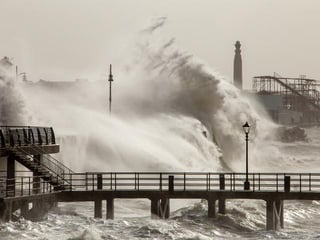
Despite being protected inside hessian bags, it was feared the seeds may have been washed away during the recent storms that battered the south coast.
But an inspection has found the planting bags survived relatively unscathed and the project is still on course – with hopes the seagrass shoots will start to appear in April.


Dr Tim Ferrero, the senior marine biologist at HIWWT and lead for the Solent Seagrass Restoration Project, said: ‘We were very concerned the recent terrible weather would have destroyed our restoration, but we’ve been out to inspect the site and the signs are good that the project remains on track.’
With its dense network of roots, seagrass binds sediment together making the sand or mud more stable, which slows down coastal erosion.
Seagrass is also a globally important carbon sink – studies have shown that some species of seagrass can even store more carbon than the rainforests.

‘Seagrasses are amazing native marine plants that provide an impressive number of environmental services – creating a vital habitat for wildlife, supporting fisheries, protecting our shores from erosion, and capable of fighting climate change as one of our most effective natural carbon stores,’ he added.
‘Sadly, this natural wonder has suffered significant declines over the past century.
‘By regenerating seagrass habitats, we will create a wilder Solent, supporting increased biodiversity and sustainable fisheries, promoting greater ecosystem services, cleaner water and creating a natural blue carbon solution to mitigate the effects of climate change.’

The trust, in partnership with the University of Portsmouth, Boskalis Westminster and Langstone Harbour Board, plans to plant a second batch of seagrass seeds later in March at Langstone Harbour, as well as at Seaview on the Isle of Wight.
In October 2019, HIWWT launched its Wilder 2030 strategy, which calls for a wilder future and 30 per cent of land and sea restored for nature’s recovery by 2030.