
"I ensure everyone’s safety in the tunnel" - behind the scenes at the Hindhead Tunnel as National Highways essential maintenance takes place
On a bitterly cold night around 30 workers gathered outside the Hindhead Tunnel ahead of a long night of essential maintenance.
The tunnel has had night closures all week with the southbound section of the A3 being the focus of attention on Wednesday, November 19. The News were invited behind the scenes to look at what takes place during the tunnel closures as well as to find out more about the issues that can cause delays for drivers on the busy stretch of road.
While it may be viewed as an inconvenience to some, maintenance works take place every 12 weeks to ensure the safety of visitors to the tunnel, and can include tasks such as jet washing with the smallest piece of loose rubbish having the potential to cause traffic delays.


Debbie Wood, 48, from Horndean, is a National Highways tunnel safety officer and has worked at Hindhead since it opened in 2011.
She said: “As well as Hindhead I manage two other tunnels, Southwick and Roundhill. I act as an independent authority on safety issues and do training exercises with emergency services and ensure the control room staff are fully trained. I ensure everyone’s safety in the tunnel.”
Safety is at the forefront of the essential maintenance works that are taking place with lighting, jet fans, emergency telephones and CCTV’s all being checked by the workforce to ensure they are working correctly in time for the reopening at 6am.
Tucked away just off to the side of the southbound entrance, Debbie and a team of National Highways control operators, work shifts to provide 24-7 monitoring of the tunnel.
Every inch of it is covered by CCTV with control operators providing constant monitoring while also tracking weather and responding to issues on highways across the region. With 43,000 vehicles passing through the Hindhead Tunnel every day, there is a lot to keep on top of.
Alongside the CCTV, they are also supported by a radar system which picks up potential obstructions in the road, with even something as small as a silver lined crisp packet setting it off.
Debbie said: “Sometimes you will see the speed limit is at 40 and it might not look like anything is wrong but it could be an issue with one of our safety systems. We then reduce the speed limit down to 40 to reduce the risk of a road traffic collision.”
When the radar flags there is something in the tunnel, the speed automatically drops to 40mph and then alerts the control room who can see what it is on CCTV and act accordingly. The most common find is litter.
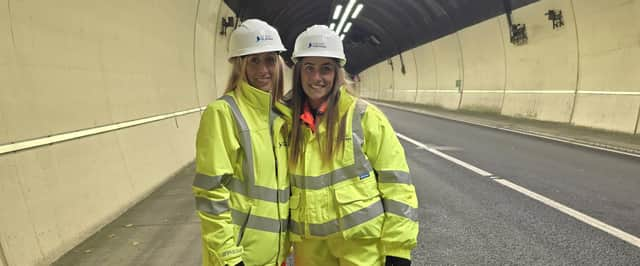
Jordan Cummings (Debbie’s daughter), 25, from Horndean, is the Hindhead Control Room team manager. She said: “We do get quite a lot of litter in here, where people just throw it out their vehicles. Also if somebody has broken down and changed their tyres they wont take their old tyre with them, which can set off the radar as well.
“The radar is automatic so if it picks up something that is unusual or shouldn't be there it will send a message to the control room where it will be manually checked. If there is nothing there it can put back to national speed limit.”
There have been some more unique incidents over the years though. Jordan said: “We have had a rabbit set it off before. We are based in an area of outstanding natural beauty with a lot of woodland so we do tend to get animals coming in.”
Debbie added: “We have had a dog running through as well, which means we have to shut the carriageway and call in the police. On that occasion it got away from the dog handler and ran away out of the tunnel.”
With the volume of cars going through the tunnel daily, a common reason for delays or lane closures is a vehicle breakdown which occurs once or twice a week. The top two reasons for the breakdowns is tyre related issues or vehicles running out of fuel.
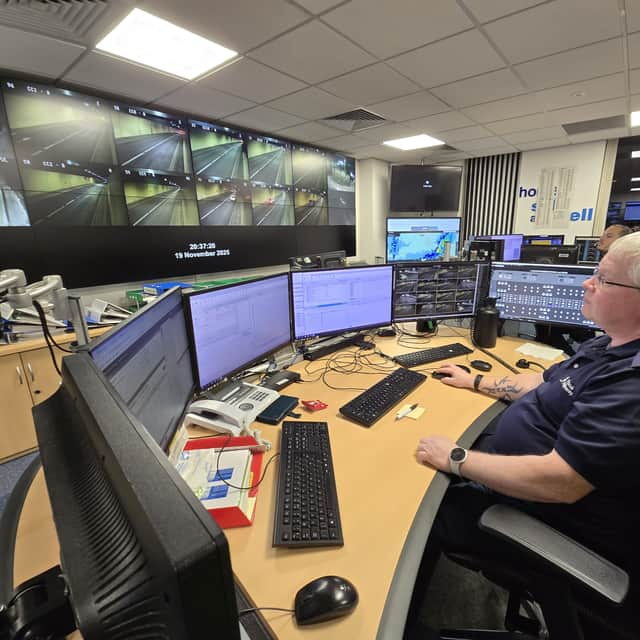
National Highways has a T.R.I.P. campaign that aims to prevent these types of breakdown which can add stress to the network. It stands for Top-up (fuel, oil, screen wash), Rest (every 24 hours), Inspect (tyres), and Prepare (for weather).
It is one of the ways drivers can help stop preventable delays in the Hindhead Tunnel and keep the closures down to essential maintenance only.
The usually unseen army of workforce continue to work through the night to get the tunnel open to the public the next morning. It is a buzz of activity with several different teams focussing on their own tasks to ensure the tunnel is safe to use.
All the while the control centre that never sleeps continues to monitor roads across the South East, sending crews to help with traffic incidents and deciding whether to send gritters out as the winter weather starts to hit.