
The Portsmouth streets and car parks where drivers are most likely to get a parking ticket
New figures have revealed the Portsmouth streets - and council car parks - which are most likely to see drivers being given a parking ticket.
The cramped and constrained nature of Portsea Island means that parking space has been an issue for years.
Data from Portsmouth City Council obtained through a Freedom of Information request has revealed the places where drivers are most likely to receive a ticket. The 10 on and off-street parking sites in the city generate a lucrative income stream, accounting for more than £170,000 in fines during the last financial year, with a significant spike in enforcement recorded during the summer months.
The figures reveal that Chichester Road topped the table for on-street fine revenue, generating £27,885. Leading the league for off-street fines was Ashby Place Car Park, netting the council £24,715.
The data also highlights a significant summer spike in enforcement activity. Monthly penalty charge notices (PCNs) issued across the city increased by nearly 1,000 between June and July, rising from 5,515 to 6,417 as the tourism season reached its peak.
Top 5 Portsmouth streets for fines
The top 5 streets generated a combined £100,823 in fine revenue for the council. The three most common reasons for drivers being caught out were being parked in a restricted street during prescribed hours (Code 01), being parked or loading and unloading in a restricted street where waiting and loading and unloading restrictions are in force (Code 02), and being parked without payment of the parking charge (Code 11).
The streets in question were:
- Chichester Road (£27,885)
- Laburnum Grove (£24,725)
- Albert Road (£18,718)
- London Road (£17,775)
- Western Parade (£11,720)

Top 5 Portsmouth car parks for fines
Off-street locations saw a combined £69,617.50 in revenue collected from the five most lucrative sites. The data also revealed the three most common reasons for fines in off-street car parks. These were being parked without payment of the parking charge (Code 73), being parked after the expiry of the paid-for time (Code 82), and being parked beyond the bay markings (Code 86).
The car parks in question were:
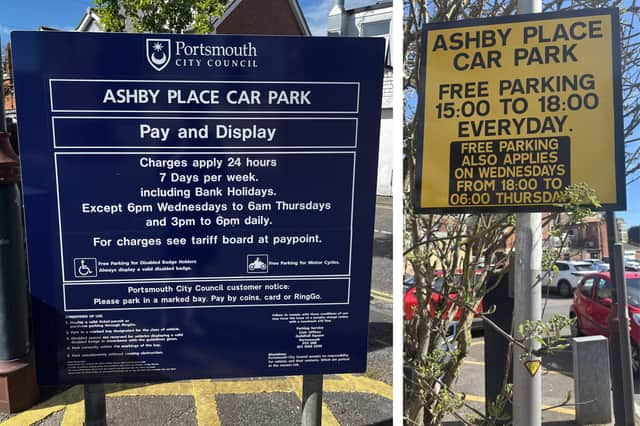
- Ashby Place Car Park (£24,715)
- The Harbour Car Park (£14,042.50)
- Seafront The Esplanade Car Park (£12,015)
- Market Way Car Park (£10,410)
- Stubbington Avenue Car Park (£8,435)
Notably, Market Way Car Park is a top-five earner for fine revenue despite the council only taking control in mid-May 2025. As the data covers the full financial year from April 2025 to March 2026, the site was not council-operated for the full period. This suggests the site could be an even higher earner next year when a full 12 months of enforcement is recorded.
A spokesperson for Portsmouth City Council said: “Any vehicle parked in breach of the rules may receive a PCN. Market Way is one of the council’s largest car parks, with 578 spaces. Since the council took it over, 521 PCNs have been issued, which is fewer than one PCN per parking space.”
The data identifies Code 86 penalties, issued for vehicles straddling bay markings, as a reason for enforcement in several locations. However, the council stated that this does not suggest a widespread problem with bay sizes.
A spokesperson said: “Only 436 PCNs across the whole city were issued for not parking correctly within bay markings, out of more than 76,000 PCNs in total. This does not suggest a widespread problem with bay sizes. At Ashby Place car park, only four PCNs were issued for this reason.”
When told that Ashby Place was the city’s most fined car park, Southsea resident Ellie, who uses the site “a couple of times a month”, said: “I’m surprised but also not surprised because it‘s greedy capitalism, isn’t it?”
She revealed that she has started taking her own precautions to avoid being caught out, saying: “I always take a picture of any signs just in case I do get a ticket, just in case I read it wrong or they misled the signage.”
Portsmouth City Council maintains that its “parking signs should be clear and consistent” and comply with national standards. Regarding the hotspots, a council spokesperson said: ”Signage across the city is reviewed when needed. In Chichester Road, most PCNs (713 of 914) were issued for parking on double yellow lines, where additional signs are not required.
“In Ashby Place car park, most PCNs (958 of 1,106) were for not paying the parking charge.”
The council also clarified that revenue is not linked to specific projects. A spokesperson said: “Any surplus income from PCNs must be used in line with Section 55 of the Road Traffic Regulation Act 1984. This means it can only be spent on things like running and maintaining car parks, public transport services, and highway improvements.”
On the subject of the summer enforcement spike, the council stated: “Enforcement takes place where and when needed throughout the city. The aim is to maintain road safety, keep junctions clear, reduce congestion and support the safe movement of traffic, rather than to increase enforcement during specific months.”