
RNLI confirm it was called to assist small boat in Channel after 36 hours at sea
The RNLI lifeboats were tasked by HM Coastguard to assist a small boat that had been at sea for 36 hours, highlighting the charity's ongoing efforts to save lives at sea without judgement or preference
The RNLI has released a statement about its involvement in assisting a boat in the English Channel yesterday that had been at sea for 36 hours.
Both have confirmed the lifeboats were sent as part of an operation on Tuesday morning, September 22, with the RNLI’s call-out tracker recording that Eastbourne RNLI was called out at 11.09am, followed by Hastings RNLI at 11.11am.
The small boat had initially departed from the Normandy coast near Vierville-sur-Mer, France, early on Monday morning, September 21. It had spent more than 24 hours at sea crossing the Channel before reaching the UK boundary line, prompting a UK rescue response.
This prompted a huge local response in Hampshire with the migrants originally expected to be brought ashore at Gosport, including protests. However this attempt was later aborted and they were transferred to a Border Force vessel and taken directly to Dover.
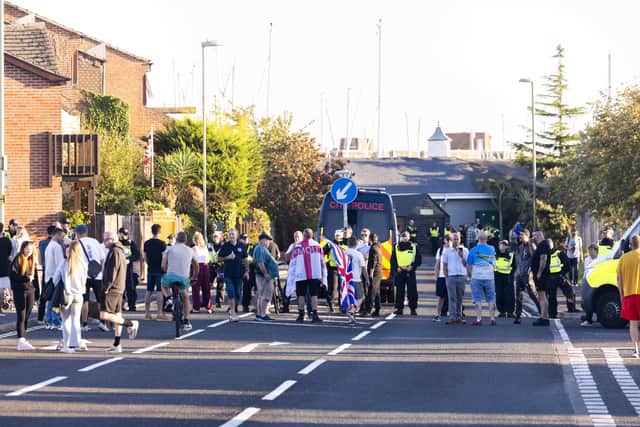

The RNLI said the lifeboats were initially tasked by HM Coastguard while Border Force vessels were unavailable. A Border Security Command Cutter was subsequently launched and attended the scene.
An RNLI spokesperson said: “Just after 11am (yesterday morning) two RNLI Lifeboats were tasked by HM Coastguard to a small boat crossing, which had been underway for 36 hours. The tasking request was made as Border Force vessels were not available to assist at the time. A short time after the RNLI were tasked a Border Security Command Cutter was subsequently launched.
“Following learnings from the public Cranston Inquiry where over 30 people lost their lives trying to cross the English Channel HM Coastguard requested the RNLI standby and support in case of a catastrophic failure of the dinghy and people ending up in the water.
“Crossing the English Channel in small boats is inherently dangerous, even in the calmest of seas. It is one of the world’s busiest shipping lanes, yet the inflatable boats used to undertake these perilous crossings are overcrowded and unseaworthy, with those aboard exposed to the elements for many hours.
“Before Border Force arrived on scene HM Coastguard directed the RNLI remove the people from their dinghy out of concern for their safety and their deteriorating health. At this point they had been at sea for over 36 hours.
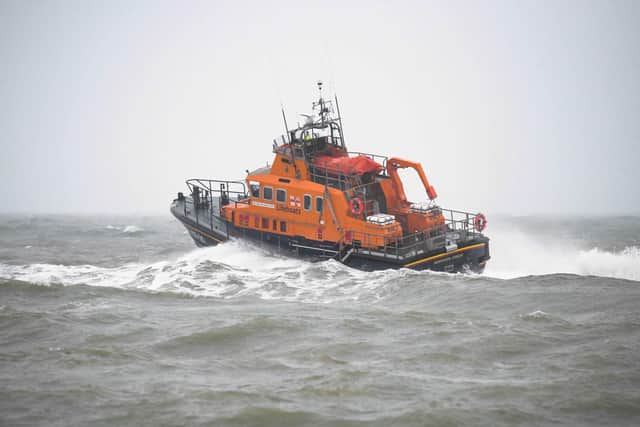
“The RNLI was also asked to facilitate transfer to the Border Force vessel.
“The casualties were safely transferred to the Border Force cutter shortly afterwards and the crew were released from their tasking allowing them to return home.
“The RNLI is the charity that saves lives at sea. We are a voluntary lifesaving rescue service, and when tasked by HM Coastguard we will rescue anyone in trouble at sea, as we have been doing for more than 200 years, without judgement or preference.
“It is not for us to question whether people have the right to be in the UK - that is a question for Government. Our core purpose as a charity has always been to save lives at sea and this remains our focus.”
As previously reported by The News, the RNLI lifeboat station in Eastney is currently closed after its volunteers were targeted by anti-migrant protesters who subjected them to online abuse and threats.
It happened after migrants were brought ashore to Portsmouth earlier this month leading to a ten-hour protest. The 120 migrants were eventually transferred by road to Dover.