
Rising costs of B&B and hotels for homeless people in Portsmouth has created a £5.6million budget shortfall
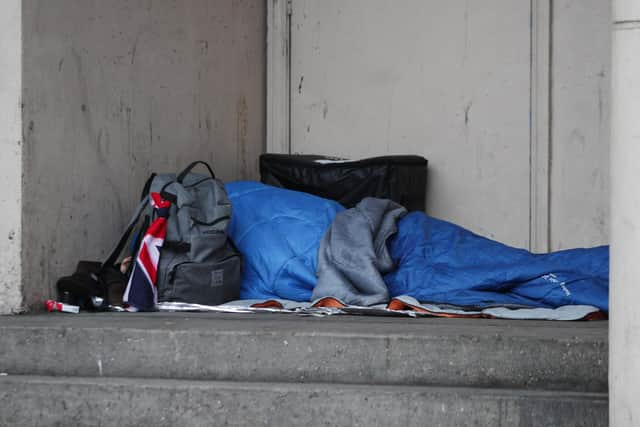
A plea is being made for emergency help to tackle a homelessness crisis which has seen the city forced to pay for bed and breakfasts and hotels to house people.
During a full council meeting, the Liberal Democrat-led administration tabled a motion calling on the Labour government for emergency funding to address the surge in temporary accommodation costs which has left a £5.6million shortfall in the budget.
Temporary accommodation refers to short-term housing provided by councils for homeless individuals or families until permanent housing becomes available. Rising demand for these services has driven the council to rely increasingly on hotels and bed-and-breakfasts, leading to an 84 per cent increase in costs.
The motion, proposed by Councillor Darren Sanders, cabinet member for housing and tackling homelessness, welcomed the £233m announced in the government’s autumn budget from April 2025. However, it stated this funding “will not deal with the current crisis” and urged the government to “deal with the causes” of homelessness.

Labour group leader Councillor Charlotte Gerada proposed amendments to the motion, accusing the administration of mishandling the crisis. She argued the root causes of homelessness stemmed from years of austerity measures.
“This is historic,” she said. “It’s ironic that the Labour government has been in power for just four months and the Lib Dem administration expects Labour to solve 14 years of Tory government failure in one budget when the country’s finances are in a dire state.”
Cllr Gerada also criticised the administration for failing to inform Portsmouth’s MPs about the budget overspend of £5.6m until a last-minute briefing was organised, which clashed with their parliamentary schedules. She described the meeting as a “tick-box exercise”, arguing it allowed the Lib Dems to claim they informed MPs before “immediately sending out a press release about this motion”.
The Labour amendments included proposals to work with the University of Portsmouth and the Ministry of Defence to explore accommodation options for those experiencing homelessness.
In response, council leader Councillor Steve Pitt stated that the temporary accommodation crisis is “not a secret” highlighting homelessness costs, alongside social care, are significant financial burdens for councils nationwide.
Cllr Pitt highlighted similar pressures faced by Southampton City Council and Hampshire County Council, which are projecting budget deficits of £39m and £175m, respectively, for the 2025/26 financial year.
He also cited a letter from Deputy Prime Minister Angela Rayner, which said the additional £233m funding was intended to “help prevent rises in the number of families” requiring temporary accommodation. However, he criticised the funding as insufficient to ease immediate pressures.
“We’re not trying to bash the Labour government,” he said. “We’re here to complain that successive governments, including our own involvement in the coalition, have not tackled this problem effectively. You are in government now, not in opposition – it’s time to face the music.”

Councillor Cal Corkery, who was expelled from Portsmouth Labour last year, voiced agreement with parts of the motion but noted that Labour “shouldn’t be expected to solve all of society’s ills overnight”.
He described the council’s £5.6m request as “short-term funding” and argued for a more preventative approach: “The only solution is to build social housing en masse – It is possible to abolish homelessness by giving people genuinely affordable homes.”
Labour’s proposed amendments were voted down, but the original motion was carried.
In response, a Ministry of Housing, Communities and Local Government spokesperson said that the government is “delivering the largest increase in social and affordable housing in a generation”, including a £500m boost to the Affordable Homes Programme to create up to 5,000 social homes.
The spokesperson also highlighted nearly £1bn earmarked to tackle homelessness by 2025/26 and £1.3bn in additional funding next year for essential local government services. Changes to the Right to Buy scheme, including reduced discounts and allowing councils to retain 100 per cent of sales receipts, were also announced.
Councils were reminded of their responsibility to balance budgets, with government support available for those facing significant financial challenges.