
Portsmouth’s electric vehicle infrastructure is set to be expanded to cope with demand
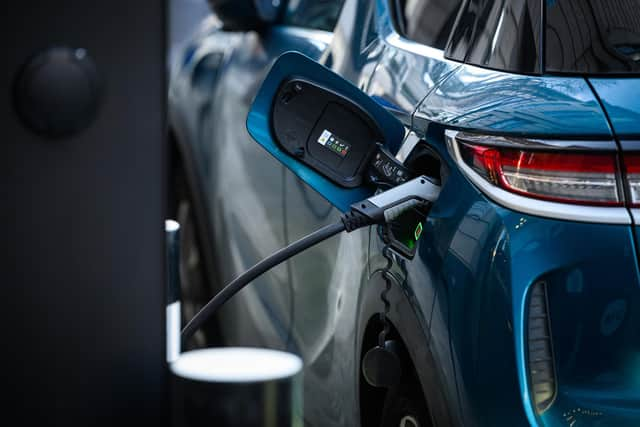
Portsmouth’s electric vehicle infrastructure is set to be expanded as part of a strategy to cope with the rise in the number of electric vehicles.
The electric vehicle infrastructure (EVI) strategy, approved at Portsmouth City Council’s transport cabinet meeting, aims to significantly expand the city’s electric vehicle (EV) infrastructure after the number of plug-in electric cars in Portsmouth doubled from 1,347 to 2,805 from 2021 to 2023 – a 108 per cent increase. By 2034, projections estimate this number will surge to 38,220 plug-in cars, including 35,100 battery-electric vehicles.
The strategy aligns with the government’s mandate for zero-emission vehicles, which stipulates that 80 per cent of new cars and 70 per cent of new vans sold will be zero-emission by 2030, reaching 100 per cent by 2035. To support this transition, Portsmouth received £3.682 million in government funding to expand public charging points.
Recent reports highlighted safety concerns that led to the disconnection of nearly 100 charging points by the council, following advice from Scottish and Southern Electricity Networks.

Councillor Peter Candlish, cabinet member for transport, said: “This is an EV strategy for the future. We’re looking forward to where we need to go. I think we’re all aware that Portsmouth has faced some challenges with the public charging network. As an early adopter of the technology, some issues were expected, and they’ve certainly materialised.”
Councillor Graham Heaney raised concerns about balancing the rising demand for EV charge points with parking space availability. He suggested that supermarkets could provide public access to private EV infrastructure. Cllr Candlish acknowledged the suggestion, adding: “The technology is evolving very fast, and new solutions are difficult to predict at the moment.”
He said that schools might also serve as potential locations for EV charge points due to their available parking spaces and quieter times.
“I think there are other public places where we should be thinking about that – I see schools as a potential,” he said. “They have the combination of car parking spaces and potentially some quieter times – I think we’re going to have many different solutions to take this forward.”