
Portsmouth Sikhs report no hostility after Henry Nowak murder
A local representative has said community relations remain strong
Portsmouth Sikhs have experienced “no hostilities whatsoever” – despite what has been seen elsewhere in the country – following the murder of Henry Nowak, according to a local representative.
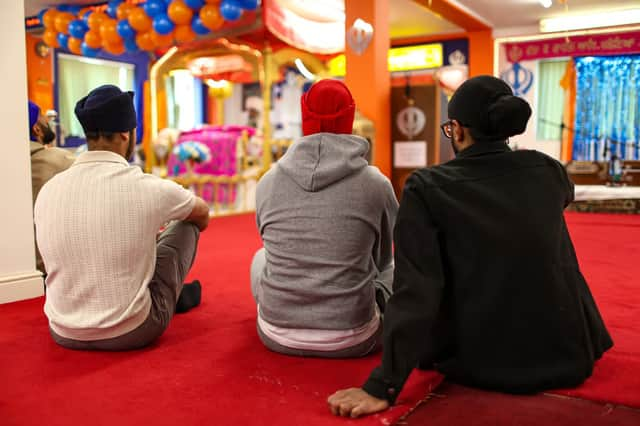

A local Sikh representative has rallied behind calls for a public inquiry, made by a Sikh Federation UK chief executive, into the “catastrophic multi-agency failures” surrounding the death of Henry Nowak.
The 18-year-old finance student was murdered in Southampton after Vickrum Digwa stabbed him five times in December last year.
He died on the street after being handcuffed, having told police officers multiple times that he had been stabbed and that he could not breathe.
In a letter to the Home Secretary Shabana Mahmood, Dabinderjit Singh, the Sikh Federation’s chief executive of political engagement, said “serious questions” remain about whether Mr Nowak’s death was preventable, and called the Independent Office for Police Conduct’s (IOPC) investigation into Hampshire Police “entirely insufficient”.
“While criminal justice has been served against the perpetrator, the wider systemic failures exposed by this case demand immediate, independent and transparent investigation,” Mr Singh wrote.
Digwa used a ceremonial knife with a 21cm blade, which prosecutors said during the trial was a kirpan he carried as part of his Sikh religion.
While he was wearing a small ceremonial kirpan knife, his second blade, described by the trial judge as “a large Sikh dagger”, was used as the murder weapon.
Mr Singh added that the police and prosecution “ought to have known” after possessing it for six months that the weapon was “not of Sikh origin” and “could not be a Kirpan”.
He said the false characterisation of the murder weapon in open court “facilitated a highly damaging wave of misinformation”.
Mr Singh said attacks on Sikhs have taken place “up and down the country” every day since Digwa was given a life sentence with a minimum term of 21 years in prison.
Digwa had been investigated by police in 2023 on suspicion of stealing ceremonial blades from a Sikh temple in Southampton, but no further action was taken.
As well as the IOPC investigation, the National Police Chiefs’ Council announced it would review anti-racism guidance, which advises police to treat ethnic minorities differently to achieve better outcomes for them - guidance that some have blamed for the actions of the officers who arrested Mr Nowak.
Donna Jones, the police and crime commissioner for Hampshire and the Isle of Wight, has requested a review of the culture and performance of the police force’s control room and the training of officers responding to the stabbing.
Jaswant Singh, a member of the Guru Nanak Sar Gurdwara committee, which serves as the Sikh place of worship in Portsmouth, agreed there should be an inquiry.
He questioned the Sikh Federation’s argument that the murder weapon was not of Sikh origin, stating he has seen many baptised Sikhs with blades similar to Digwa’s rather than the typical curved kirpan.
He said that Nowak’s murder was an “isolated incident” that was perpetrated by a “mentally disturbed” person.
He said that Sikhs have a “very good rapport” with the local community in Portsmouth and have experienced “no hostilities whatsoever”.
He said he has had no problems with neighbours where he lives and that the local Sikh temple has been unaffected, with “no repercussions like damages”.
He objected to any broader argument to ban the kirpan, stating that it is one of the five articles of faith for practising Sikhs, known as the five Ks.
He said that the best description for a Sikh is a “safe soldier”, and that whilst they “display the warrior-type image Sikhs are very calm, collected and very down to earth people who definitely don’t want to see violence”.
Sikhism is a monotheistic religion founded in 15th-century Punjab, India. It is sometimes conflated with Islam, which originated in 7th-century Arabia, although the two faiths have distinct beliefs and practices.