
Portsmouth fly-tipping falls slightly but remains above 2022/23 levels
Portsmouth’s fly-tipping statistics have improved slightly since last year, despite national figures worsening.
Every year the government releases national statistics for fly-tipping across local authority areas.
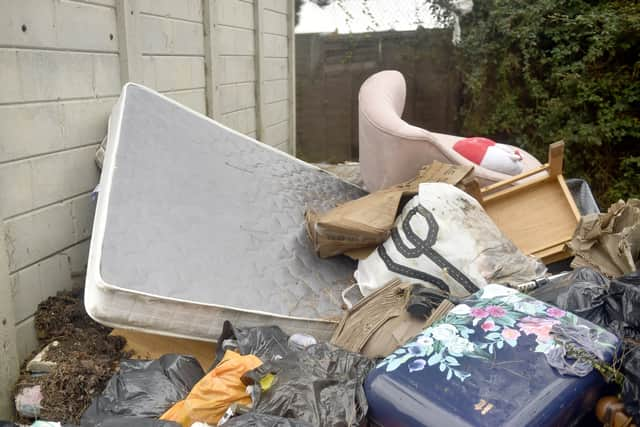

The latest figures between April 2024 and March 2025 show 937 fly-tipping incidents across the city, of which 379 were on highways and 478 were on council-owned land.
This is a slight improvement on the same period between 2023 and 2024, which recorded 1,092 incidents, of which 390 were on the highways and 622 were on council-owned land.
However, the picture has not improved compared with 2022/23, when 751 incidents took place, 168 of which were on the highway and 545 were on council-owned land.
In the most recent data set, Portsmouth City Council undertook 937 investigations, issued 38 fixed penalty notices, carried out 203 duty of care inspections and secured one prosecution resulting in a fine.
Of the waste types fly-tipped between 2024/25, there were 267 black bags and 459 other household waste incidents.
Across England, local authorities dealt with 1.26 million incidents, an increase of 9 per cent from 2023/24.
Fly-tipping most often occurred on highways (pavements and roads), accounting for 37 per cent of all incidents. In 2024/25, highway incidents totalled 463,000 – a 9 per cent increase from 427,000 in 2023/24.
A spokesperson from the Chartered Institute of Waste Management (CIWM) said waste crime is at risk of “running out of control across the UK”.
“It is evident that waste crime at all levels continues to cause misery and anxiety for local communities and causes real damage to local environments and local economies.
“Collectively we should all be clear on where the blame lies for such incidents, which is clearly on the perpetrators. These are crooks and cowboy operators, often organised criminal gangs, deliberately profiting from others’ misery, from polluting our environment and exploiting loopholes in the system.
“They must be held to account wherever possible and to pay the price for their actions – including full clean-up costs where they can be recovered.
“Landowners and regulators are often stuck between a rock and a hard place, given the obvious complexity of and gaps in the current legal framework, available powers, responsibilities and liabilities, along with the limitations in targeted resources and capacity of the regulators.”