
Portsmouth clean air projects praised in university report
Two green initiatives in Portsmouth that aim to make the city’s air cleaner have been held up for praise.
Schemes to reduce air pollution have been highlighted in a University of Southampton report into air quality best practice.

The report, titled Sharing Solutions and Best Practice, was produced by Clean Air South, which is led by the University of Southampton and Wessex Health Partners.
The consortium aims to address the harmful health effects and economic costs of poor air quality across the region.
The report highlights two Portsmouth initiatives, including First Bus’s fleet of 62 electric buses serving the city, alongside Fareham and Gosport.
A partnership between Portsmouth City Council, Hampshire County Council and First Bus secured £12.7m in government funding, alongside a £15.9m investment from First Bus South.
The initiative was recognised in the report, which stated that “since launch, these buses have made nearly 4m journeys and 1.3m miles travelled, saving approximately over 2,400 tonnes of CO2 emissions.”
Doug Claringbold said: “We’re proud to see First Bus included in the report, as it reflects the progress being made to improve air quality and reduce emissions through our investment in cleaner transport.
“In Portsmouth, Gosport and Fareham, our electric bus fleet was the first in the region and forms part of a wider commitment to working with local authority partners like Portsmouth City and Hampshire County Councils to decarbonise public transport and improve journeys for local communities.
“Last year, we also introduced four ‘repowered’ electric buses across the Solent network, converting existing diesel vehicles into fully electric buses. These are another step towards our ambition to achieve a fully zero-emission fleet by 2035.”
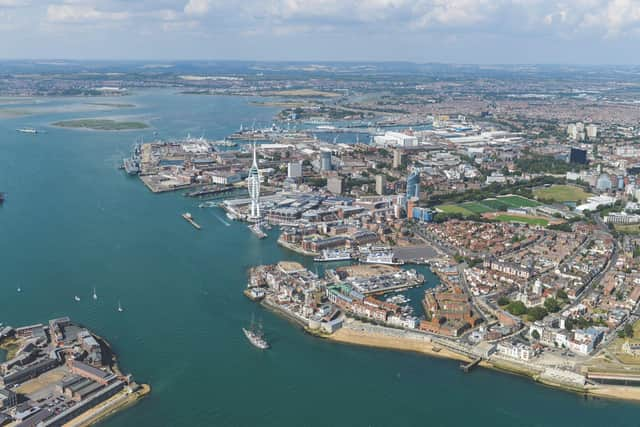
Another scheme highlighted in the report, labelled the ‘Sea Change Shore Power System’, operates at Portsmouth International Port, which is owned by Portsmouth City Council.
The system allows ships to draw electricity directly from the port, enabling them to switch off their engines while docked and operate on battery power when entering and leaving Portsmouth Harbour.
The scheme is the first of its kind in the UK and is expected to prevent around 20,000 tonnes of CO2e emissions by 2027.
Steve Pitt, leader of Portsmouth City Council, said: “Air pollution has a clear and harmful impact on both the environment and people’s health, particularly for children, older residents and those with existing health conditions.
“Addressing this is a priority for Portsmouth City Council through our Clean Air Strategy 2026 – 2040, approved in February 2026, which takes a long-term approach and focuses on protecting those most at risk.
“While challenges remain, the council is confident that by continuing to work closely with partners, residents and health organisations, real and lasting improvements to air quality and public health can be achieved across Portsmouth.”
The report can be found on the University of Southampton website.