
Next phase of flood scheme to cut sewer overflows in Fareham is approved as costs double to £1.31m
Raingardens and underground storage capacity aim to prevent the sewer network from being overwhelmed
The latest £485,000 phase of an innovative project to reduce flooding and help tackle sewage overflows in Fareham has been approved, despite the overall cost of the pilot scheme more than doubling.
A partnership between Hampshire County Council and Southern Water is bringing forward the pilot on new sustainable drainage systems. The programme is being rolled out in four phases across Westborn Road, Southampton Road and Serpentine Road.
Southern Water has committed to covering the design development and construction costs, which have risen from around £650,000 to £1.31m as it was “more complex than originally expected”.

Fareham was selected because the utility firm identified it as an area with a high number of combined sewer overflow releases and environmentally sensitive surrounding waters.
Following consents for phase 1 and 2a, council director of universal services Patrick Blogg has this month approved phase 2b for two permanent raingardens in Southampton Road and one in Serpentine Road.
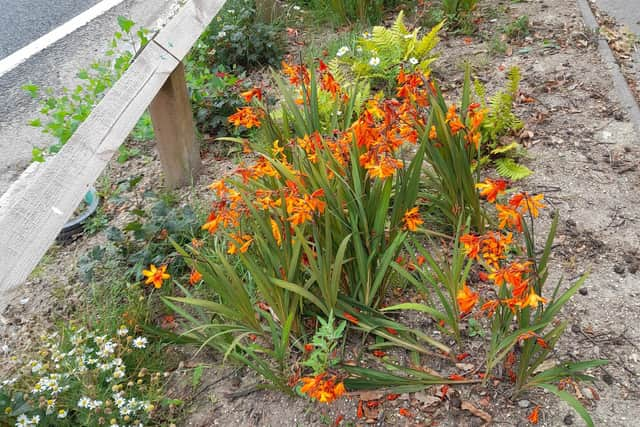
The raingardens will be landscaped with wildflower turf and bollards above ground while underground there will be a total of 80,000 litres of storage capacity.
The infrastructure is expected to reduce the rate at which water enters the sewer network from around 64 litres per second to just three litres per second.
Richard Harris, Reform UK Fareham Town county councillor, said he was keen to support any preventative measure that helped residents and the community survive heavy downpours, which were inevitably going to take place.

Cllr Harris said: “We have seen across the town and area increased issues caused by deluges of rain. We are all now getting used to the fact that it seems to be the norm that we have these dry spells and then we have periods of very heavy downpours.
“The way we used to deal with it with the standard drains isn’t sufficient. Without this ability to soak up the surface water with these sorts of schemes, we’re going to see just more flooding.”
Residents raised concerns about access to driveways, visibility, traffic movements and impacts on the appearance of the street. Council officers said the raingardens would be built within existing double yellow line restrictions and would not result in a net loss of parking spaces.
Cllr Harris said: “There are always compromises. It is a really tough challenge when you’re doing any kind of engineering projects in a residential area.”
He added: “I would hope everyone can give the project a chance. There will be some short-term pain with the development cones, noise and inconvenience.
“I am not ducking that and I think the council is aware of people’s apprehension when it comes to any kind of contractor work in your area when you have got to navigate cones or you lose the footpath for a while, but longer term I hope residents will see the benefits.”
Phase 2b also features trial measures in Serpentine Road in the form of two carriageway build-outs to test the emerging design for future stages of the project.
The trial build-outs, which will act as traffic calming features after the bend in the road, could be converted into permanent raingardens under phase 2c of the pilot if deemed suitable.
Hampshire County Council is temporarily underwriting £191,000 of the project pending completion of a revised funding agreement with Southern Water covering the increased costs.
Southern Water has also agreed in principle to cover maintenance costs for 30 years.
A Southern Water spokesman said: “We’re looking forward to working with Hampshire County Council on this sustainable drainage pilot, which has the potential to create greener streets while helping to reduce pressure on the sewer network during heavy rainfall.
“Sustainable drainage systems, known as SuDS, slow down and absorb rainwater before it reaches sewers. This can help reduce the risk of storm overflows while bringing wider benefits to communities, including more green space and increased biodiversity.
“We’ll work closely with the council and local residents throughout the process to keep communities informed as the plans develop.”
Construction work on phase 2b is due to start in October and finish in December. The wider pilot is intended to act as a proof of concept for a wider Hampshire County Council and Southern Water partnership that could see similar highway drainage schemes rolled out elsewhere across Hampshire.