
Greening work in Portsmouth will continue as data shows less than one per cent of CO2 was absorbed by trees
GREENING work will continue, the city's environment boss has said, after figures showed trees absorbed less than one per cent of CO2 in Portsmouth in 2017.
The most recent data from the department for business, energy and industrial strategy (DBEIS) revealed that woodland in the city sequestrated 0.7 tonnes of carbon dioxide per hectare three years ago.

In the same year Portsmouth emitted 813,000 tonnes of CO2, meaning trees absorbed just 0.3 per cent of the carbon released into the air.

Nationally the data has prompted outcry from environmental groups who have blamed 'woodland destruction.'
Emi Murphy, trees campaigner at Friends of the Earth, said: 'Decades of woodland destruction has left us severely lacking in one of the biggest natural allies in the fight against climate breakdown.
'Growing and maintaining more woodland is a key part of tackling the climate and nature emergency.'
But Portsmouth City Council's environment and climate change boss, Councillor Dave Ashmore, said 'positive' changes are being made.
'The data is from three years ago, a lot will have changed since then,' he said.
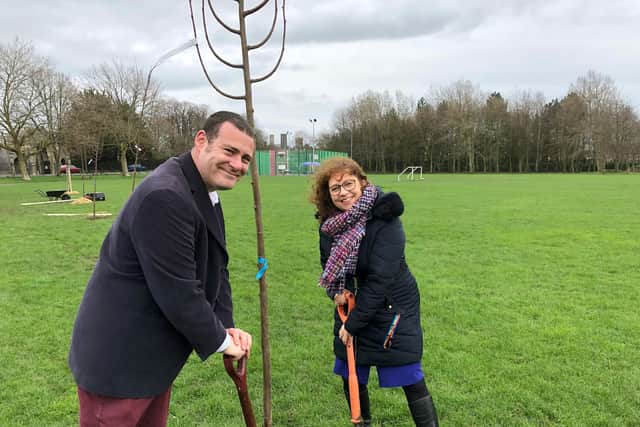
'The bulk of our tree planting has been on Horsea Island where we've planted 50,000 trees. But we have got lots of other greening projects underway such as the community orchard in Fratton.
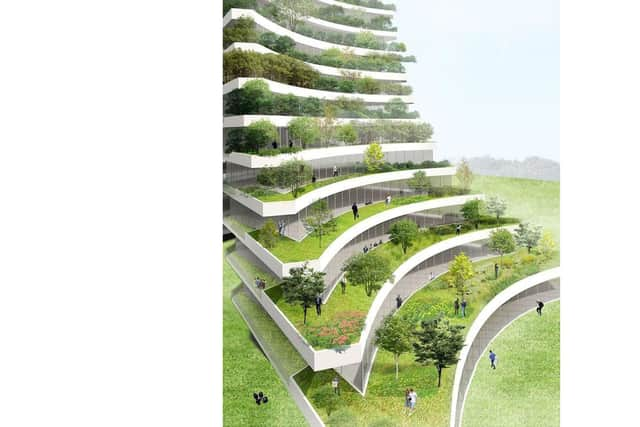
'It's not just about trees we have also been including hedges and plants. And the other thing we are looking at is living walls and where they could be feasible.
'We also know greening isn't one solution. We need to cut down on our emissions and look at the way we travel in the city.
Kimberly Barrett, founder of campaign group Keep Milton Green, praised the work of the council. She said: 'I am quite surprised it's less than one percent. But since 2017 I have found people seem to have woken up to climate change issues and this has changed significantly in the past two or three years.
'The council and the MP for Portsmouth South have listened especially concerning greening projects in some of the city's poorer areas.'
A new city-wide greening strategy that included planting 30,000 trees by 2030 was approved last month by the council.