
D-Day 80 beacon plans aim to celebrate Portsmouth’s wartime story
Plans have been submitted to place a D-Day 80 beacon next to the Landing Craft Tank on Southsea seafront.
The beacon would sit on land between the Landing Craft Tank and the entrance to the D-Day Museum car park.
Planning documents say Portsmouth City Council’s cultural services team is “keen” to install the beacon which was used to mark 80 years since the D-Day landings in the Second World War.


D-Day, on June 6, 1944, was the invasion of Nazi-occupied Normandy, France, marking a turning point for the allied forces and in June 2024 the special beacon was lit at Portsmouth Historic Dockyard - the first of more than 800 UK beacons marking the 80th anniversary of D-Day.
The council said placing it near the D-Day Museum would “enhance the overall D-Day story,” as it is close to where around 170,000 troops originally embarked.
The beacon is just over 5m high and is made from pale grey, powder-coated steel. It has ten-sided plates at the base and a large steel basket mounted on a column. It was designed by maritime engineers at BAE in Portsmouth and commissioned by King Charles III.
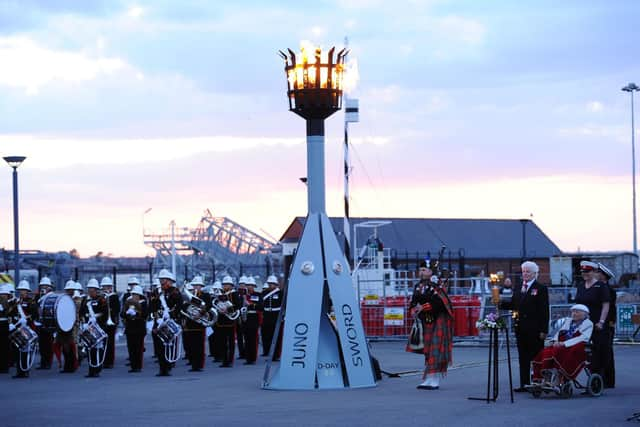
Originally, the basket was lit by a gas flame hidden inside the base. However, documents confirm it would not be lit in its proposed Southsea location. Five of the steel plates are named after the Normandy beaches linked to D-Day and each plate contains a small glass capsule holding sand from one of the beaches.
Claire Looney, the council’s partnership and commissioning manager, said the proposal would “further enhance this specific part of the seafront”.
She said the beacon would be “complimentary to the narrative” of Portsmouth’s role in the D-Day landings.

Ms Looney said the location next to the landing craft tank and D-Day Story was “relevant” because the beacon was “specifically created to mark the Normandy beach landings”.
She added that its “cultural significance” was important, as it links to the major national and international D-Day events on Southsea Common, opposite the proposed site.
Residents can view and comment on the application using the reference 25/01453/FUL.