
Councillor shares recovery story as more Portsmouth children enter drug treatment
A Portsmouth councillor has shared his recovery story after new figures showed a rise in under-18s seeking help for drug and alcohol use.
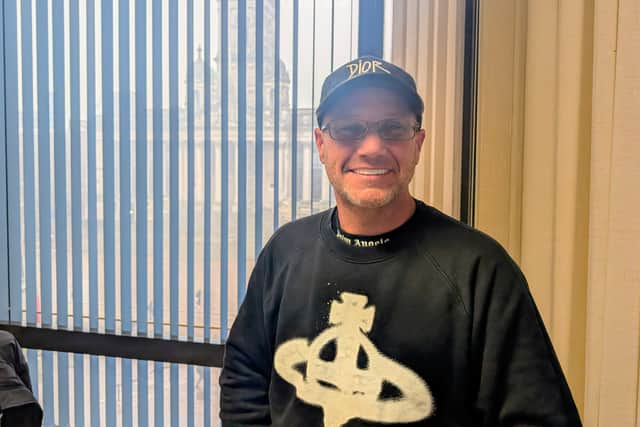
Portsmouth councillor Nick Dorrington has spoken about his experiences of addiction and recovery following figures showing more young people are accessing drug treatment.

The comments follow a previous report using BBC data which showed the number of under-18s in drug treatment in Portsmouth rose from 35 to 50 between 2023 and 2024.
Of those patients, 30 were aged 15 and under, including 10 aged under 14. Cannabis was the most commonly used drug, accounting for 45 cases, followed by alcohol (20), ketamine (10), cocaine (5) and ecstasy (5).
Nationally, across England, there were 16,212 teens in treatment in 2024/25, equating to 13 per 10,000 under-18s – up from 11 the year before.
His story
The member for Eastney and Craneswater and cabinet lead for children, families and education, told the Local Democracy Reporting Service that his addiction “wasn’t something that I went straight into”, but was instead a consequence of trauma.
He said his addiction developed over time, describing it as a progression of trauma, which he said is not always linked to a specific event, but could be a feeling that came in many forms.
He said that like many children, you “try different things” to cope. He said that when he experimented with substances there was “a certain escapism that came from that”.
He explained that long-term exposure to that escapism led to physical addiction, which then began to “strip away” integrity, self-esteem, usefulness and a person’s “position in society”.
What began as an escape, he said, “later became a means of normality”, shifting from feeling “wrapped in cotton wool” to being “wrapped in barbed wire”.
He said that even when someone is aware of the harm, the “need and want for it overtakes that desire not to have it”.
He added that as his addiction deepened, he became physically, mentally and emotionally dependent and pushed family and friends away because “they got between me and the path of ease and comfort”.
He said his biggest struggle came after he stopped using, because the “crutch is taken away and you’re left with the trauma”.
Recovery
Cllr Dorrington described recovery as a non-linear process which began in his teens, when he realised “that something has to change and that it may be self”.
He said that for many addicts, this can be a “really small window of opportunity” and without support they may not see it again.
He said that even if someone acts on that moment, failing to address long-term trauma can lead to relapse or lapse, because after weeks, months or years of abstinence “they think that there’s some element of control”.
He said Portsmouth, where he experienced street homelessness with “no view of getting out of the darkness that I found myself in”, was also where he found recovery.
At the time, he said, he had worked himself “into the belief that there was something wrong with me”, adding: “Belief systems are very strange.”
He said he had come to live in a world shaped by “my perception”, rather than truth, and that his worsening perception reinforced his belief there was “no hope”.
However, he said he found a group of people who showed him how to change his perception and invited him to follow the same path.
He said that once his perception shifted, he was able to “get past myself”, which he described as essential because “selfishness and self-seekingness was the root cause of my problem”.
He said the change helped him see that things did not happen to him but happened for him, and that this allowed him to recognise opportunities he once thought were not available.
He added that the shift ultimately led to gratitude, describing it as “the most magical thing”.
Young people
Asked why more young people were turning to drugs, he said: “I don’t think that’s increased at all”.
However, he said there were now “better provisions” for young people, particularly in Portsmouth, meaning more were engaging with support services.
He said ketamine, cannabis and alcohol were likely popular among young people due to low cost and availability.
Asked what signs parents and teachers should look for, he said “isolation and untruths” were main clues, alongside erratic behaviour.
He said parents would often notice changes, adding: “Nobody knows their children better than their parents.”
He encouraged adults to speak to children about what is going on and warned against making secretive, saying that when it becomes “seedy and hidden”, it can become attractive to some groups.
When asked what help us out there for young people without strong support networks he suggested the council’s Drugs and Alcohol Support Service (DASS), and added: “Just call me.”
“If you type in my name, my phone number comes up. Just call me. And that’s the same for parents as well.”
There is no “fix”
Cllr Dorrington said the “human element” of addiction was often overlooked, with society wrongly claiming addicts are “choosing their behaviour, which they are not, they’re escaping their pain”.
He said too much focus was placed on the effects of addiction and warned that “unless you go to the root cause of it, which is the individual trauma, and you treat that, then the effects are going to continue.”
He also criticised the lack of funding for follow-up care, comparing it to: “you’ve laid the lawn, but now you’re not going to cut the grass. Before you know it, it’s going to be a wilderness again.”
He said addiction could become an “isolated” existence, while recovery was about “unity” through “groups”, “society” and being “present in the moment”. He added that the more money invested in tackling the issue, the more of the solution could be created.
However, he said: “It’s not something we can fix,” and that “the only person that can fix addiction is the person who suffers from it,” while society and medical professionals could “outline the pathway” or “open the door” but “can’t walk you through it”.
He warned that “to dehumanise the individual is one of the worst things that we can do”, and urged people to show compassion, saying: “be kind, just be kind, just show them that they are human.”
Help in Portsmouth
DASS provides free and confidential drug and alcohol services to young people in Portsmouth, find out more information here.
The Portsmouth Recovery Hub is a working partnership between the NHS and The Society of St James charity which provides specialist advice and support tailored to individual needs.
Alcoholics anonymous Southdown intergroup lists all their meetings online, with several happening across Portsmouth on a weekly basis. The same applies to cocaine anonymous and narcotics anonymous.
Cllr Dorrington is also involved in The Silkworth Project, a supported housing scheme for addicts or those trying to rebuild their lives after addiction, which will open its doors on Elm Grove on February 13.