
Council tax to rise as Portsmouth City Council grapples with budget pressures
Portsmouth City Council has approved its 2025/26 budget, including a maximum council tax rise, amid concerns over financial pressures and calls for more government funding.
The budget was agreed during a full council meeting, as the authority faces an £18.8m rise in spending and a projected £9m budget gap by 2028/29.
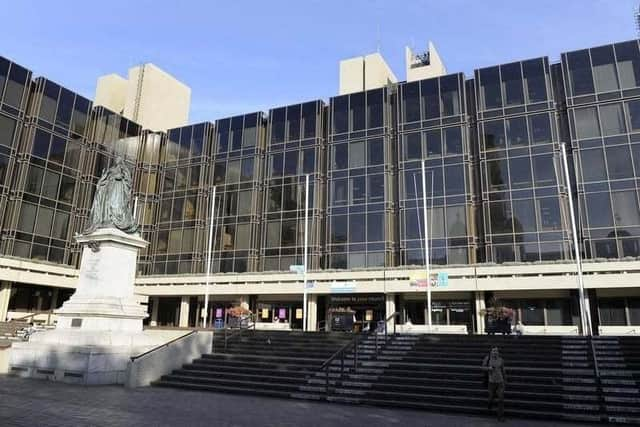

Like many councils across the country, Portsmouth is dealing with increasing costs, particularly in social care and temporary accommodation. Over the past year, the number of households in temporary accommodation has risen by 54 per cent, with costs increasing by 84 per cent.
The budget includes a 4.99 per cent council tax rise, with two per cent allocated to adult social care. The increase, the maximum permitted, is expected to raise £5.1m for the council, adding around £70 per year to the average Band B home’s council tax bill and adding £86 to the average band D property. This means the average portion of Portsmouth City Council’s portion of the tax cake will be £2,075.45 for a Band D property.
‘A very big ocean’
Steve Pitt, leader of the Liberal Democrat-run council, described the financial situation as precarious.
"It is difficult not to feel as if we’re being tossed about on a very small boat on a very big ocean and that our future is largely not in our hands," he said.
He also expressed opposition to the proposed local government reorganisation, saying: "None of us signed up to the abolition of PCC (Portsmouth City Council), losing our Lord Mayor as chair of our council meetings, to diluting the long and proud history of our great city by rolling into a new super unitary council."
Budget pressures
According to the council’s chief finance officer, Chris Ward, local government funding has not kept pace with rising costs.
“The climate for local government generally continues to be one where the pace at which costs rise is not matched by the pace at which income and funding rise, creating an underlying structural imbalance within the overall financial system,” he said.
Portsmouth Independent Party
Cllr George Madgwick, leader of the Portsmouth Independent Party, said his group largely supported the budget but had concerns over the Civic Futures project, a plan to replace the council’s offices.
“I think the budget was pretty good to be fair, there was very little room for manoeuvre," he said. "The one thing that our group felt unsettled with was the Civic Futures—I’m a bit scared of spending £2m of taxpayers’ money, bearing in mind that £2m doesn’t actually put a brick on the ground.”
His group put forward amendments focused on revisiting previously approved council motions that had not been implemented. The only PIP amendment adopted was funding for Paulsgrove Boxing Gym.
Labour
Labour group leader Cllr Charlotte Gerada criticised how councils have been funded since austerity measures were introduced.
“Central government grants have been cut in real terms by 40 per cent since 2010 and giving local authorities like Portsmouth adequate resources is going to take time,” she said.
She highlighted Labour-backed government funding for Portsmouth, including £5.7m for homelessness, £2.7m for roads, and £20m to improve health outcomes, alongside a 6.6 per cent increase in Hampshire police funding and the purchase of 448 military homes in the city.
Labour put forward amendments including additional street lighting at Cornwallis Crescent, safety bollards outside the Lawrence Arms, and play equipment replacements. These were all accepted by the administration.
Conservatives
Cllr Simon Bosher, leader of the Conservative group, said the budget “does not provide much comfort to our residents,”
He added: “We are asking them to pay more to just maintain the line while they struggle with increased energy bills and face job uncertainty.”
All Conservative budget amendments were subsumed. These included resurfacing Kenyon Road and implementing traffic calming measures for Sywell Crescent by reducing spending on the Civic Futures project.
Civic Offices debate
One key point of contention was the Civic Futures project, with opposition groups recommending taking money from the fund to support their proposals.
However, Cllr Pitt argued that deferring the project would be costly in the long run.
“Our civic offices are an environmental catastrophe," he said. "The assessments that we had done show that north of £50m would impact us like a train wreck at the end of a five-year period.
“If we stay there, the couple of million pounds that we put in the bank will end up being a £50m problem.”