
Council shake-up could leave local services "massively under threat"
Council shake-up sparks fears over services, assets and funding
Libraries, museums, community wardens and even Portsmouth’s port could be “massively under threat” under sweeping council shake-up plans, local leaders have warned.
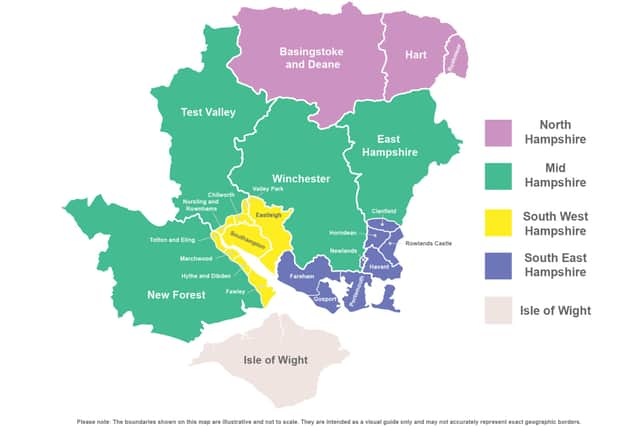

Across south-east Hampshire, councils are raising concerns that the government’s Local Government Reorganisation (LGR) could force difficult decisions on service cuts, asset sales and long-term financial stability.
At the centre of the debate is a fundamental question: whether reshaping local government into large council will strengthen services – or leave them with inherited financial pressures.
A major restructuring of local government
LGR is part of a wider government reform programme introduced in 2024 alongside devolution plans, which aim to create county-wide mayoral authorities similar to those operating in London and Greater Manchester.
The reforms would replace the current two-tier system, where responsibilities are split between county and district councils, with larger unitary authorities responsible for delivering all local services.
Ministers argue the changes will simplify governance, reduce duplication and create councils better aligned with local economies and housing needs.
But critics say the process lacks clarity, is insufficiently funded, and risks shifting rather than solving the financial pressures already facing local authorities.
Hampshire’s proposed new map
In Hampshire, proposals have been drawn up for four new unitary authorities, each serving roughly 500,000 residents.
Under one of the key proposals, Portsmouth, Fareham, Gosport and Havant would merge into a single South East Hampshire authority.
Elections for the new bodies are expected in May 2027, with successful candidates forming “shadow authorities” tasked with preparing for full operations in May 2028.
That transition period is expected to be crucial, but also contentious, as councils begin to assess what inherited financial positions could mean for future service delivery.
Fears over services and assets
In Portsmouth, concern over the proposals has been particularly strong.
City council leader Steve Pitt has been one of the most vocal critics, describing the plans as “delusional” and warning they could place significant pressure on already stretched budgets.

The Liberal Democrat member points to a projected £67m budget gap in the proposed new authority, based on financial deficits linked to Hampshire County Council, which itself faces a £101.9m shortfall in 2026/27.
If those pressures are carried into the new structure, he warns, the consequences could be severe.
When asked which non-statutory services might be most vulnerable, he said: “All of them.”
He said Portsmouth City Council has already lost around £113m in funding since austerity measures began, forcing years of cuts and slimming down services.
At present, the council has £10m and £15m of “wiggle room” where it can spend on discretionary services and “things that matter to residents” such as libraries, museums, community wardens, business support grants and the council’s events programme.
The risk of cuts, sales and restructuring
Beyond services, concerns have also been raised about the future of council-owned assets and infrastructure.
Cllr Pitt warned that financial pressures could force councils to consider selling key assets which include Portsmouth International Port, the housing portfolio, and the Lakeside offices.
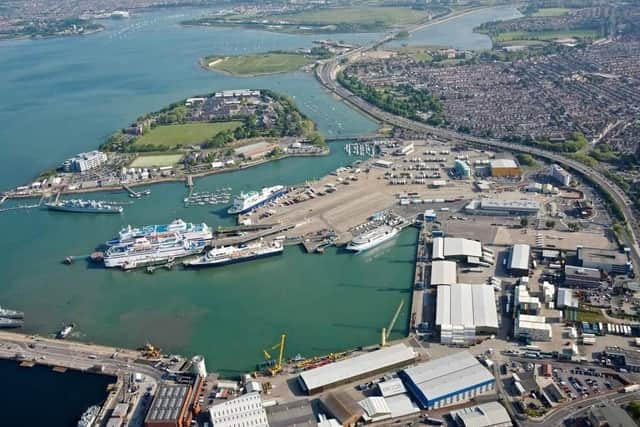
While acknowledging that asset sales could help close funding gaps in the short term, he warned that “once that money’s gone you’re then back in the same position, only you no longer have those assets”.
He also raised concerns about the council’s highways contractor Colas, warning that any change to arrangements could lead to a “levelling down” in road maintenance standards.
“All of these things are massively under threat,” he added.
Section 114 fears and government oversight
Among the most serious concerns raised is the possibility that a new authority could move towards what is known as “section 114 territory” – a legal mechanism used when a council is effectively unable to balance its budget.
In such cases, spending is restricted and government-appointed commissioners may oversee financial recovery.
Cllr Pitt said: “The first thing they do is stop all discretionary spend,” he said.
He added that if the shadow authority fails to address inherited deficits, “all our discretionary services will go in a pen stroke.”
While such scenarios are rare, the warning reflects the scale of concern among some local leaders about how financial pressures could interact with structural reform.
A wider debate over funding and responsibility
Not all councils share the same interpretation of the risks.
A Fareham Borough Council spokesperson said current figures relating to the new authority remain “indicative and based on assumptions, not agreed budgets”.
“Our new authority will be required to set a balanced budget and take a long-term, prudent approach to financial planning,” the spokesperson said.
“It would be premature at this time to speculate about any impact on frontline services or asset sales.”
Conservative Fareham leader Cllr Simon Martin criticised the lack of dedicated funding for the transition process itself.

“It does seem ludicrous that the government’s reorganisation programme is not funded,” he said, arguing that new councils will inherit the cost of structural change as well as existing financial pressures.
He also pointed to unresolved questions around adult social care funding, which remains one of the largest cost pressures facing local government.
“This is a major issue which the Government is running away from,” he said.
Meanwhile, Havant Borough Council leader Cllr Gillian Harris MBE said the future authority would be required to operate as “safe, legal and sustainable”, noting that the business case had already been considered at government level.
She added: “It is not a matter for any existing sovereign authority to comment any further on what will be a matter for the future unitary authority and its own leadership.”

Gosport Borough Council leader Cllr Zoe Huggins echoed concerns about inherited financial pressures, saying councils would continue to push for “proper funding” from central government.
Central government has consistently maintained that it is the responsibility of councils to manage its own budgets and that there are no plans to write off deficits or debt within the LGR process.