
Charity boss raises concerns over ‘concoction’ of pollutants in Portsmouth waters
Final Straw Foundation calls for more monitoring to uncover hidden water pollution
A charity boss has urged Portsmouth councillors to expand water testing, saying “we really don’t know what this full concoction is that’s out there”.
The Final Straw Foundation has called on Portsmouth City Council to support more water testing across the city’s harbours.
The charity’s CEO spoke to a Portsmouth City Council scrutiny panel during its review into sewage discharges and their impact on water quality and communities.
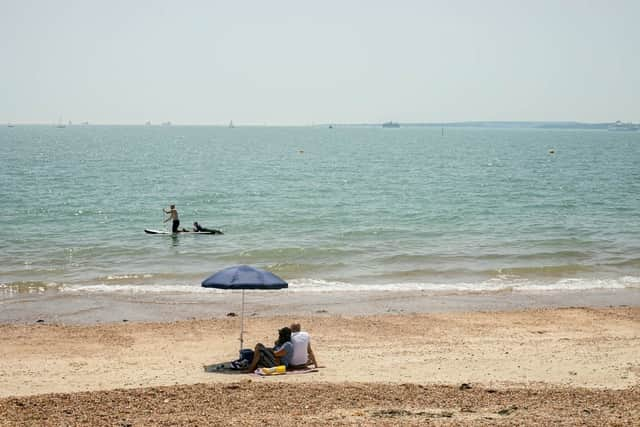

Bianca Carr, founder and CEO of the Final Straw Foundation, said the charity aims to restore, protect and celebrate the Solent.
Through the charity, she has worked with the Clean Harbours Partnership to investigate Langstone and Chichester harbours, identifying a “range of pollutants”, including pharmaceuticals and recreational drugs.
Agricultural run-off was also found in the water, including pesticides “that were banned in the 60s”.
“We only found what we tested for, we picked a top load of 100 chemicals. There are so many more chemicals. So we really don’t know what this full concoction is that’s out there.”
Ms Carr said the work “demonstrates why we need to look beyond the visible sewage – we need to consider the wider effects on our marine environment.”
She called on the scrutiny panel to “support more monitoring locations around Portsmouth and Langstone harbour”.
“An absence of testing shouldn’t be mistaken for an absence of pollution and currently we have an absence of testing.”
Ms Carr proposed the use of rapid testing, which measures the bacterial load in the water rather than identifying specific pollutants.
She also told the panel about an infection suffered by her son after he went swimming in the sea this summer.
Before entering the water, he “had a tiny blister on his arm” which, within four hours of swimming, had increased by six or seven times its size while inducing a “burning feeling”.
After a doctor diagnosed a gram-negative bacterial infection from dirty water, he was put on a course of antibiotics.
After two days, she said: “There was still tracking up his arms and the blister had popped and it started eating down into his skin”.
After two and a half weeks and multiple courses of high-dose antibiotics, he recovered, but “he is now left with a nasty scar in his arm”.
Ms Carr clarified that the infection could have been caused by naturally occurring bacteria, but raised concerns that if an immunocompromised person suffered the same infection, “we have a big problem”.
In response, Cllr Richard Adair said: “there’s no point having a wonderful seafront if people come here to use the sea get infections like your son got”.
On Southern Water, the local wastewater provider, Ms Carr said public trust towards the company had fallen in recent years.
However, she said: “we’re not saying that every bit of pollution in our sea is their fault – it’s really not, it’s part of it and that’s what I want everyone to understand.
“They are the lightning conductor, they’re the ones that get all the blame.
“My son’s infection has nothing to do with sewage, it was a dirty water infection.”
She called for more detailed data on the volume of sewage discharges, rather than the amount of time the discharges take, which is what is currently provided.
Ms Carr said legislators should increase the frequency of testing and monitoring and that water companies should be independently regulated rather than “marking their own homework”.
She also called for treatment works to go “much further”, pointing to Switzerland’s advanced treatment infrastructure, which breaks down chemicals in the water.
“Treated sewage to me means to the best possible capabilities that we have and we learn from other European countries that are doing this.
In closing, Cllr Adair said it was “a matter of will and money”.