
'Thuggery and intimidation' of RNLI volunteers condemned by the charity commission
‘I want to use this opportunity to condemn in the strongest terms the thuggery and intimidation that volunteers of the RNLI have faced’
The “thuggery and intimidation” RNLI volunteers face from anti-migrant protesters has been condemned by the charity regulator.
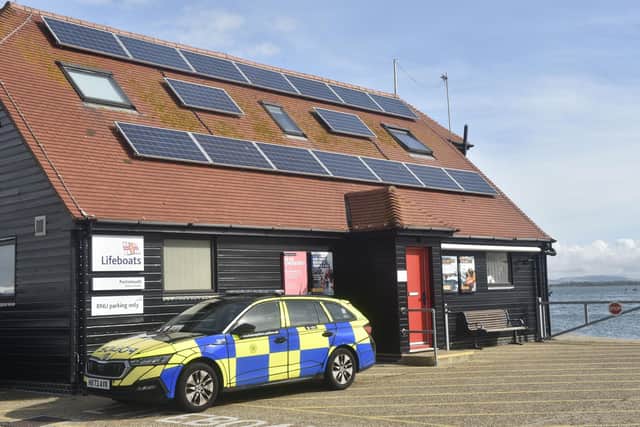
Last month, the RNLI – Royal National Lifeboat Institution – said it had paused its services in Portsmouth in the wake of abuse of its volunteers following anti-migrant protests.
The charity’s volunteers were targeted for helping migrants at sea, with footage posted on social media showing them described as “traitors”, after bringing a dinghy to safety in Eastney on September 6. Further anti-migrant protests have taken place in Gosport with the RNLI once again being called upon to assist with bringing small boats to safety.
The RNLI’s stated aims on the charities register are to “save lives, promote safety and rescue service efficiency, and provide relief from disaster at sea”.

Dame Julia Unwin, addressing the Charity Commission’s annual public meeting for the first time as chairwoman, will say different views should be welcomed as evidence of freedom of conscience in UK society.
But she will warn against the “normalisation of violence” and highlight there is a difference between “heated discussion” and harassment or abuse.
Speaking in central London, she is expected to say: “I want to use this opportunity to condemn in the strongest terms the thuggery and intimidation that volunteers of the RNLI have faced over recent weeks – and indeed over months and even years.
“Charities must only do things that meet their purpose and objects. For the RNLI that means rescuing people in peril in the sea. It is not their right to do so. It is their absolute duty.
“The charitable sector must have the courage to tolerate vigorous debate, individual charities must accept that people might disapprove of their work, for reasons of values, politics, faith or identity.
“We should in fact welcome differences of view as evidence that we are living in a society in which everyone has freedom of conscience. But we must never grow accustomed to criminal or para-criminal abuse.”
She will say the commission’s role in regulating charities “means being prepared to register charities whose purposes, while allowed in law, might upset some people”.
In 2023, transgender rights group Mermaids lost its case to have gay rights organisation LGB Alliance stripped of its charitable status in what was believed to be the first case of its kind in the UK.
Mermaids – which supports transgender, non-binary and gender diverse children and their families – had appealed against the decision of the Charity Commission to grant LGB Alliance charitable status in 2021.
It was thought to be the first time in the UK that a charity has sought to have the charitable status of another removed.
Dame Julia will say the commission must also be “willing to resist pressure from the media, government, or other charities to find against a charity in the absence of clear evidence” and take action against a charity “when the law requires it, even if that means getting in the cross hairs of sensitive debates”.
This week, the Government opened a consultation proposing that people convicted of hate crimes and serious national security offences can be automatically disqualified from being charity trustees. The suggested changes are aimed at ensuring the charities regulator is able to keep pace with “changing threats”.