
Smart motorways such as M27 have 'failed' with drivers 'less safe', AA says
Smart motorways such as the M27 have “failed”, with it time to bring back the hard shoulder, the AA has said.
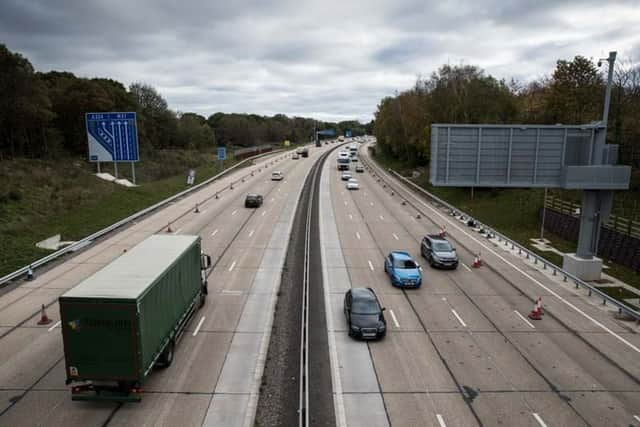

The controversial introduction of smart motorways has led to drivers feeling “less safe” compared to before when motorways had a hard shoulder, the driving body said.
On the M27 smart motorway between junctions 4 and 11, the hard shoulder has been transformed into a permanent running lane. It means drivers instead have to use designated emergency areas at specific locations if needed.
The situation was highlighted just yesterday on the M27 after a car exploded between junction 11 and 12 during Friday evening rush hour. This resulted in the vehicle being able to pull onto the hard shoulder - but this would not have been possible just a short distance further back.
Safety concerns have also been raised about smart motorways technology not always working - with a BBC probe revealing no cameras were working for a day on a section of the M27 in May 2023.
Following National Highways’ latest research into the safety of smart motorways, and analysis by the Office of Road and Rail (ORR), the AA is now calling for the reinstatement of the hard shoulder on smart motorways.
Edmund King, AA president, said: "Data released by National Highways shows that several sections of All Lane Running on the M1 have a higher killed or seriously injured rate now than before the loss of the hard shoulder. At the same time, a third of radar detection schemes tested failed to meet the standard - two of which failed and worsened in a 12-month period.
"Shockingly, the M62 J10-12 had a system failure for almost a month. This loss of safety technology, which drivers have been asked to put their trust in, meant they were put in unnecessary danger.
"It is little wonder that a third of drivers say they feel less safe on smart motorways compared to three years ago. It is time to accept so-called 'smart' motorways have failed and side with the majority of drivers who want the reinstatement of the hard shoulder."
An investigation by BBC’s Panorama previously revealed hundreds of incidents when crucial safety equipment was out of action. Radar and cameras on smart motorways are meant to boost safety by spotting broken-down vehicles with warning signs meant to close affected lanes.
The removal of the hard shoulder has sparked fears about the safety of drivers who break down. Overall, smart motorway technology failed more than 400 times over a 17-month period. Data also revealed there were 397 power failures between June 2022 and February last year, the BBC found.