
From a portacabin and ambulance that could fly - behind the scenes of air ambulance's new £3.6m base
The air ambulance hopes to save more lives after its move from north of the county
They’ve come a long way from operating out of a portacabin and being ambulances that could “just fly” when they started out in 2007.
Today, Hampshire and Isle of Wight Air Ambulance now operates from its incredible new base, strategically located at Southampton Airport after £3.6m was raised from over 13,000 donors to sponsor the life-saving organisation’s new headquarters.
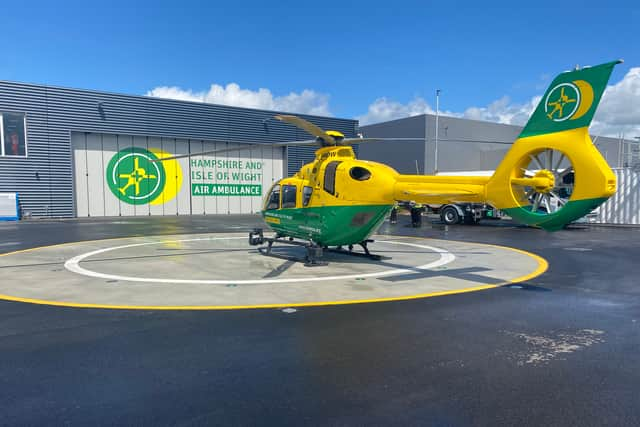

The crew had operated out of Thruxton near Andover - but data showed around 70 per cent of the service’s emergencies occurred in the south of the region, nearer the more densely populated cities such as Winchester, Southampton and Portsmouth, as well as the Isle of Wight.
With every minute crucial in getting to people, the distance from its previous base in the north of the county meant crews would often spend up to 20 minutes flying to reach a patient - and the same again returning to base.
That time increases fuel, funding and time that critically unwell or injured patients do not have. Preliminary data already show the teams are reaching patients far quicker than ever before.
Doctors, pilots and advanced paramedics can now “bring the hospital to patients” even in difficult terrain, such has been the progress of the air ambulance in its 19 years. They are able to perform blood transfusions, put people into induced comas and even deliver amputations at the scene of an incident due to the high-tech equipment and expertise on hand.
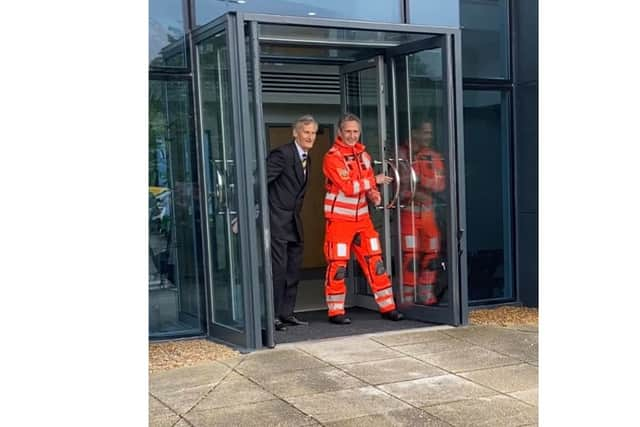
Medical lead, Dr Chris Hill, said: “Air ambulances were traditionally ambulances that could just fly but now we’ve moved into a critical care space where we are delivering very advanced procedures, skills, knowledge and medicine which is just not available anywhere else out there. It’s a really exciting space to be in.
“The air ambulance has more advanced equipment than a traditional ambulance with critical decisions made about what incidents to attend and what to leave to the ambulance service.
“If the patient could be treated by a normal ambulance then we probably wouldn’t go. We only go when we think we can add something on top of what the ambulance service provides.”
Rebecca Brackwell-Slade, chair of the board of trustees, said: “When we originally set up we only did stuff in the day time, it was volunteer based clinicians and now we’re doing world leading critical care delivery.
“We’ve got dedicated clinical teams and a charity team. We’re now flying 19 hours a day with two additional cars we have for critical care.
“We have a senior consultant, an anaesthetist, a trauma specialist and a critical care paramedic so we bring the hospital to you. So everything you’d receive in hospital we can do in your home, in your workplace or at the roadside which really makes a difference whether someone recovers from an incident.”
Revealing the extent of care people can receive from the air ambulance, Dr Hill added: “One of our signature manoeuvres would be to put someone on life support at the roadside. We can put them to sleep by giving them a full anaesthetic, perform surgery if needed, give you a blood transfusion and then deliver people to the place they need to go to be treated.
“For example, for a head injury where you were unconscious we would give you the anaesthetic, we would stabilise you and protect the brain and give you the best possible outcome we could get.
“We would bypass the emergency department at the hospital and take you straight to the CT scanner so we know what’s going on. If your injury requires an operation we would take you straight to the operating table and hand over to the surgeon directly. So we’ve cut out all the delays and taken you straight to where you need to be.
“A lot of the situations are time sensitive - minutes make a difference - whether that’s cardiac arrest, bleeding, head injuries, it’s all about stabilisation and providing the care they need and then taking them to the best place to have the best outcome.”

The highly trained team can perform amputations, deliver babies by caesarean section if the mother’s in cardiac arrest and can perform open heart surgery. “So we open someone’s chest to repair a hole in their heart where they’ve been stabbed or shot,” Dr Hill, who has performed open heart surgery twice for the air ambulance, said.
“We train for those procedures quite frequently because no one is doing huge volumes of them thankfully. These are procedures we don’t want to be doing every day but we can do if required.”
The crew are also able to give “very specialised” medicines to stabilise patients and the same level of care as hospitals. “We give them the same level of care as if they had just arrived in hospital which bides them time to be stabilised and taken to intensive care and gradually recover,” Dr Hill said.
The doctor, who splits his time working in the emergency department at Southampton General Hospital with the air ambulance, recognises the importance of the team’s role. “It’s a really privileged place to be and we’re always looking at making sure we deliver just the right amount of care, just exactly what the patient needs at that time and then take them to the right place where they can get the right care,” he said.
The new base will also help the crew deal with an increasing workload after already having responded to 1,000 callouts this year when they normally have 2,500 a year.
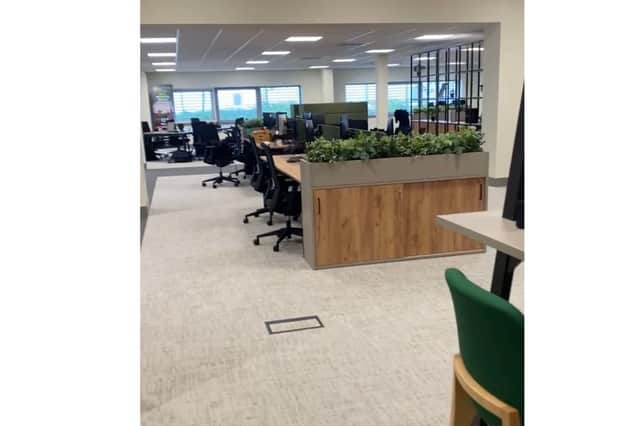
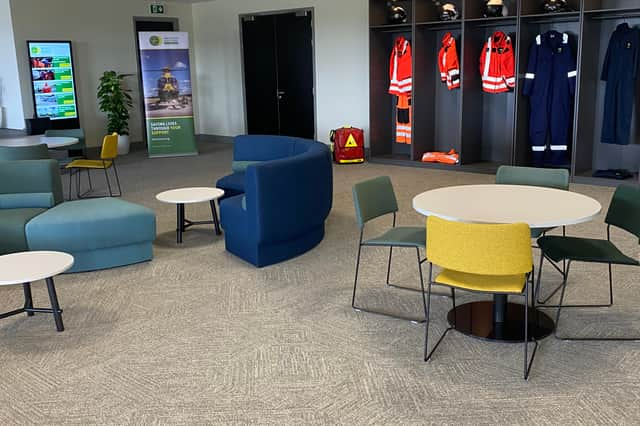
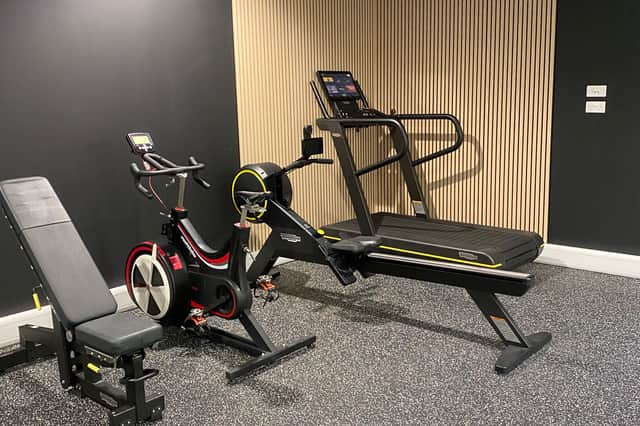
The two-storey site features a hangar to house the helicopter, a helipad, office space, aftercare facilities, on-site crew accommodation, gym, training and briefing rooms, and a garage for the charity’s fleet of emergency response vehicles.
A visitor centre with a 150 capacity overlooks the helipad and hangar, providing an inspirational setting for the charity’s CPR training and is also available to book for corporate events, meetings and training days.
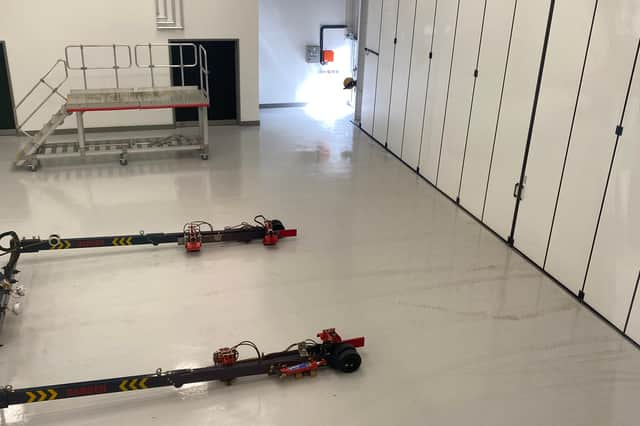
“We’re busier than ever before. It’s quite common you’ll see the aircraft go out five or six times throughout our 19-hour operating period in the day. We’ve got a car service too so depending on where the location is we’ll use the vehicle that’s most suited,” Dr Hill said.
Critical decisions on what to attend are made by the “despatches” team who listen to emergency calls before deciding whether the air ambulance needs to go. “Certain jobs are known as an ‘immediate send’. Based on what you’re hearing or what’s been typed in by the person taking the 999 call if it’s so obvious we need to be there they will just send us,” Dr Hill revealed.
“Most of what we get sent to is because they’ve listened to the call, they’ve used some judgement to try and work out what’s going on and whether we are going to add value. And because we are so much closer to most of our population now we’re finding already that we’re getting to people so much sooner. We can be on the Isle of Wight in five minutes, it’s incredible.”
He added: “Dispatches is a real art and that’s why we employ specialists so we’re constantly refining that data to be as perfect as possible. We will continue to research the most accurate way to dispatch our team. We’re pretty accurate and pushing to only target those patients where we need to be at.
“It’s about saving lives and improving outcomes for people. We can make a difference so people recover normally.”
Dealing with life and death situations away from hospital also provides extra challenges which the crew have to prepare for. This also includes being physically up to the task and explains why the new base has a modern gym, which all the medics regularly use.
“The environment does add to the complexity for sure, it could be in the rain and wind or in the dark,” Dr Hill continues.
“Our teams are trained very specifically for that. We control everything we do and are very specific about our business and so that gives us the advantage. Because we do this all the time we get used to it and are then able to perform at the highest possible level. We have become so professionalised I now find it just as easy as working in hospital.”

And Dr Hill says his work at Southampton General Hospital enhances his ability to do the job with the air ambulance. “The areas complement each other very nicely. I can see what the steps needed to get back to health are (for air ambulance patients) so I can start making short cuts and get them into the hands of specialists who will take their care forward,” he said.
“Having your doctors work in a hospital and on an air ambulance is the magic and put them alongside a specialist paramedic and you’ve got something really special. That’s a force to behold and I think we’re very lucky in this country to have an air ambulance community to work together and continue to excel in this space.”