
First side-necked turtle discovered on the Isle of Wight by an amateur fossil collector and Portsmouth palaeontologists
A 127 million-year-old fossil has been found of the first side-necked turtle to have been discovered to have lived in the UK by an amateur fossil collector and Portsmouth University palaeontologists.
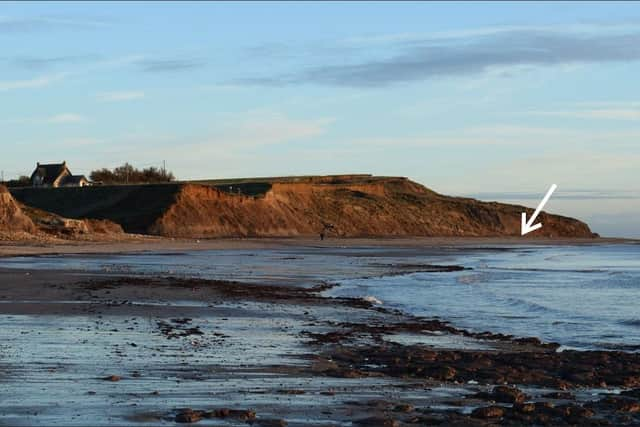
The fossil has been nicknamed 'Burby' after enthusiast Steve Burbridge who found it on the foreshore of Brook Bay on the Isle of Wight. Palaeontologist Megan Jacobs from the University of Portsmouth has analysed the fossil and confirmed it to be of the earliest of the side-necked pan-pleurodiran turtle, named because they folded their neck into their shell sideways when threatened.
This defensive posture left them only capable of spying out of their shell with one eye. The turtle fossil is an almost complete shell with cervical, dorsal and caudal vertebrae, scapulae, pelvic girdle and appendicular bones but with the skull was missing.
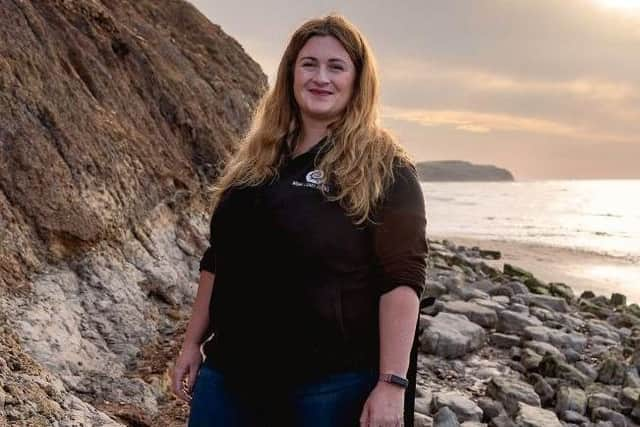

Ms Jacobs said: "This is an amazing discovery because it's the first time this type of turtle has been found in the UK.
"Even more exciting is that we used a new technique of radiometric dating to determine the age of the fossil beyond any doubt. And to top it off, CT scanning revealed all the tiny bones inside.
"It's really incredible for what looks like a rolled beach pebble."
Ms Jacobs and colleagues dissected minerals from inside the turtle shell fossil, which has been donated to the Dinosaur Isle Museum in Sandown, and analysed them for uranium and lead.
The researchers also used cutting-edge micro CT scanning at the University of Portsmouth's Future Technology Centre to discern various tiny bones.
The imaging technique provided insight into the structure and composition of the turtle's shell, without damaging it, with the findings published in the journal Cretaceous Research.
Mr Burbridge said: "It's beyond my wildest dreams to have one of my finds published. I could never have guessed it was such an incredibly important fossil. It's so wonderful to see all the tiny bones inside too."