
Human review: The BBC’s touchy-feely new series reminds us how our ancestors put the human in humanity
At times during the BBC's new landmark documentary series Human (BBC2, Mon, 9pm), the evolution of our species sounds like a particularly uncomfortable family wedding.
Paleoanthropologist Ella Al-Shamahi describes some of the human species that our own homo sapiens shared the earth with hundreds of thousands of years ago.
There was homo erectus – the first to leave Africa; Neanderthals, adapted for cold weather and expert hunters; and homo floresiensis, were about three-and-a-half feet tall and have been tagged as The Hobbit in anthropological circles.
Al-Shamahi evokes the Lord of the Rings, but it is that wedding that comes more readily to mind, one of those dos when you meet distant cousins and great aunts for the first time in decades and wonder how on earth you can be related to them.
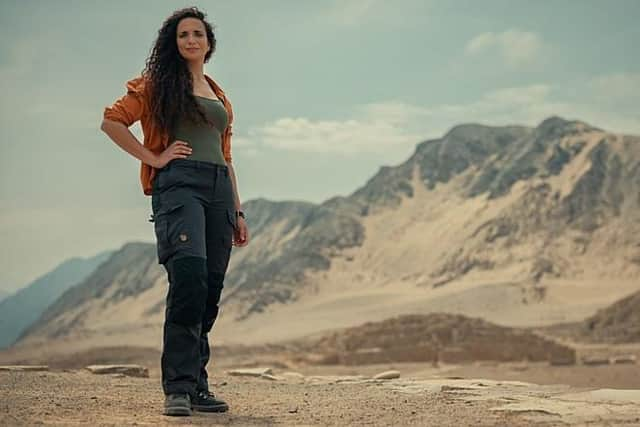

But this illuminating series also has resonances with the present day, as Al-Shamahi draws a picture of homo sapiens as a “connected and co-operative species”, one which talked with other groups and learned from them.
Looking at the headlines today, you'd be hard-pressed to divine where that interconnectedness has gone.
But this is more than a parable for how we should all get along or swap shell bracelets.
It's one of those series – like most of Prof Brian Cox's TV lectures – which is full of sweeping shots across deserts and broiling sulphur pits and red-hued mountains. There's lots of Al-Shamahi walking across a barren landscape into the sunset. And there are living, moving dioramas of people posing as our ancestors as they herd goats through the dust.
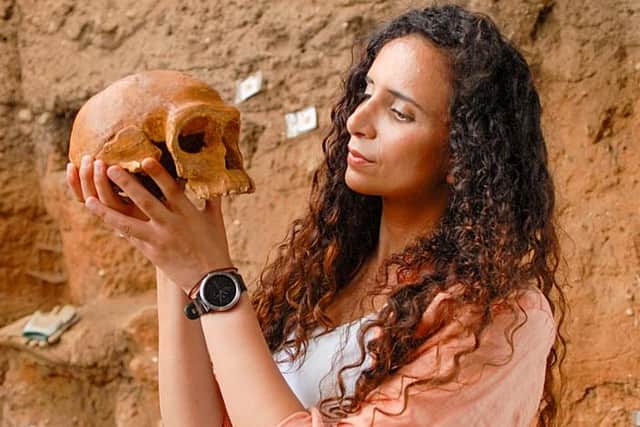
Human is never far away from trying to forge an emotional connection with those early humans too, as Al-Shamahi imagines encounters with these distant ancestors.
“If we were to look into their eyes, into those quite delicate features,” she gushes, “would we see ourselves within them?”
All of this touch-feelyness, however, can't obscure the general jaw-dropping nature of the whole thing – not least the massive twists of fate and fortune that led to you, and me, and them, being here, together.
There are new breakthroughs to suggest that East Africa was not the cradle of civilisation it was thought to be, but that homo sapiens developed across Africa, spreading and intermingling and co-operating in such a way as to ensure our survival above the other human species.
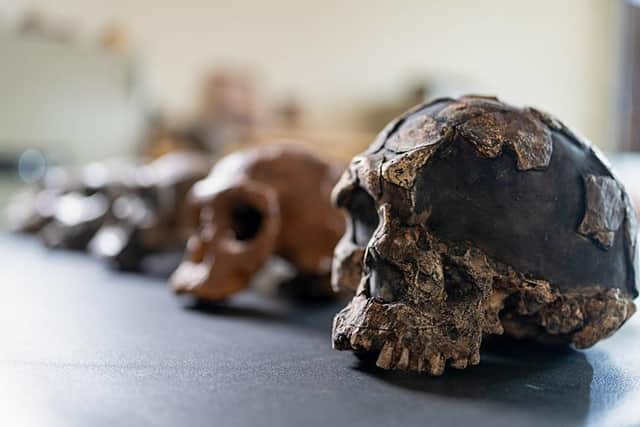
Similarly, there is evidence that on a mountain in what is now Israel, homo sapiens and Neanderthals lived in neighbouring caves.
“We don't know if they interacted,” says Al-Shamahi, but it sounds like a pitch for a good sitcom.
Meanwhile, we see how the ability to think in the abstract, to see snakes caught in the rocks, to offer gifts and to make art showed the development of the human brain to see beyond the concrete and come up with new advances.
Much of it is mind-boggling, not only because of the sheer amount of knowledge being dropped on, but the whole sweeping vastness of time thing.
But it looks fantastic, keeps a light touch with its learning, and Al-Shamahi is an engaging, passionate presenter who looks like she could do for skulls and beads what Cox did for moon rocks and sunspots.
And, more importantly, it brings our ancestors into sharper focus – their way of being “connected and co-operative” - and makes you think that maybe they had the right idea in the first place.
If we can get along at that wedding, why not try it in the wider world?