

A haunting snap of a rarely-seen hyena passing through a mining ghost town has earned its creator the 2025 ‘Wildlife Photographer of the Year’ title.
The winners of the prestigious competition – which is developed and produced by the Natural History Museum – and each of its diverse categories were unveiled at an awards ceremony in London on Tuesday night (October 14). This year’s grand prize went to South African wildlife photographer Wim van den Heever, for his powerful image ‘Ghost Town Visitor’.
Van den Heever, who also won the ‘urban wildlife’ division, captured the elusive brown hyena – the rarest hyena species in the world – passing through a long-abandoned diamond mining town in Namibia. The photo was taken using camera trap technology, the culmination of a decade of trying.
Jury chair Kathy Moran said that she got a prickly feeling just looking at the image. “You know that you’re in this hyena’s realm. I also love the twist on this interpretation of ‘urban’ – it was once but is no longer a human-dominated environment. Abandoned by miners, wildlife has taken over. Repopulated, if you will. Is it still a town – it would seem that way to me – just no longer ours.”
Other division winners include a stark snap of a longhorn beetle looking out over an abandoned digger; an orphaned giant anteater pup tottering after its caregiver; and a UK photo of an orb weaver spider tucked away in its web on a frosty September morning – the winner of the under-10s category.
All of these entries – and more – will be available to view at the Natural History Museum in London, with the exhibition opening on Friday (October 17), and running until July 12 next year. It will then embark on a UK and international tour, the Museum says, “to inspire millions to appreciate and conserve the natural world”. You can buy tickets to the initial exhibition online here.
Here are a few of the 2025 winners in some of the competition’s key categories, each of which shows off a different facet of the natural world in all of its glory:
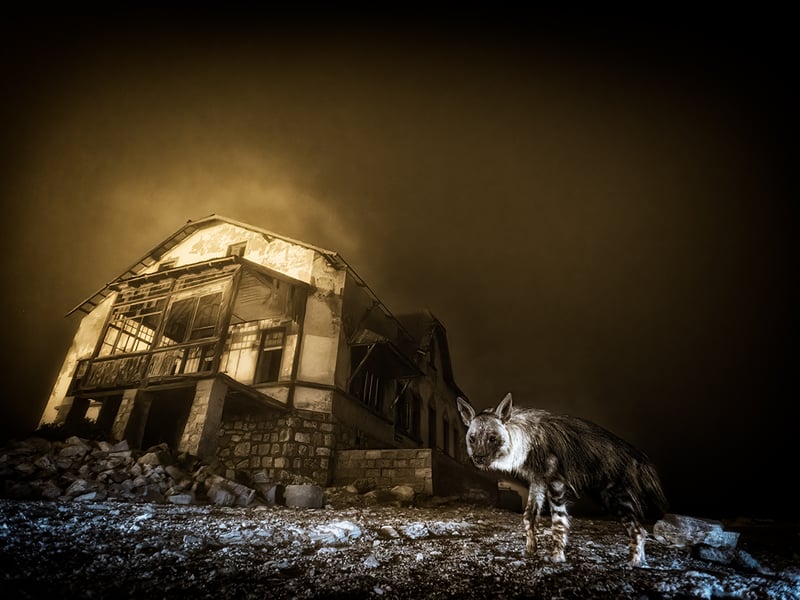
1. Ghost Town Visitor - Wildlife Photographer of the Year 2025
With sea fog rolling in from the Atlantic Ocean, Wim chose this spot for his camera trap after noticing hyena tracks nearby. ‘It took me 10 years to finally get this one single image of a brown hyena, in the most perfect frame imaginable.’ The rarest hyena species in the world, brown hyenas are nocturnal and mostly solitary. They are known to pass through Kolmanskop on their way to hunt Cape fur seal pups or scavenge for carrion washed ashore along the Namib Desert coast. | Wim van den Heever (South Africa)/Wildlife Photographer of the Year
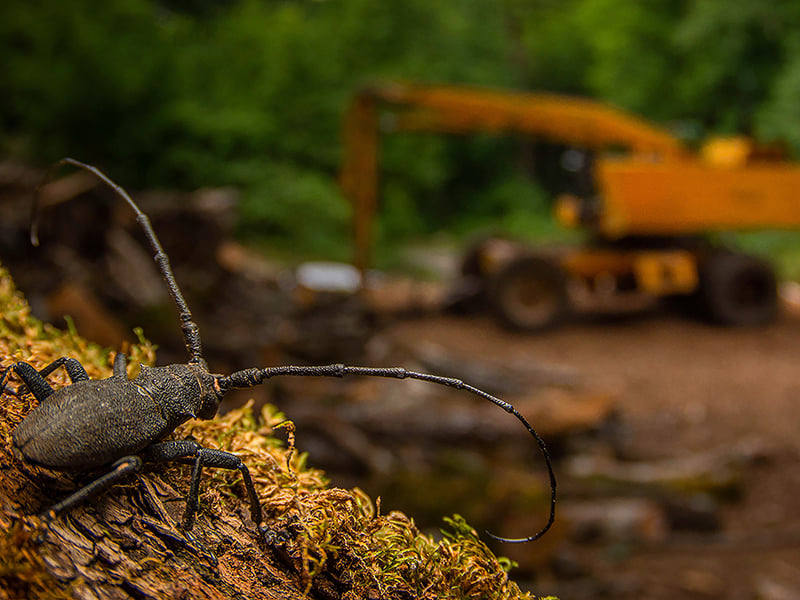
2. After the Destruction - Young Wildlife Photographer of the Year 2025
Andrea noticed this longhorn beetle while walking in the Lepini Mountains of central Italy, in an area once logged for old beech trees. Using a wide-angle lens and off-camera flash, he framed the beetle against abandoned machinery. Andrea’s photograph tells a poignant story of habitat loss. As longhorn beetles tunnel into dead wood, fungi make their way inside, helping to break it down and recycle nutrients. If the beetles’ habitat is disturbed or destroyed, the effects ripple across the entire ecosystem | Andrea Dominizi (Italy)/Wildlife Photographer of the Year
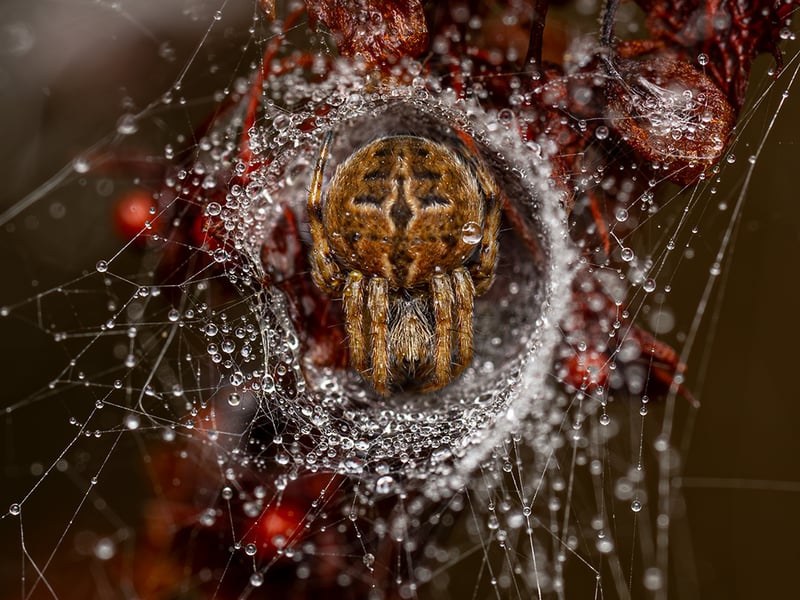
3. The Weaver’s Lair - Winner, 10 Years and Under
Jamie first noticed the dew-laden web before realising its maker was sitting in a nest. With the patience and steadiness needed to manually focus her camera, she kept the spider perfectly lit and symmetrically framed. This spider’s web is constructed from a scaffold of radial threads, overlaid with a spiral of sticky silk to hold ensnared insects. A strong signal thread transmits vibrations to the spider’s hiding place, triggering it to emerge and collect its prey. | Jamie Smart (UK)/Wildlife Photographer of the Year
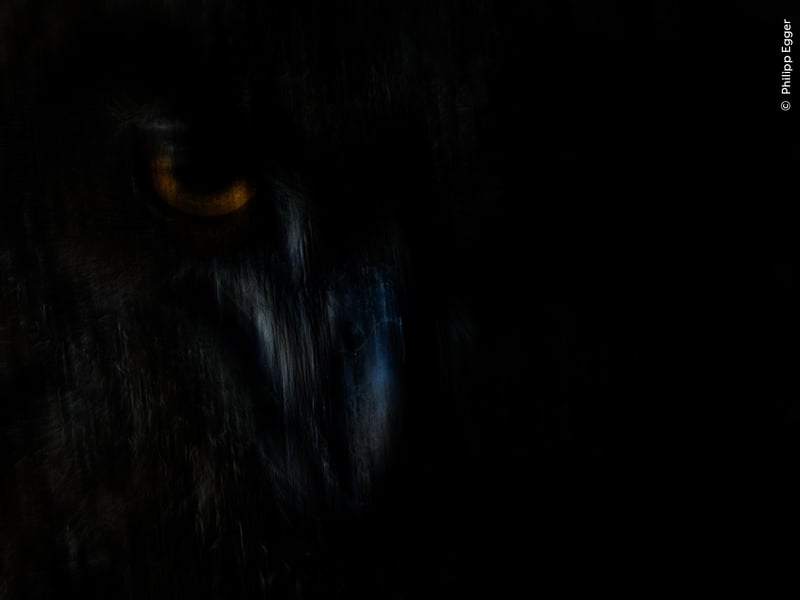
4. Shadow Hunter - Winner, Animal Portraits
Philipp Egger’s (Italy) patience is rewarded with the orange glint of an eagle owl’s eyes and the evening light falling on its feathers. Philipp first saw this nest while climbing and spent four years observing it from a distance. He planned this image meticulously, right down to the slight camera wobble to blur the few elements present, using a telephoto lens. | Philipp Egger (Italy) - Wildlife Photographer of the Year