

A cedar scaled by The Beatles, a stand of ancient yews that inspired William Wordsworth, and a lone birch which Liam Hemsworth could soon make a lot more famous are fighting it out to be crowned the country’s best tree.
But which one wins will be up to you. Voting is now underway in the Woodland Trust’s 2025 Tree of the Year competition, an annual celebration of some of the oldest, most unique and storied denizens of parks and woodlands across the UK. There are only a few days left to cast your vote (which you can do online here), with the ballots closing at midnight on Friday, September 19.
After they’ve been tallied up, the winner will be announced next Friday (September 26). The victor will then go on to represent the UK at the European Tree of the Year finals.
This year’s theme was ‘rooted in culture’, meaning each of the nominees has inspired poems, graced our movie screens, or played a part in history. Actress Dame Judi Dench, who is also a patron of the Woodland Trust, says that our oldest trees “hold more stories than Shakespeare”.
“Some were putting down roots long before he began writing, more than 400 years ago. They are as much part of our heritage as any literature.” Each of the 2025 finalists were “trees that foster creativity and inspire”, she continued. “I hope you will join me in voting.”
Here are the ten trees from across the UK amongst this year’s finalists – and just what makes each of them so special:
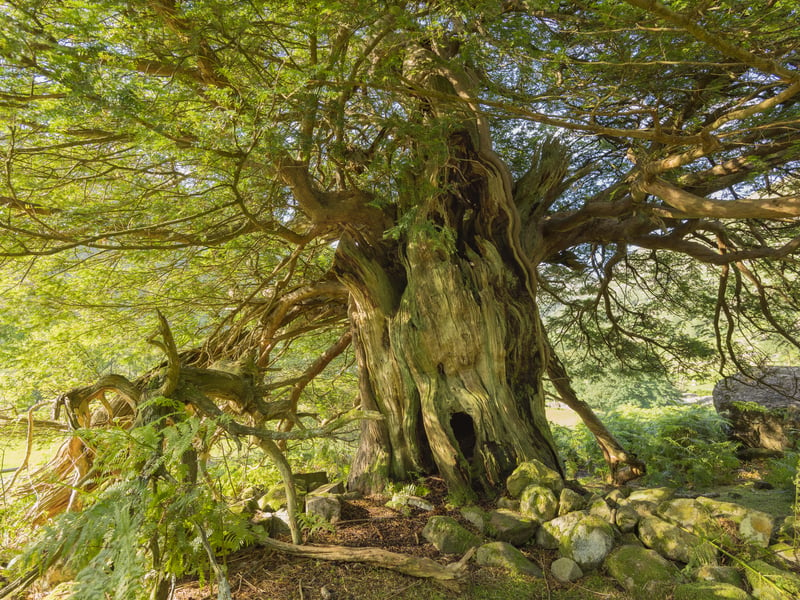
1. The Borrowdale Yews, Cumbria
This “huddle” of ancient yew trees is thought to be around 2,000 years old. Sitting on an exposed Cumbrian hillside, they were described by William Wordsworth in his 1803 poem ‘Yew Trees’. Although he originally referred to four yews, one was lost in the Great Storm of 1884 – but its remains still lie alongside the others. Although appearing to be separate trees, DNA has proven they all grew from the same original plant. | James Reader/Supplied
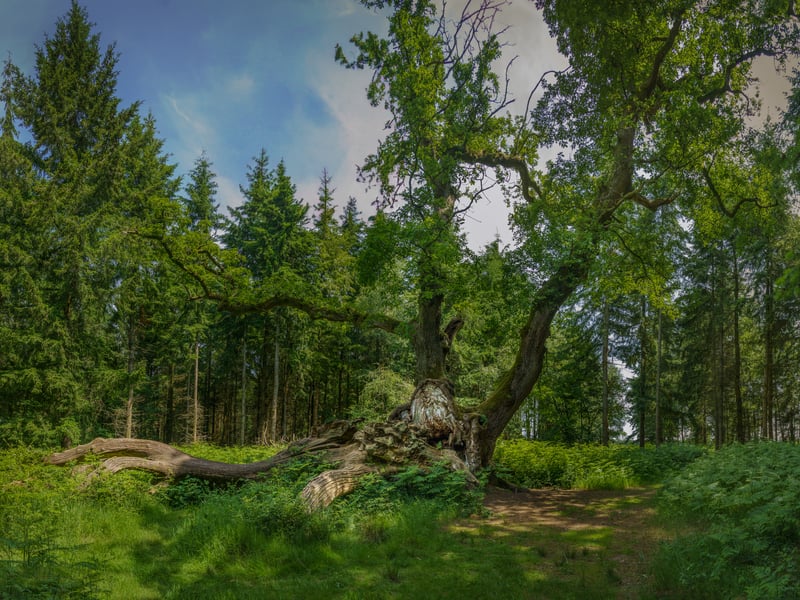
2. King of Limbs, Wiltshire
The King of Limbs is a thousand-year-old sessile oak of a particularly unusual shape, with sprawling branches sticking out from its wide trunk at every possible angle. This is due to a practice called pollarding, which saw its branches cut back to encourage growth up until the 19th century. If its name seems familiar, that’ll be because Radiohead’s 2011 album – King of Limbs – was indeed named after this ancient oak. The band spotted it while they were recording ‘In Rainbows’ at nearby Tottenham House. | Lee Cooper/Supplied
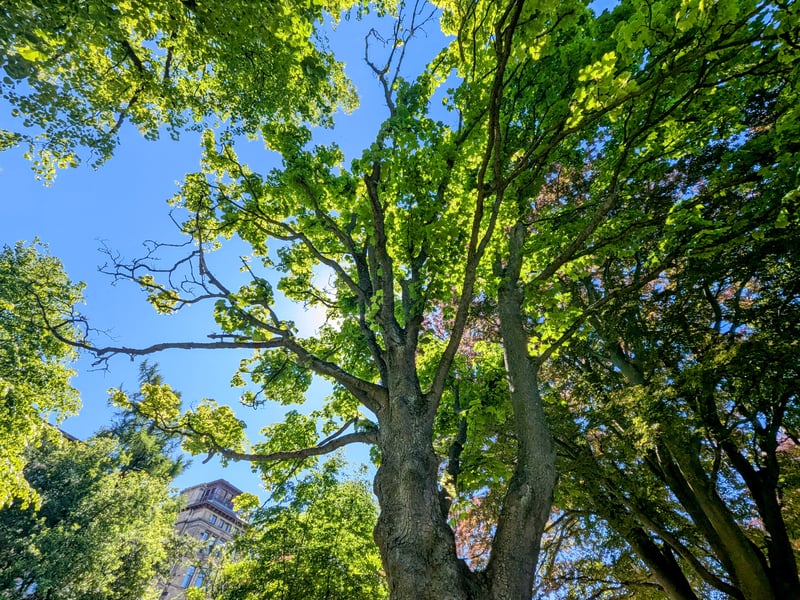
3. Wilfred Owen Sycamore, Edinburgh
This hundred-year-old sycamore stands on the grounds of Edinburgh Napier University. But in 1917, it was the Craiglockhart War Hospital, where poet Wilfred Owen was treated for shellshock. Here he met and was inspired by fellow poet Siegfried Sassoon and wrote his most famous poems, before returning to France where he was killed in action. When a branch was removed for safety reasons in 2014, a local instrument maker made a violin from it to commemorate 100 years since World War I began and honour Wilfred Owen’s memory – inscribing his poem ‘Written in a Wood, September 1910’ inside. | Woodland Trust/George Anderson
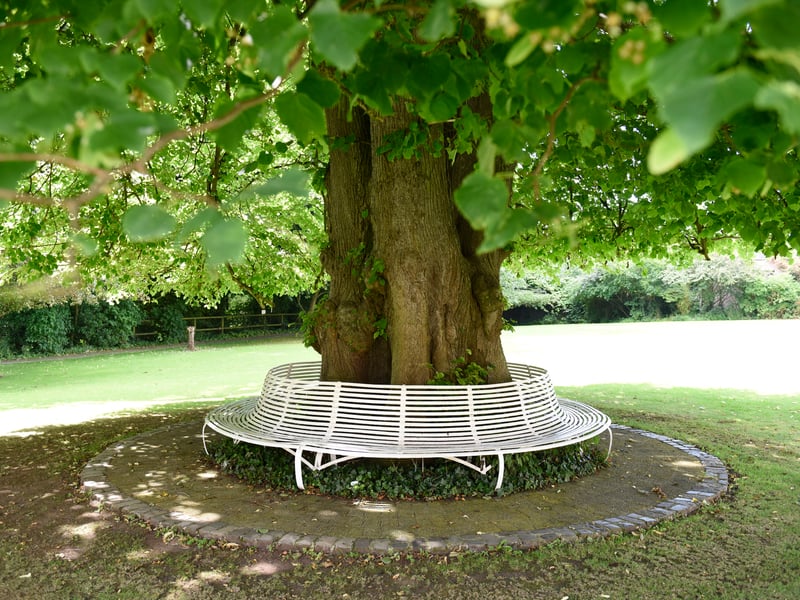
4. Tree of Peace and Unity, County Antrim
This is a hundred-year-old lime, bearing not just history, but symbolism. It’s actually formed of two trees that grew together and bound into a single trunk – now inseparable. Newly married couples still sit beneath it for luck, but the tree also became a symbol of peace and reconciliation when Tony Blair, David Trimble and John Hume met here in 1998 at the signing of the Good Friday Agreement. | Michael Cooper/Supplied