
Portsmouth sea defences: What's being built and when will all the work be finished?

More than £250m has been spent on sea defences up and down Portsmouth.
Over the past few decades, sea defences have provided a lifeline for coastal towns and cities.
Long-term monitoring from the Met Office shows that the coastline is not only receding in many places, but doing so at a faster rate than it did in the past. A rising sea level is also the primary cause of future coastal flood and erosion risk.
Because of the underlying geology, the south coast is particularly vulnerable to coastal erosion, putting Portsmouth and the surrounding area at major risk in the years to come.
Fortunately, our city and its neighbours are not sitting idly by and letting nature run its course. Instead, millions of pounds are being pumped into sea defences across Portsmouth, from South Parade Pier to Ports Creek.
Former floods minister Emma Hardy MP said: “Flooding can turn lives upside down in a matter of hours, destroying homes, shutting down businesses and leaving communities facing months of heartbreak and recovery.
“We’ve already stepped in to stabilise our flood assets after years of decline and this funding goes further, creating thousands of jobs, protecting communities from billions of pounds of damage and unlocking new homes and businesses in places made safer from flooding.”
Projects in Portsmouth have been divided into two by Portsmouth City Council. These are the North Portsea Coastal Scheme, and Southsea Coastal Scheme.
North Portsea Coastal Scheme
Starting in 2015, construction began on an 8.4km stretch of Portsmouth’s coastline, running across the north of the city. The aim was to protect low-lying land from Eastern Road, all the way up to Anchorage Park, and along the Hilsea coastline towards Tipner.
In total, it’s thought that the scheme will protect more than 4,200 homes, 500 businesses, and critical infrastructure from immediate flooding risk.
Since 2014, more than £85m of funding has been given to the project, which was separated into five stages. Work at Anchorage Park, Milton Common, Tipner Lake, Eastern Road, and Ports Creek was all planned out according to the needs of each location.
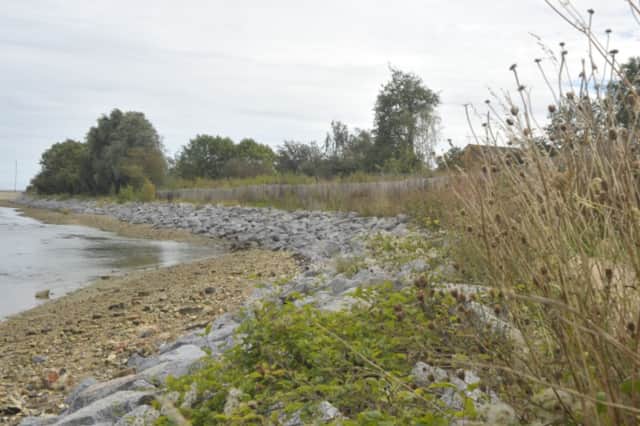

At Anchorage Park, earth embankments were built, and sloping rock revetments are providing both flooding and erosion protection.
Wildflower and seed mixes have created a sea of floral colours, with hedgerow screens and new trees also planted across the area following “extensive” landscaping works.
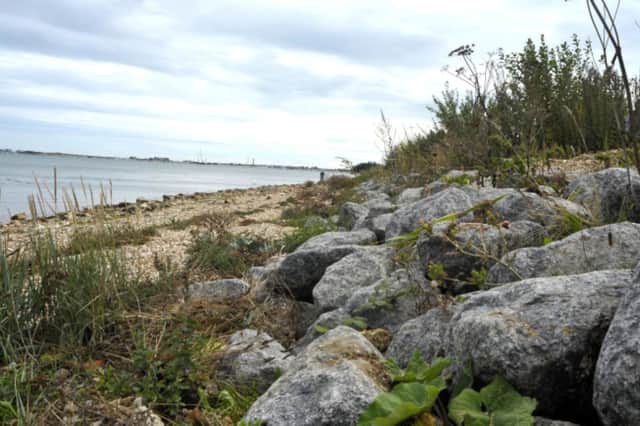
Similar work took place along Milton Common, with granite Larvikite delivered from Norway. Alongside the rock revetment, a new sea wall was built along the car park at Great Salterns Quay, plus new footpaths for pedestrians and cyclists.
Over by Tipner Lake, a sea wall has been built with access points to the shore itself, protecting the coastline against rising sea levels in the decades to come. There were also three tidal pools constructed, to encourage marine biodiversity in the area.
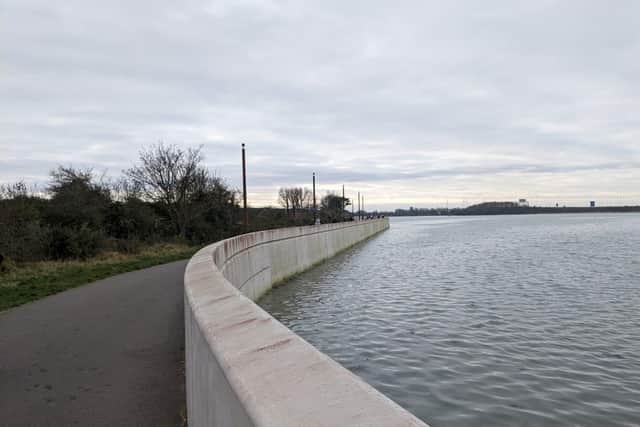
An additional sea wall was then built along Eastern Road, with 2.1km of full-height flood defence wall - making it the largest application of textured eco-formliner in the country.
Another 138 integrated tidal pools were set up, as well as the landscaping of “Cockleshell Island”, which allows birds to roost at high tide. All of this was accomplished by December 2024.
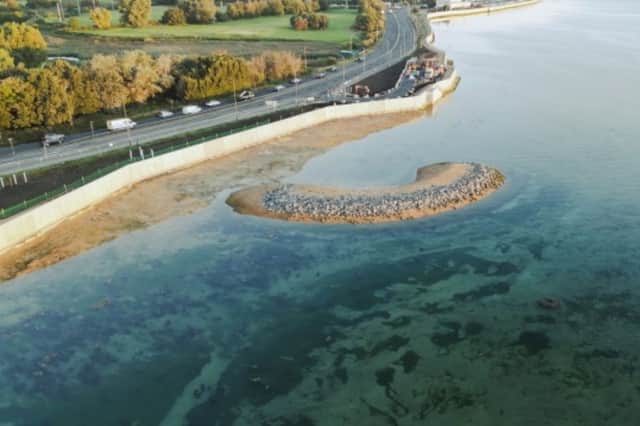
Later this year, the final piece of the puzzle will be completed when work at Ports Creek, to the north of the island, comes to an end. Similar to Anchorage Park, there will be sloping rock revetments, as well as raised earth embankments to protect the stretch from Portsea Roundabout to Eastern Road.
Work here is expected to finish by the end of this year.
Southsea Coastal Scheme
Almost £200m has been put into making Southsea seafront safer for future generations.
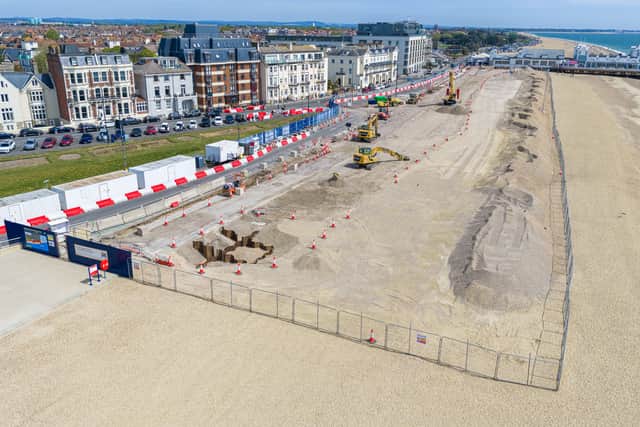
With seven phases of work, totalling £185m, Portsmouth City Council is putting its best foot forward with the Southsea Coastal Scheme, stretching 4.5km from Old Portsmouth to Eastney. Once complete, the sea defences will reduce the flood risk for 10,000 homes and 700 businesses - with around 4,000 properties already at risk of direct threshold inundation.
Speaking about the scheme, Portsmouth South MP Stephen Morgan said: “Flooding has caused real worry and disruption for families and businesses in Portsmouth and strengthening our local defences is absolutely essential.
“The Southsea Coastal Scheme, which has my full support, is making good progress. This further investment from the Labour government will make a meaningful difference, helping to protect homes, support local businesses, and our community the security they deserve.
“I will continue working with the Environment Agency and local partners to ensure Portsmouth gets the resilient flood protection it needs for the future.”
The Long Curtain Moat was the first part of the project to be completed, with the old seawall being demolished and replaced by a new one. Eighteen rock pools were set up, and the height and width of the promenade was increased. The Clarence Pier Car Park was also renewed.
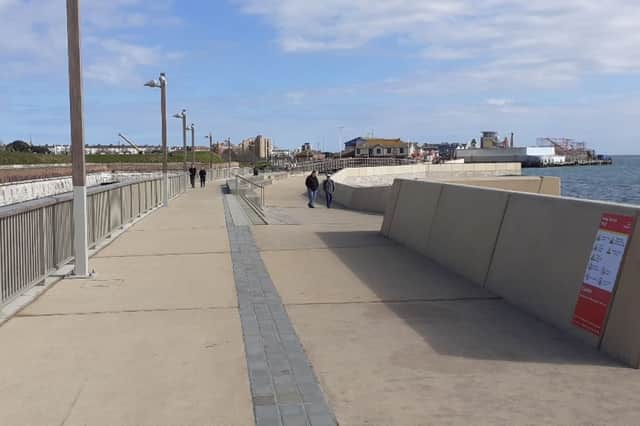
Sea defence construction around Southsea Castle began in January 2022, and the area was reopened to the public in May 2024.
The key additions included 145,000 tonnes of rocks, placed up against the coastline to protect it, a 96m rock groyne constructed to reduce beach erosion, and a split-level promenade known as the ‘Theatre of the Sea’.
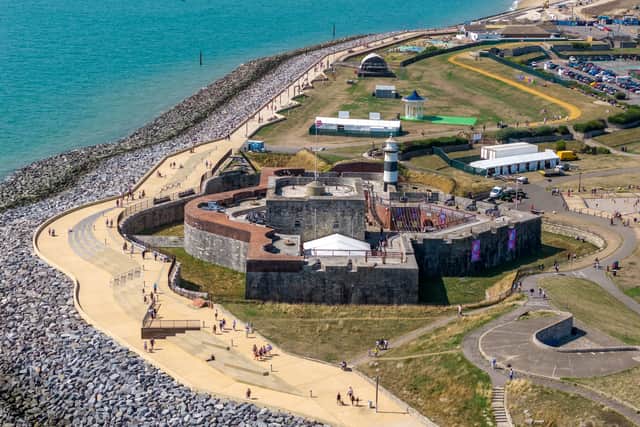
In April 2026, work along Southsea Common was completed, after roughly 18 months of work. A combination of stepped and rock revetment has provided the bulk of sea defence here, and both the promenade and road have been elevated, so that everyone can still enjoy the sea views.
The shingle beach is still there, and has been added to by the council to make it a wider space.
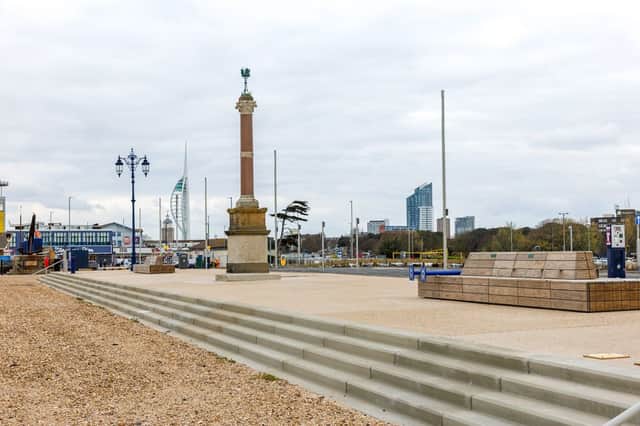
Between the Pyramids and Speakers’ Corner, similar efforts are being made to elsewhere on the seafront. The promenade will be elevated by 600mm, with a stepped revetment and a low-set sea wall.
All Grade II listed shelters and lamp columns are being refurbished and reinstated, with work due to be completed next year, with the area reopening in May 2027.
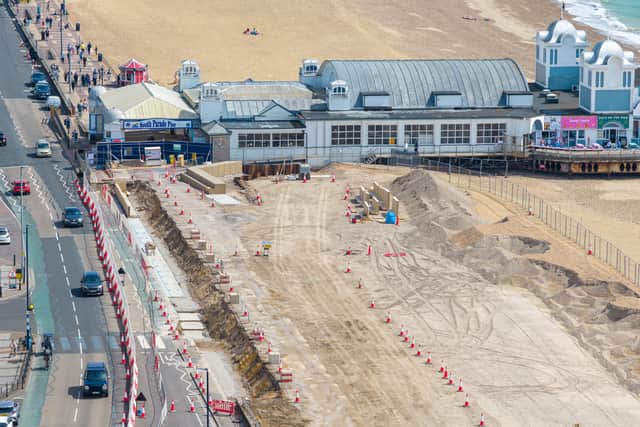
The final two phases of the Southsea Coastal Scheme relate to Clarence Pier, and the stretch from South Parade Pier to Eastney. With the former, a section of Pier Road will be raised and flood gates added; sloped bunds and concrete walls are also expected to be used.
The area along South Parade Pier is still in its design stage, and work is scheduled to start in spring 2027. A new shingle beach will be the primary sea defence, with the existing sea wall being demolished and replaced by a secondary defence wall.
As with the rest of the seafront, the promenade itself will also be raised.
What about Portsmouth’s neighbours?
Over the years, local authorities on Portsmouth’s doorstep have also been investing heavily into sea defences.
Gosport Borough Council recently secured £8.3m funding for a new flood wall and road gate at Stoke Lake, Alverstoke, which is expected to be built by late 2029. Via Coastal Partners, Havant Borough Council operates on a combination of beach management and structural projects across Hayling Island; shingle is repeatedly recycled at Eastoke, while a £5m project last decade saw rock revetments and groynes set up along the seafront.
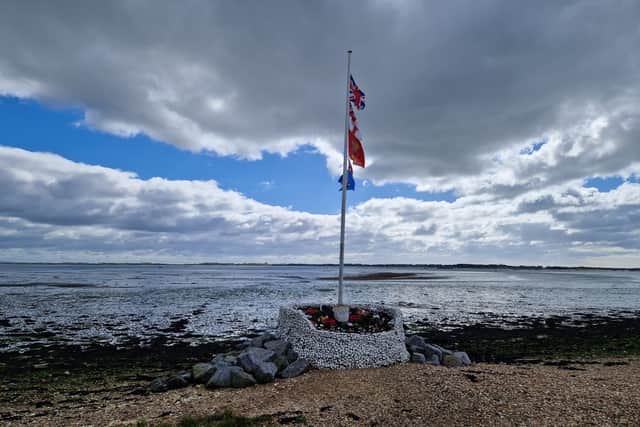
A £23.6m flood defence scheme was also approved for Langstone Harbour last month. Raised earth embankments, footpaths and cycleways will be created, alongside flood defence walls, flood gates and alterations to the highway in the area the shape of a horseshoe from Solent Way down to Langstone Bridge, and then up round the coastline past both The Ship Inn and The Royal Oak pubs.
Councillor Jonathan Hulls, the council’s cabinet lead for coastal, coastal communities and local plan, said: “This approval takes us one monumental step closer to safeguarding the future of Langstone and securing our borough’s infrastructure.
“This is not a sudden or unvetted proposal as the strategy to upgrade Langstone’s defences was adopted back in 2013, and it’s a fully funded scheme.”