
Halloween: The one decoration experts say to keep out of your garden - which can trap and harm wildlife

These fake decorations can snare real prey 🕷
- Wildlife groups are urging people not to use artificial spider webs to decorate their gardens this Halloween
- Even though they’re fake, they can trap and injure all kinds of real animals
- There is one way they say people can use them safely
- There are also more eco-friendly alternatives, for those trying to forego plastic
There’s a definite chill in the air at this time of year, and it’s not just the impending winter.
Spooky season is here, and we’re now in the lead-up to Halloween at the end of the month. The holiday has seemingly skyrocketed in popularity across parts of the UK in recent years. As such, many of us will now be planning how to celebrate this year - whether it’s getting kitted out for a costume party, buying up candy for trick-or-treaters, or putting up some hair-raising decorations.
But wildlife experts are urging nature lovers to keep one popular piece of décor out of their gardens this year to protect the wildlife we share them with, from hedgehogs to bats. We’ve checked what conservation groups have to say as artificial cobwebs come under fire, including whether there’s any way to use them safely.
Here’s what people decorating their homes for Halloween this year need to know:
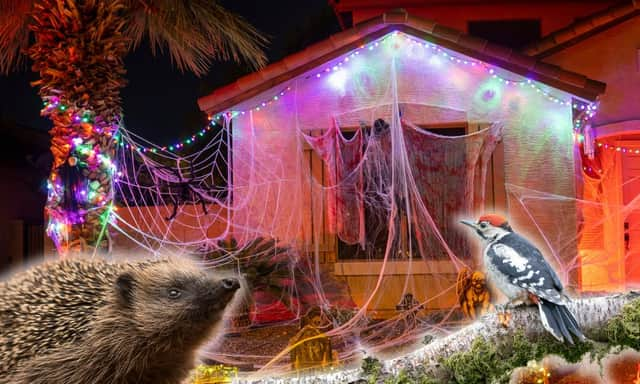

Common Halloween decoration ‘can catch real-life prey’
Conservation charities are urging people planning to decorate for Halloween to steer clear of artificial spiderwebs this year. These fake cobwebs can often be seen stretched between branches, over hedges, or draped over the outside of buildings this time of year, and are often made from synthetic fibres or plastics – or sometimes natural ones like cotton.
In a social media post, the Yorkshire Wildlife Trust warned: “Before you decorate, remember: artificial spider webs might look fun, but they can trap and harm hedgehogs, birds, bats, and insects. This Halloween, let’s keep wildlife safe by choosing natural, wildlife-friendly decorations,” they continued. “Small changes make a big difference.”
The Royal Society for the Protection of Birds (RSPB) shared a similar message in its guidance for looking out for wildlife over the spooky season. “In the run-up to Halloween, the chances are you’ll spot spooky looking spider web decorations draped over garden hedges and dangling from doorways.”
But the conservation charity added: “Although they’re fake, these webs can catch real-life prey, with birds and other wildlife getting tangled in the fibres, so they’re best avoided.”
Is there any way to use them safely?
The RSPB says that if you had your heart set on a spider-themed display, there was a way to set them up to avoid any harm to birds and other friendly garden critters. “Try hanging them inside your windows instead, for an equally creepy display, without the risk to wildlife,” it advised.
Of course, plastics generally aren’t great for the environment, and the Yorkshire Wildlife Trust says that unfortunately, Halloween is often full of it – from decor to costumes. It recommended getting creative – and sticking to non-plastic or recyclable decorations.
These included making ghosts, bats, or garlands out of paper; transforming milk jugs into ghostly lanterns; and just for the spider lovers, using brown string to create spider webs.
Keen to check out more of our Halloween coverage for the upcoming spooky season? Here are the spookiest walks you can take across the UK – and for the more easily rattled, here are some of the country’s best pumpkin patches.