
Going green: Just think green when choosing tea or coffee
I love my daily cup of tea and coffee, but which one is best for the environment? Tea is the second most consumed drink after water with 100 million cups of tea drunk in the UK each day!
Coffee is the world’s second most tradable commodity after oil and third most popular drink after tea.
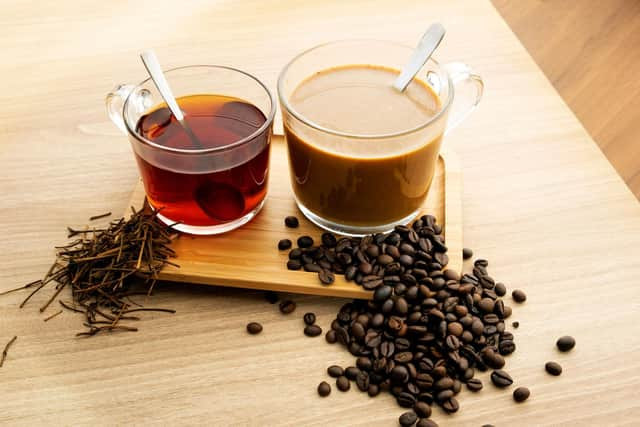

Most high streets have a growing number of coffee shops and range of hot drinks – many of which contain mind boggling levels of caffeine and sugar.
Our love for tea and coffee continues to grow but there are a couple of easy wins to reduce the impact, of our cuppa on the planet.
In general sustainability terms, tea is seen as being better than coffee, in terms of water, carbon, land and energy use. The simplest tip is avoiding disposable take away cups to reduce waste by taking along a keep cup.
For tea and coffee, an easy swap is how much milk you add. This also impacts how many calories are in the drink so, the less milk the better for the planet and your waistline.
Therefore, a white Americano is far better for the environment than a latte. There are so many alternative milks on the market, such as oat and soya, that have a lower impact than dairy milk.
Many brands also offer a barista range, to replicate the creamy frothy taste and
texture created in cafes.
If you’re making a brew at home, only boil the amount of water you need. Water takes a lot of energy to heat up and kettles are power hungry gadgets so this will also help cut your electricity bill.
Look at the display for your smart meter if you have one when you flick the switch. Using fresh water each time also tastes better, as does descaling the kettle, and a
smaller amount of water is also quicker saving you time and money.
Choosing tea bags that don’t contain plastic is a good idea so they can go in the compost bin afterwards. Loose leaf tea always tastes best from a tea pot but also cuts down on packaging, but frustratingly is often a more expensive option.
For those who use a pod machine at home, capsules that are biodegradable are the best option. If you do use aluminium ones, then please recycle them as producing this metal requires a huge amount of electricity so pods going to landfill is a real waste.
It’s not just environmental factors to consider. Fair trade tea, coffee and sugar offer an excellent way for conscious consumers to support brands that offer a fair wage for farmers who harvest tea leaves and coffee beans, and their families to live on.
The Rainforest Alliance is another certification label to look out for that highlights good practise. Both tea and coffee crops are very sensitive to the climate they grow in.
With global warming, farmers are facing more extreme weather including water scarcity, which is impacting costs and availability. Therefore, doing everything we can to turn our coffee break into support for a more sustainable business is a win win.
The great news is that 80 per cent of tea products in the UK are already organic, fair trade or Rainforest Alliance certified. So let’s work on that remaining 20 per cent and perhaps organise a coffee morning with friends to discuss all things climate and actions we can all take together.
Celebrity spot
The actor James Murray said: “After a while your eyes are opened to the abuse our rivers suffer at the hands of polluters.
"There has to be hope, a target to aim at. It has never been timelier for our vast fishing community to rally together to fight for the future.
"We are many and if we all unite and become more active, we will surely force the changes our rivers and oceans are screaming for.” Visit https://www.thefield.co.uk/features/james-murray-the-field-interview-54392 website.
Green swap
Swap shop bought blackberries for foraging them from local hedges. Not only is there a huge crop this summer, kids (and adults) adore picking them. This swap avoids pollution from plastic tubs, pesticides and trucks and provides free entertainment during walks.
Met office reveals its storm naming convention
The Met Office has released 12 new storm names for this winter with the first being Amy.
The name Amy was the most popular female name put forward from a whopping 50,000 ideas that were suggested by the public.
Many of the names have cute stories behind their nominations for loved ones, pets and even for pop stars.
Storms are named in conjunction with the Dutch and Irish weather forecast organisations, who work together as the western storm naming group to highlight the risk of bad weather.
Amy, Bram, Chandra, Dave, Eddie, Fionnuala, Gerard, Hannah, Isla, Janna, Kasia, Lilith, Marty, Nico, Oscar, Patrick, Ruby, Stevie, Tadhg, Violet and Wubbo are the names suggested.
Naming started in 2015 as part of a very simple yet successful public communication process to help keep people, businesses and property safe during extreme winter weather.
For example, schools can shut early to make sure children are safely indoors rather than caught out walking or cycling home.
When the Met Office anticipate an amber or red weather warning that could result in
damage, disruption or death they let the public and their partners know in Government, media and emergency services the name, which is selected in alphabetical order.
They do not include names which begin with the letters Q, U, X, Y and Z. There were six named storms last year in the UK and 12 the year before.
Unfortunately, every year people die during storms in the UK from flooding or on the roads after being hit by obstacles so, it’s always best to stay indoors when advised to do so unless travel is critical.
Strong winds can overturn lorries on motorways or throw objects in the air, such as trampolines.
Another potential impact is the loss of electricity as power lines are
blown over of hit from falling trees.
Due to climate change, caused by burning oil and gas, extreme weather is increasing.
As well as hotter temperatures and consequently more wildfires, there is an increase in super storms with heavier rain or snow.
Intense downpours can lead to severe flooding when drains are overwhelmed and the land is saturated.
This is why it’s a good idea to sign up to flood alerts via the Environment Agency, SEPA or Natural Resources Wales so you have time to prepare if the worst should happen.
If you would like to suggest a name for a storm visit the Met Office website to submit your idea for free https://www.metoffice.gov.uk/forms/name-our-storms-call-for-names website.
Fact or fiction
The UK spent £3 billion on bottled water last year.
FACT.
The UK has excellent quality drinking water freely available 24/7, by just by turning on a tap, yet consumers spent a staggering £3bn on buying water in a bottle adding to plastic and transport pollution.