
‘Battle winning’ virtual training drills push Royal Marines to their limit at new Portsmouth facility

Exercise Virtual Dagger saw personnel thrown into complex scenarios where they had to be prepared for anything
Unpredictable virtual training scenarios completed at a brand new facility prepared Royal Marines for the frontline.
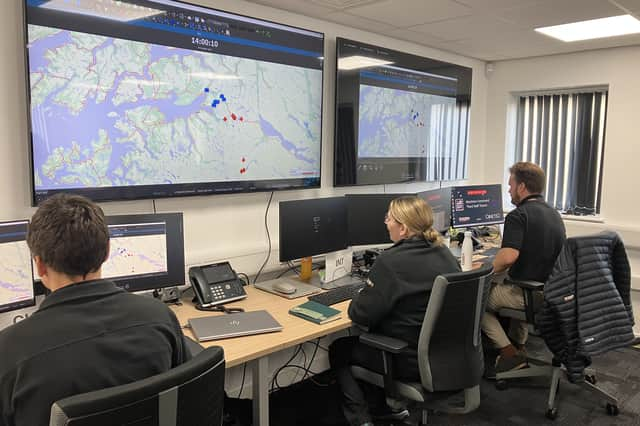
Members of 40 Commando were thrown headfirst into an extensive five-day planning trial at Portsdown Technology Park. Set up at QinetiQ’s brand new dedicated Maritime Command and Staff Trainer (MCAST) facility, personnel completed Exercise Virtual Dagger. The News was given behind the scenes access, with personnel facing a constant barrage of scenarios.
Marines got to grips with the latest technology while playing out a challenging synthetic wargame in the North Atlantic. QinetiQ and one of its subsidiaries, Inzpire, built the facility and provided the training under a £25m contract.

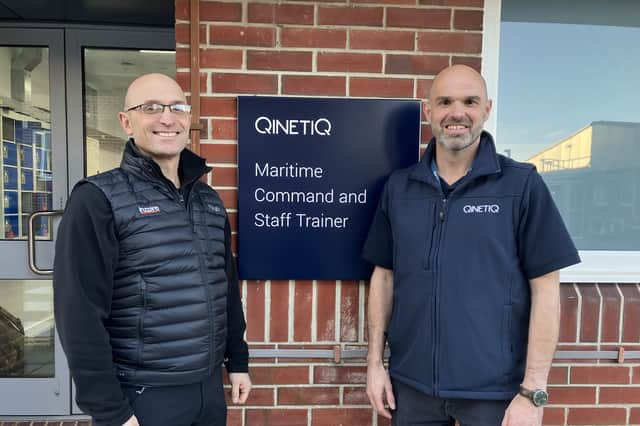
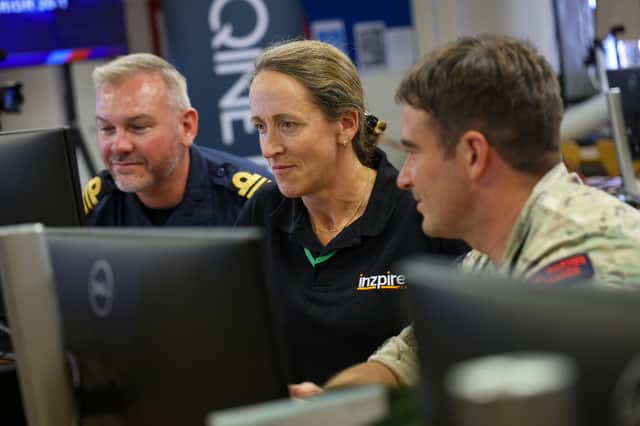
MCAST delivery manager at Inzpire, Tony Liva - former Royal Marine - said: “It’s entirely flexible to make sure they learn as much as they can, and understand the most complex aspects of the training session. We provide everything to make sure they’re in the zone.”
Mr Liva said injections - simulated situations and moments such as phishing emails or adversary ships - make the live scenarios as realistic as possible. This is to test the marines’ ability to act decisively under pressure.
“We’ve got talented people who can create scenarios for a whole range of units,” he added. “Planning, command and control is battle winning. It’s a perishable skill, and you have to keep it alive.”
Exercise Virtual Dagger played out scenarios which personnel face on the battlefield. Many of the scenarios they faced would be too unsafe or impossible to replicate in a live exercise. Marines were tested on how to deal with casualties, logistical failures, breakdowns and the sudden appearance of submarines or other capabilities.
QinetiQ’s MCAST service delivery manager Adam Crossley said: “It’s about creating realistic scenarios in the command and control space, making sure they’re realistic and challenging. It gives as much depth as they would expect to see on operations. They can deep dive into complex situations.”
Simulation technology is used to deliver the exercise. Inzpire’s White Force - a team of elite military subject matter experts - design, plan, execute and debrief complex synthetic training missions.
Software is enhanced with real shipping and naval movements, making the drills as precise as possible. This is the first time a Command and Staff Training (CAST) model was specifically designed for the Royal Navy and Royal Marines.
Mr Crossley added: “We can scale up or dial down each exercise. We’re giving extra horsepower to the Royal Navy. Results and notes can be recorded to reduce the burden on them.
“The commanders can set the training demands, which is essential. We’re guided by the navy for how they want these scenarios. This is the navy’s opportunity to fulfil niche requirements.”
Exercise Virtual Dagger is the third iteration to be carried out. The first, Exercise Virtual Warrior, was undertaken at Rollerstone Camp on Salisbury Plain this summer. A follow up virtual Royal Navy mine-hunting drill was completed at PTP in September. Personnel helped to design the scenarios during the testing phase.
Military grade servers make sure the system runs without any interruptions or interference. Future exercises are planned with personnel deployed with the UK Carrier Strike Group (UKCSG).
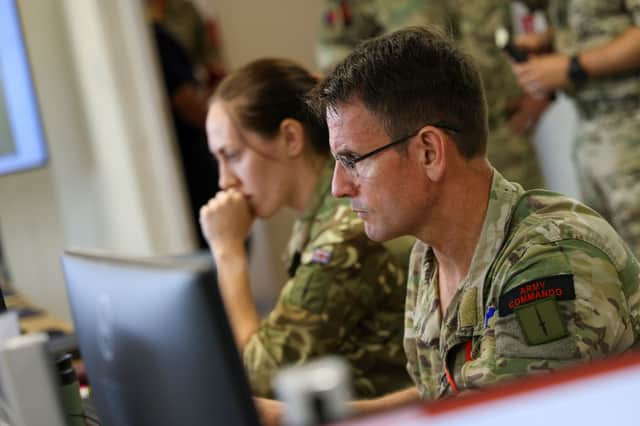
Royal Marine Lieutenant Colonel John Wall, in charge of the training, said deploying in the North Atlantic puts personnel under constant strain, with planning scenarios like this being essential before landing in challenging environments.
He added that some previous exercises needed an unsuitable level of effort. In-person drills will not be replaced, he said, but supplemented with work like this.
“It brings the sense of where we’re fighting, and we get to rehearse what we may do,” he said. “It’s an extremely cold winter environment and you’re constantly fighting the elements as well as any potential threat. It’s an intimidating place with significant challenges.
“This site is hugely beneficial. Doing the training beforehand helps them think about logistics and how they can deal with sudden changes. It’s all about prudent planning.
“They’re loving the facility. Everyone wants to be good at their jobs, and doing this is really important. The learning environment is much better. It helps them go through processes, achieve overarching goals through planning and address weaknesses.”