
Portsmouth Second World War codebreaker recalls 'exciting' service as WRNS celebrate anniversary

It has been 33 years since the Women's Royal Naval Service amalgamated with the Royal Navy
Brave women who served their country in the Second World War looked back on their ‘exciting’ experiences ahead of a historic anniversary.
Veterans who served in the Women's Royal Naval Service (WRNS) played a vital role in the war effort against Nazi Germany. Dorothy Walsh, 100 - a resident of Admiral Jellicoe House in Locksway Road - was one of them.
She operated the Bombe Machine at the Stanmore outstation of Bletchley Park, supporting Britain’s wartime codebreaking efforts. She said it was strange not being able to tell her family members about her work, but was extremely proud to have signed up.
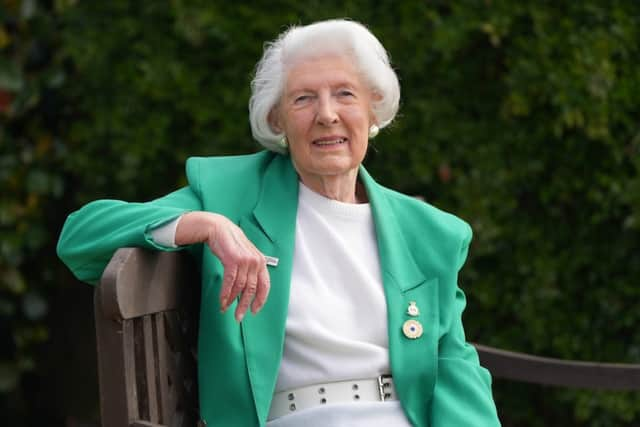

“My old school friend was doing secretarial work and I think she got a bit bored,” she added. “She was the one who suggested we join the Wrens. So we volunteered. It sounded exciting, code breaking with Alan Turing. We won the war with a bit of help from Alan, of course.”
Ms Walsh also spoke to Jay Hawkins of the Lee Enfield rifle project, where veterans are interviewed across the UK to tell their stories. She said she signed the official secrets act, and even to this day, hasn’t told anyone what she was involved in at Bletchley.
Ms Walsh said she was under constant pressure, but decided to serve because it was the right thing to do. She added that she later became haunted by her work during the war. “You feel these things emotionally when you’re much older,” she added. “I often think about the German lives that were lost because of us. I couldn’t go to Germany.”
Mr Hawkins said: “Meeting Dorothy was a lovely experience for me personally as people think roles in the Second World War were very male dominated, and that’s not the case. The women of the Seconds World War behind the doors, back home, or on the front line, played just as big a role as anyone else.”
The WRNS was formally merged with the Royal Navy on November 1, 1993. This brought more than 75 years of separate service to an end.
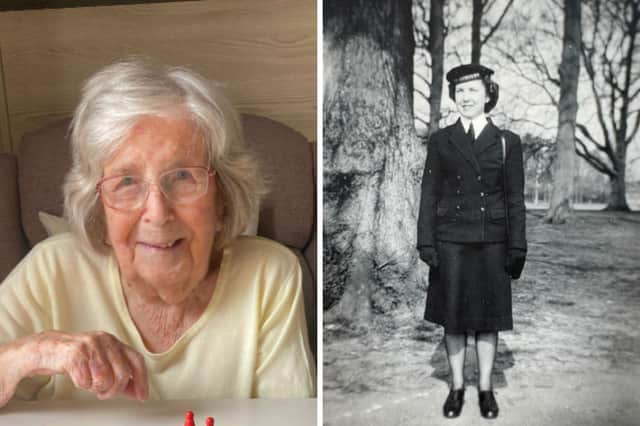
Former Wren Daphne Thompson, 96 - resident at Admiral Jellicoe House - joined the force after being inspired by her father’s stories of naval life, as well as her brother and sister’s service during the Second World War. As a communicator and radio operator, she worked in an airfield control tower, carried out direction finding and worked in cryptography.
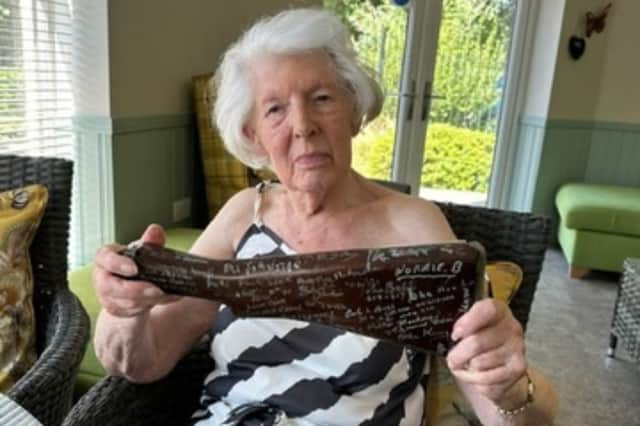
Her memories also capture the camaraderie and fun that existed alongside the serious nature of her work, including one occasion when she and her fellow Wrens decided to walk across an airfield in Scotland in search of a ruined church they believed was haunted.
“We thought we'd go looking for ghosts,” she recalls. “And when we saw white figures jumping about we thought ‘Oh my goodness.’ And then we found out it was the petty officers.”
Community engagement officer for The Royal Naval Benevolent Trust (RNBT), Corinne Day, joined the Wrens in 1987 and was serving during the merger. She said: “It wasn't a case of ‘it shouldn’t happen’, but it did mean losing a bit of our identity that had been an important part of our lives.”
The merger saw great roles for women at sea, having previously been barred for such roles. Navy veteran Sally Fountain, head of housekeeping at Admiral Jellicoe House, joined the force in 1998 and was among the early generations of women to serve at sea.
She said many male sailors were accepting, but having females on board was still a new experience.
“There were still lots of men who had not been to sea with women before,” she added. “For them it was a completely new world. Some of them liked it, some of them not so much.”
RNBT chief executive Debbie Doliner said the stories of WRNS veterans demonstrate both the extraordinary changes that have taken place and why supporting Naval women remains important throughout their lives. She added: “When you hear these women talk about their experiences, you get a real sense of how far the Royal Navy has come.
“The women who served as Wrens were part of an extraordinary community, often working in roles that were hugely important but at a time when their opportunities were very different from those available today.
“Women serving today have far more opportunities, but service life can still bring particular challenges around family, relationships, separation and transitioning to civilian life. At The RNBT, we want women to know that support is available whether they are currently serving, leaving the Service, raising a family or have been veterans for many years. Our support is there for the whole journey.”