
Royal Navy's most deadly frigate HMS Lancaster flexes her military muscle in gun test at sea
A NAVY warship is gearing up for a fortnight flexing its military muscle in a fiery display of deadly prowess.
HMS Lancaster sailed from her home base of Portsmouth over the weekend to focus on the ‘business end’ of naval operations: warfare.
It comes as the ship prepares to hit the front lines for her first operational tour in almost five years.
Coming off the back of a two-year refit, Lancaster is now bristling with new weapons and sensors, making her one of the most deadly Type 23 frigates in the fleet.

The huge overhaul saw the warship being fitted with an Artisan 3D radar – capable of pinpointing objects as small as a tennis ball and travelling at three times the speed of sound – and the Sea Ceptor air defence system, which fires supersonic missiles that can destroy airborne threats up to 15 miles away.
Those systems, as well as the ship’s company, will face a two-month-long test in September when the Lancaster goes through operational sea training.
And in a warm-up for this, Lancaster has been firing some of her deadly arsenal of weapons – including the 4.5in gun.
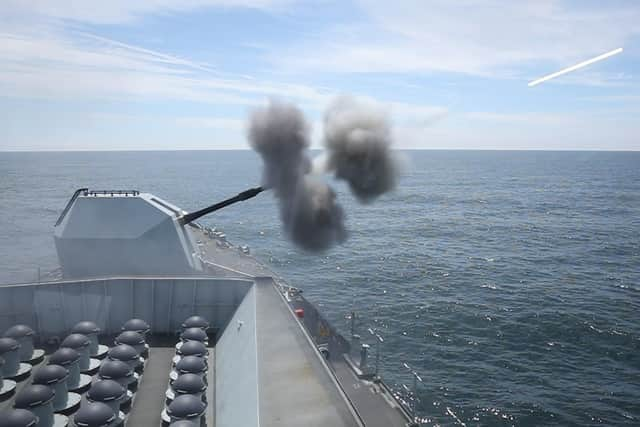
The huge weapon can fire 21kg shells, hurling the round at more than twice the speed of sound up to a range of 15 miles.
‘It was great to finally be back at sea and use the gun,’ said Petty Officer Alan Bates.
‘Having joined Lancaster over a year ago as the maintainer to get to function the gun was fantastic. We are now ready to move forward in our training.
‘A lot of the junior members of the crew have never heard or seen the gun fire so it was a great demonstration to them about the impact the gun can provide.’
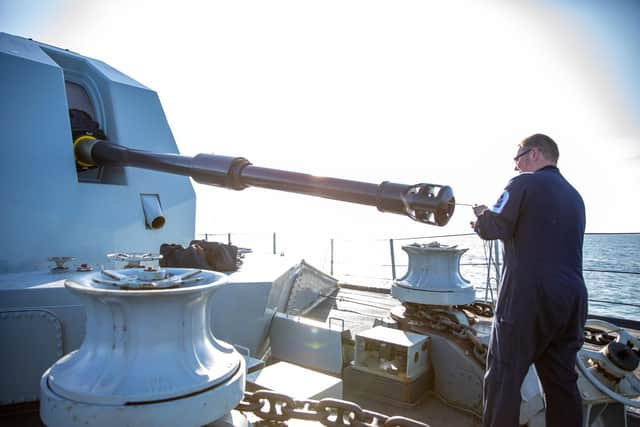
Further training and equipment trials over the next 10 days will focus on the 4,500-tonne warship’s other weapons and sensors – every day bringing her one step closer to full operational status.
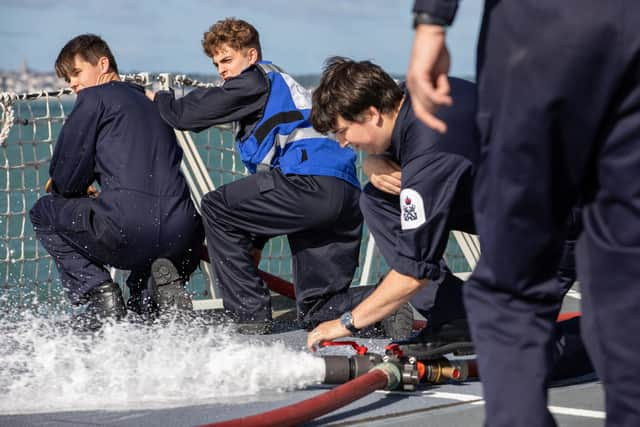
The ship’s crew have already been put through their paces reacting to fictitious disasters and mock fires.
Sailors also refreshed their knowledge about how to deal with chemical, biological or nuclear attacks against the ship.
‘Lancaster’s story from engineering project to ship and warship is now in its final few chapters,’ said the frigate’s skipper Commander Will Blackett.
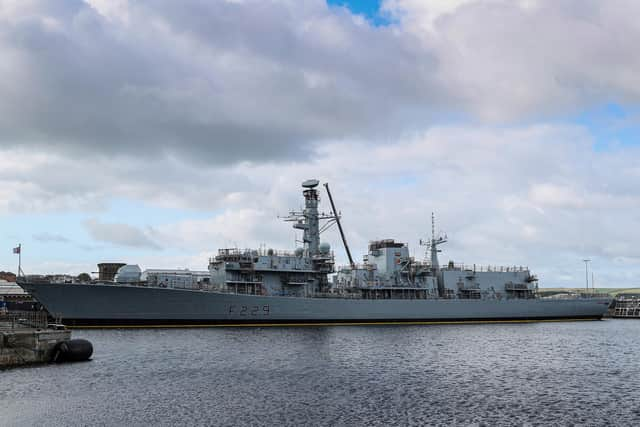
‘She is a fantastic ship, with a fantastic team and plenty more to offer UK defence over the months and years ahead.’