
What is HMS Duncan doing? Royal Navy destroyer leaves Portsmouth for first time since large Nato deployment

The Type 45 destroyer played a vital role in Operation Firecrest alongside the Royal Navy flagship
A mighty Royal Navy warship has left Portsmouth Naval Base for the first time since returning home from a major deployment.
Type 45 destroyer HMS Duncan sailed past The Round Tower in Old Portsmouth last night (August 19). She set off after previous planned sailings on the King’s Harbour Master shipping movements. She is expected to conduct various training drills ahead of the second phase of Operation Firecrest.
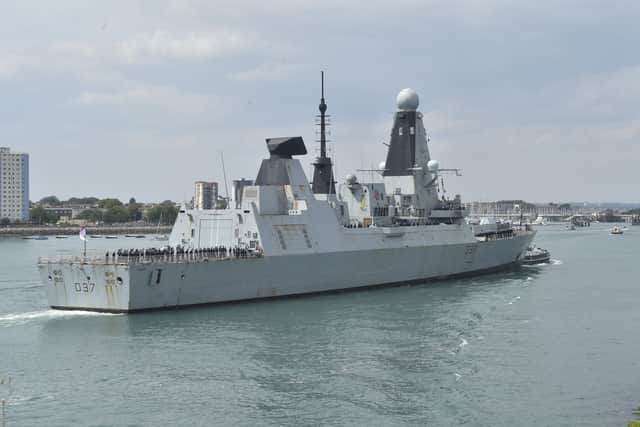

A Royal Navy spokesperson said: “HMS Duncan has departed Portsmouth to continue operations following a period of well-deserved summer leave and planned maintenance. This comes after a highly successful deployment to the high north as part of the UK Carrier Strike Group.”
The warship made a glorious return to her home city on July 24 alongside the Royal Navy flagship HMS Prince of Wales. HMS Duncan was part of the UK Carrier Strike Group (UKCSG) during phase one of Operation Firecrest, conducting intense military drills in the North Atlantic and High North.
Since being back in Portsmouth, the ship’s company have spent quality time with their loved ones. Preparations are now underway for the second phase of the Nato deployment. No official timeframe has been confirmed, but it’s expected to resume later this year.
Operation Firecrest took place in a strategic part of the world which is seeing more activity from Russia. As sea ice melts, more contested trade routes will appear in the Atlantic. Moscow has also been bolstering its submarine fleet in the region.
The UKCSG undertook various drills in the first phase, including Exercise Neptune Strike. This saw sailors and aviators from ten Nato allied nations operate across air, land, and sea. Similar exercises, including those which saw F-35B fighter jets conduct aerial manoeuvres hundreds of miles away from HMS Prince of Wales, took place near Norway and Iceland.
Commodore Richard Hewitt, Commander of the UK Carrier Strike Group, previously said: “Over the past three months, we have proven the UK Carrier Strike Group capabilities over and over again, committing this capability to NATO and demonstrating our determination to defend NATO’s Northern flank.
“We have shown how we can generate, sustain and when called upon, defend our NATO and JEF allies against unwanted threats in the High North and North Atlantic. Neptune Strike has been a successful finish, demonstrating our capability and supporting NATO deterrence across the Euro-Atlantic.”