
"New leading role" for Royal Navy's HMS Stirling Castle and RFA Proteus to protect “security vulnerabilities”

A “new and leading” role will be handed to the Royal Navy to protect the nation against “security vulnerabilities abound”.
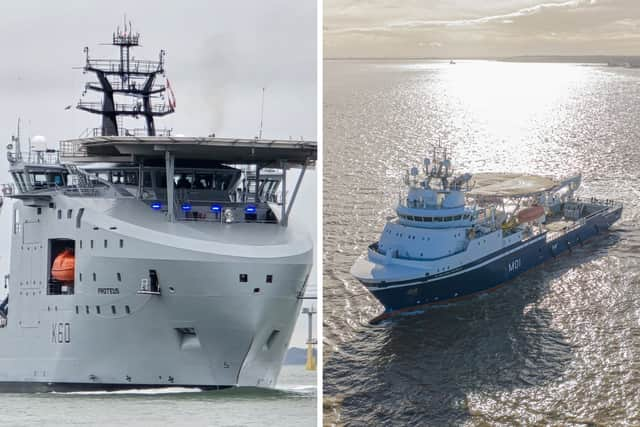
The force will be asked to deploy more resources to protect the UK’s critical undersea infrastructure. Two of the Royal Navy’s newest ships, HMS Stirling Castle and RFA Proteus, are expected to be used extensively for this purpose and other operations.
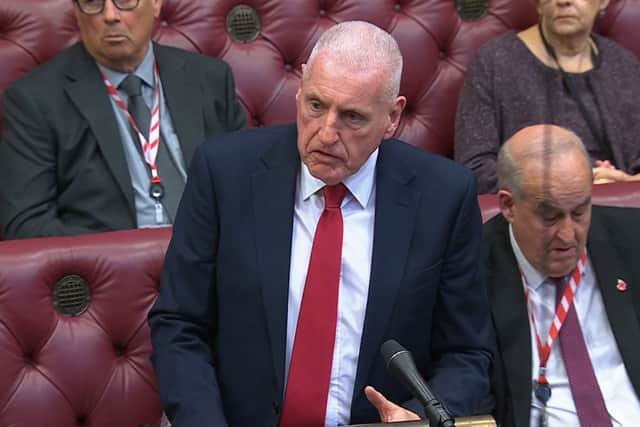
Russia has been deemed as a potential threat, given the nation has damaged infrastructure belonging to Nato allies in the past. Speaking in the House of Lords today (October 27), Lord Vernon Coaker said activity in UK waters is constantly monitored by Royal Navy assets, maritime patrol aircraft, and the multi-role ocean surveillance programme.

He added: “The Royal Navy will play a new, leading and coordinating role, alongside the private sector, in securing undersea pipelines, cables, and maritime traffic.”
Stephen Benn, 3rd Viscount Stansgate, said the National Security Strategy committee found in a recent report that there were “security vulnerabilities abound” to the UK’s infrastructure. It recommends for a sovereign defence ship to be built and escorted under Royal Navy surveillance. He asked the government if a seabed warafre strategu is being deployed.
Lord Coaker, Labour, responded: “We should and are developing one. We are undertaking several different actions. These include surveillance aircraft, RFA Proteus, and we’ve got Stirling Castle, which looks at how drones can operate from her deck to protect underwater pipelines.”
RFA Proteus and HMS Stirling Castle have been procured due to their ability to act as motherships for drones and other autonomous assets. This new technology will be used to protect underwater infrastructure, destroy mines, and carry out surveillance operations. The UK also signed an agreement with Germany to host eight P-8A Poseidon maritime patrol aircraft, at RAF Lossiemouth, to hunt Russian submarines.
Earl Russell, Liberal Democrat, said critical undersea infrastructure face an ever increasing hostile landscape, and asked for Lord Coaker’s view on the Germany deal. The defence peer said: “Germany offered for some of their aircraft to visit RAF Lossiemouth to work with our aircraft with respect to underwater surveillance tasks. I think that is an important step for all of us.”
Lord Harris of Haringey, Labour, said disruption to cables would have huge implications for communication and data, and disrupt satellite systems the nation depends on. He asked if the government is planning to have a national exercise in preparing for a major communications or data disruption.
Lord Coaker said: “There are plans which are currently being worked on. The threats we face from others are different to those in the past. Disruption to data, energy supplies, and communication, are all part of the threat we now face. We have to do more as a homeland to stand up against that.”